 English
 русский
 Español
 عربى
عربى
Home / News / Industry News / Are Down Comforters Hot? A Hotel Buyer's Guide to Warmth, Weight & Fill
Are Down Comforters Hot? A Hotel Buyer's Guide to Warmth, Weight & Fill


Are Down Comforters Hot? A Hotel Buyer's Guide to Warmth, Weight & Fill
2026-10-05
Content
- 1 Why Down Comforters Trap Heat
- 2 Fill Power vs. Fill Weight: The Two Numbers That Decide Warmth
- 3 The Shell Fabric Changes the Feel Before the Down Does
- 4 How to Choose a Lightweight Down Comforter for Hot Sleepers
- 5 Hotel Considerations: Matching Guest Comfort Without Overheating
- 6 Duck Down vs. Goose Down: Same Warmth Question, Different Cost
A hotel guest walks into a room, turns down the duvet, and within 20 minutes feels sticky and flushed. That is the moment “are down comforters hot?” turns from a casual search into a real procurement problem. The direct answer is yes: a down comforter can easily sleep hot. But the more useful answer is that a down comforter only feels hot when the fill power, fill weight, and shell fabric are mismatched to the season or the sleeper. For hotel buyers and linen managers, that distinction matters because it changes how you choose, rotate, and specify duvets.
Why Down Comforters Trap Heat
Down works because it traps air. The clusters create hundreds of tiny pockets that hold body heat, and that barrier is what keeps you warm. A high-loft down comforter can feel significantly warmer than a synthetic blanket at the same weight. That is the appeal, and that is also the risk. If you choose a duvet with too much loft or too much fill, it continues to trap heat even after you have found a comfortable sleeping temperature. The body's core temperature drops during sleep, but a heavily insulated duvet keeps pushing heat back.
The heat effect is not caused by the down itself. Down is a breathable natural material. It warms when it traps air; it cools when that air is allowed to escape. The combination of dense fill and a tightly woven cover is what makes a duvet sleep hot.
Fill Power vs. Fill Weight: The Two Numbers That Decide Warmth
Buyers often ask whether higher fill power means a hotter duvet. The answer is not that simple. Fill power measures loft, or how many cubic inches one ounce of down occupies. Higher fill power means larger clusters and more loft per ounce. A 700-fill duvet can be warmer than a 550-fill duvet at the same weight, but a lighter 700-fill duvet can also be cooler. Fill weight is the actual amount of down inside the duvet, usually measured in grams per square meter (gsm). That number directly controls total heat output.
As a starting reference, here is how fill power and fill weight work together.
| Fill Power | Loft | Warmth Profile | Typical Use |
|---|---|---|---|
| 550–600 | Medium | Moderate warmth | Spring, autumn, mild winters |
| 650–700 | High | Warm and light | Winter, average sleepers |
| 700–750 | Very high | Very warm | Cold climates, cool sleepers |
| 800+ | Extra high | Maximum warmth per ounce | Premium alpine properties |
For a hot sleeper, the fill weight matters more than fill power. A 200gsm duvet with 700 fill power will still be lighter and cooler than a 350gsm duvet with 550 fill power. Hotels that serve a wide range of guests usually choose a mid-weight duvet, around 200–250gsm, and rely on the room temperature rather than an oversized winter fill.
The Shell Fabric Changes the Feel Before the Down Does
Down never directly touches the guest. The shell is the interface, and it plays a bigger role in the “hot sleeper” question than many buyers expect. A tightly woven 750 thread count cotton sateen can block airflow, creating a damp, warm microclimate under the duvet. A 300 thread count cotton percale, by contrast, allows more air exchange and feels crisper.
Most hotel down duvets use a cotton or cotton-blend shell with a downproof weave. The weave stops feathers from escaping, but it also determines breathability. If the shell is coated with a waterproof finish, that finish will further reduce moisture transfer and push heat back toward the sleeper. For warm climate properties, a breathable 100% cotton shell is usually the better choice.
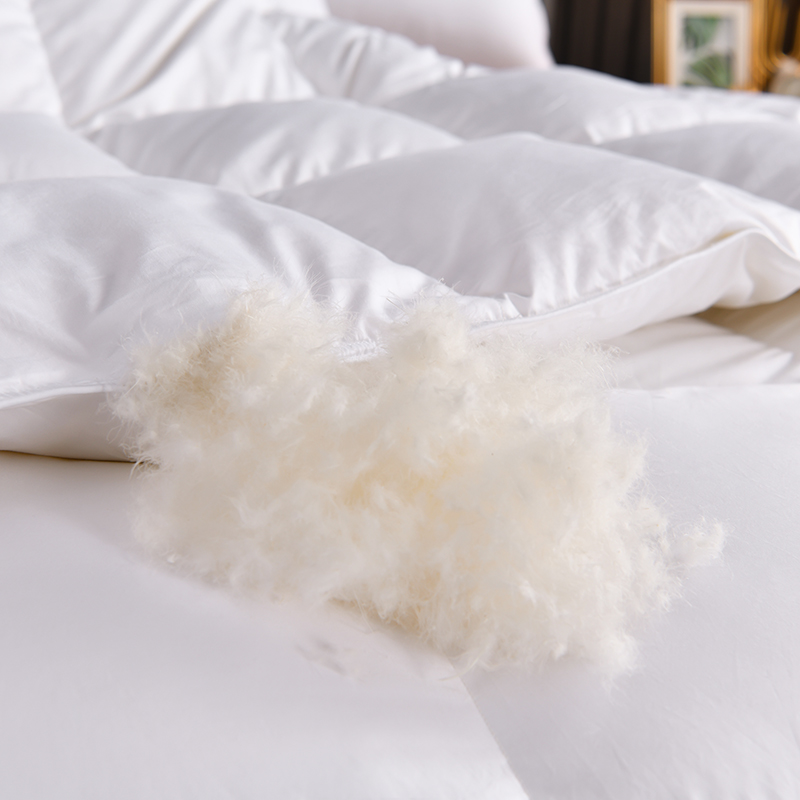
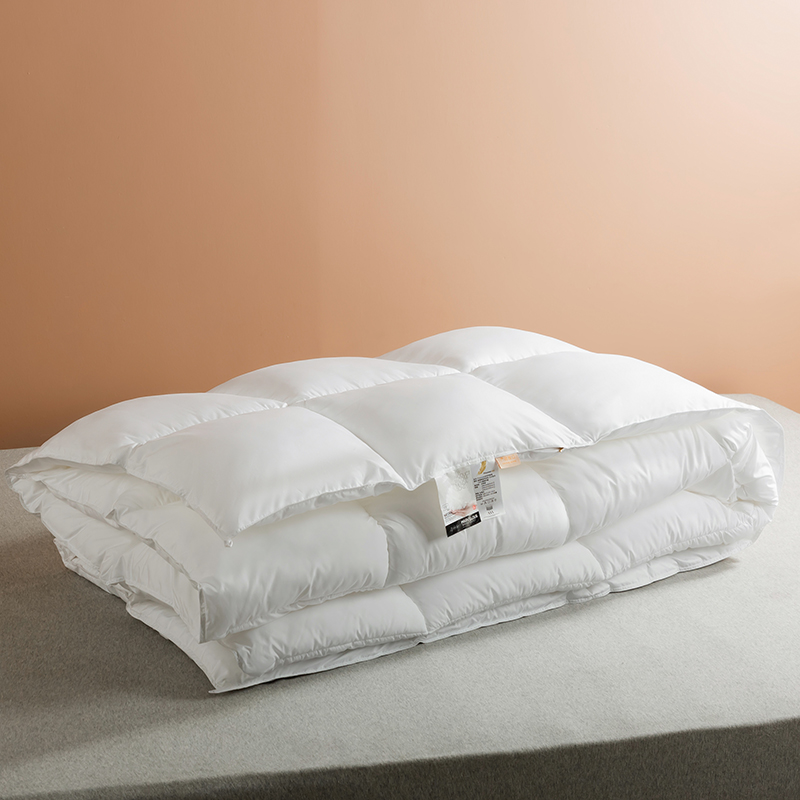 100% Cotton Shell Goose Down Duvet for Star HotelsThis star-hotel goose down duvet uses a 100% cotton shell that manages temperature and humidity better than polyester blends, while the high-thread-count fabric keeps the down secure and the bed breathable.View Product →
Our star-hotel goose down duvet is made with a 100% cotton shell specifically because cotton handles temperature and humidity better than polyester blends in a hotel room.
How to Choose a Lightweight Down Comforter for Hot Sleepers
If the guest profile leans hot, here are concrete buying criteria:
- Keep fill weight under 250gsm for year-round room use; use 150–200gsm for warm climates.
- Avoid the highest fill power when the goal is less insulation. A 600–650 fill is easier to keep cool than 800 fill.
- Choose a cotton shell with a thread count between 300 and 400 for good breathability.
- Look for a duvet with box or channel stitching that allows the down to distribute evenly, preventing hot spots.
A lighter duvet does not mean less quality. A well-constructed 650-fill duck down duvet at 180gsm can still feel comfortable at 20°C while allowing the sleeper to move freely. For hotel projects, these light duvets are also easier to launder and quicker to dry.
Hotel Considerations: Matching Guest Comfort Without Overheating
Hotels face a challenge that home buyers do not: the same duvet must accommodate guests who run cold and guests who run hot. Standardizing on a heavy winter duvet will generate complaints in summer; standardizing on a summer duvet will disappoint in cold months. The practical solution is rotation.
Many four- and five-star properties operate with a two-season or three-season duvet program. A 150–200gsm duvet covers summer and warm climates, a 250–300gsm duvet works for autumn and winter, and an extra warm winter duvet is reserved for cold destinations. Another approach is a two-in-one duvet, where two layers snap together to create a heavier option in winter and separate into lightweight all-season duvets in summer.
Housekeeping also matters. When guests complain about heat, a very common fix is simply removing a layer. A duvet that is too hot cannot be adjusted easily, but a medium-weight duvet plus a cotton blanket gives the guest control. From a purchasing perspective, that is more cost-effective than buying a single extremely heavy duvet that cannot adapt.
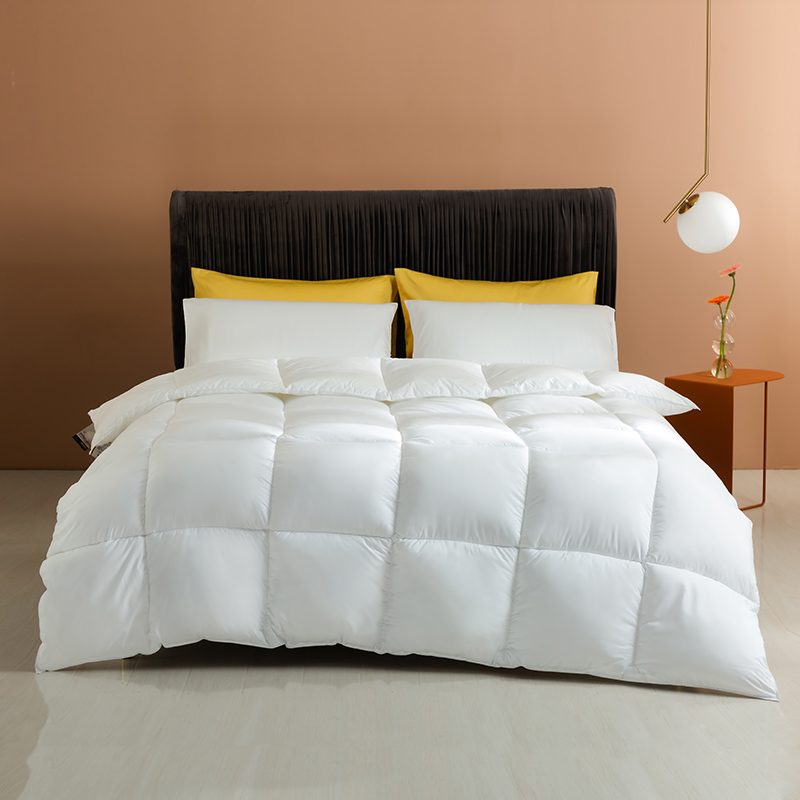
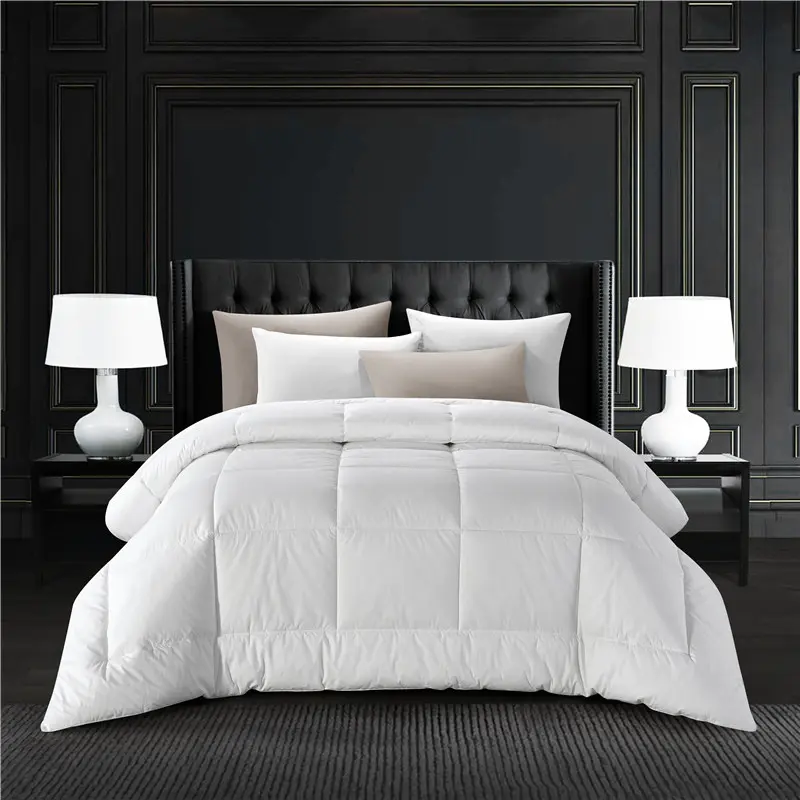
 Quilted White Goose Down Duvet with Breathable Cotton ShellA quilted white goose down duvet in a breathable cotton shell offers medium-weight warmth that suits year-round hotel use, letting guests adjust layers without overheating on milder nights.View Product →
For properties that want the luxury feel of goose down without a heavy winter profile, a quilted white goose down duvet in a breathable cotton shell is a strong year-round option.
Duck Down vs. Goose Down: Same Warmth Question, Different Cost
Does goose down sleep hotter than duck down? Not necessarily. Goose down clusters are larger and produce higher fill powers, so a goose duvet can achieve the same warmth at a lower fill weight. That usually means it feels lighter and less suffocating. Duck down has slightly smaller clusters, so manufacturers use more of it to reach the same loft—sometimes adding noticeable weight and warmth.
For hotel buyers on a budget, duck down is still a solid choice when the target is moderate warmth. It costs less than goose down, and if you keep the fill weight at 180–220gsm, it will not feel heavy. Just be careful: low-quality duck down with feather shafts can poke through the shell and create a prickly sensation, which has nothing to do with heat but ruins the guest experience.
 Piped Duck Down Duvet with 100% Cotton Shell for Budget RoomsThis piped duck down duvet with a 100% cotton shell delivers a soft down feel at a lower price point, with moderate warmth that works well for standard hotel rooms.View Product →
A piped duck down duvet with a 100% cotton shell can deliver that down feel at a price point that works for more rooms.
So, are down comforters hot? Yes, when they are too thick, too dense, or wrapped in a fabric that traps heat. No, when you choose the right fill weight, a moderate fill power, and a breathable cotton shell. Start with the season and the guest, then work backwards: choose a fill weight that suits the climate, a shell that breathes, and a construction that keeps the down evenly distributed. If you keep those three variables balanced, a down comforter can be genuinely comfortable all year round.
For more guidance on selecting hotel duvets, read our guide to choosing hotel duvets, or contact our team directly if you want to spec a trial set for your property. We manufacture down duvets and hotel linen in our own factory, so we can match the duvet to your climate and guest profile without a middleman.

News
-
Hotel Duvet Materials: Microfiber vs Down Explained Introduction to Hotel Duvet Materials Hotel duvets are more than just bedding; they are a critical component of the guest experi...
READ MORE -
Why That Hotel Bed Feels Like Sleeping on a Cloud There's a particular moment every traveler knows. You pull back the crisp white sheets of a luxury hotel bed, sink into the mattre...
READ MORE -
Why Choose Hotel-Style Bedding? Choosing a hotel-style bedding set is one of the easiest ways to instantly elevate your bedroom into a calm, luxurious retreat. Here’s why millions ...
READ MORE

Product List
 Hotel Bedding Set
 +86-180 6864 1189
 +86-(0)513 86311444
 F Zone Chuanjiang Industrial Area, Tongzhou, Nantong City, Jiangsu Province, China