 English
 русский
 Español
 عربى
عربى
Home / News / Industry News / Are Down Comforters Washable? Care Tips From a Hotel Linen Factory Expert
Are Down Comforters Washable? Care Tips From a Hotel Linen Factory Expert


Are Down Comforters Washable? Care Tips From a Hotel Linen Factory Expert
2026-10-12
Content
If you have ever stood in front of a washing machine holding a king-size down comforter, wondering whether you were about to ruin something expensive, you are in good company. It is one of the questions we hear most often, and after more than twenty years of making duvets and pillows for hotels, we can give you a straight answer: yes, down comforters are washable, and in most cases you can do it at home.
The catch is that down is only as washable as the fabric and the stitching around it. Get those two things right, use the right detergent, and take your time with drying, and a down comforter will come out of the wash just as lofty as it went in. Get them wrong, and you will be picking wet clumps of feathers out of a twisted shell.
The Short Answer
Most down comforters can be machine washed on a gentle cycle in a front-loading machine, then tumble dried on low heat until they are completely dry. A queen-size comforter usually fits comfortably in a drum of about 4 cubic feet or larger; a king-size one often needs the bigger commercial machines at a laundromat. If the care label says dry clean only, follow it, unless you know the shell fabric well and are willing to accept some risk.
How often should you wash it? Less often than you might think. If your comforter lives inside a duvet cover that gets washed every week or two, the comforter itself may only need a wash once a year, sometimes even less. Spot-clean spills and marks in between, and let the duvet cover do the heavy lifting.
Why Down Survives a Wash
Down is a protein fibre, similar in some ways to wool, but far more forgiving. Its warmth comes from the structure of the clusters themselves, not from a chemical finish that washes away. Water does not dissolve down, and a properly dried comforter regains its loft almost completely.
What does get damaged is everything around the down:
- The shell. Loose weaves let small feathers work their way out during the wash cycle. That is why we specify a tightly woven, downproof cotton shell, often in a 40s yarn, on the down duvets we make for hotels.
- The seams and baffles. A soaked king-size comforter is surprisingly heavy. Weak stitching, broken baffle walls or a small tear will open up under that weight, so mend first and wash second.
- Time and moisture. Down left damp is where mildew starts, and a musty smell is very hard to remove once it has settled in.
You can see the full range of shells and fills we build these duvets with on our hotel down duvet collection, which is a useful reference for the construction details worth checking on any comforter.
Reading the Care Label First
Before anything else, find the label sewn into the comforter and read it. Those few words are not decoration; they reflect what the manufacturer knows about that specific shell and fill. Here are the phrases you are most likely to see, and what each one means in practice.
| Label wording | What it means for washing |
|---|---|
| Machine wash warm, gentle cycle | Safe in a front loader with a mild liquid detergent and an extra rinse. |
| Machine wash 60 °C | Common on hotel-grade down; the higher temperature also helps with dust mites. |
| Dry clean only | Usually points to a delicate shell or trim; follow it unless you accept the risk. |
| Tumble dry low | The best drying option for down; expect several cycles and dryer balls. |
| No bleach, no fabric softener | Softener coats the clusters and quietly reduces loft over time. |
| Do not wring or iron | Wet down tears at the seams, and direct heat damages the shell. |
Washing a Down Comforter at Home
Once the label gives you the green light, the method matters more than the machine. This is the sequence we recommend.
- Mend small tears. A short split in a seam will grow once the comforter is full of water and being pulled around a drum. A few stitches beforehand save a proper repair later.
- Pre-treat marks. Use a little mild liquid detergent and cool water. Dab rather than scrub, and let it sit for a few minutes.
- Use a front-loading machine if you can. Top loaders with a central agitator can twist the comforter and strain the seams. If that is what you have, choose the gentlest cycle and a low spin speed, or wash by hand.
- Wash one comforter at a time. Overloading stops water from rinsing through the filling, which is how detergent residue gets trapped inside.
- Add a small amount of mild liquid detergent. Not a full scoop. Skip bleach and fabric softener completely; an oxygen-based booster is a safer choice for white down if the label permits it.
- Choose gentle or delicate, warm water, and an extra rinse. The extra rinse is not optional in our view. It is the cheapest insurance against residue that dulls loft.
- Lift it out with both arms, supporting the middle. Wet down is heavy, and a seam already under strain does not need a helping hand.
Hand Washing in a Bathtub
Fill a bathtub with lukewarm water and a tablespoon of mild detergent. Lower the comforter in, press it down until it is fully saturated, and knead it gently with your hands for a few minutes. Drain the tub, refill with clean cool water, and press again; repeat until no suds appear. Press the water out instead of wringing, roll the comforter in a couple of large towels, and then dry it in the machine on low or lay it flat on a drying rack, turning it every few hours.
How a Hotel Laundry Handles Down Duvets
Hotels do not treat a down duvet as a fragile object. They treat it as part of a rotation. Duvets go into a large-drum commercial washer, receive a carefully measured dose of detergent, run through a high-speed extractor that pulls out as much water as possible, and then go into a dryer with far more airflow than any home machine can produce. The whole process is built on two ideas: remove the water quickly, and never let the down sit damp.
That is also how we build the duvets we supply. A shell tight enough to keep feathers in, seams reinforced where the weight gathers, and a fill that can go through repeated washing without going flat.
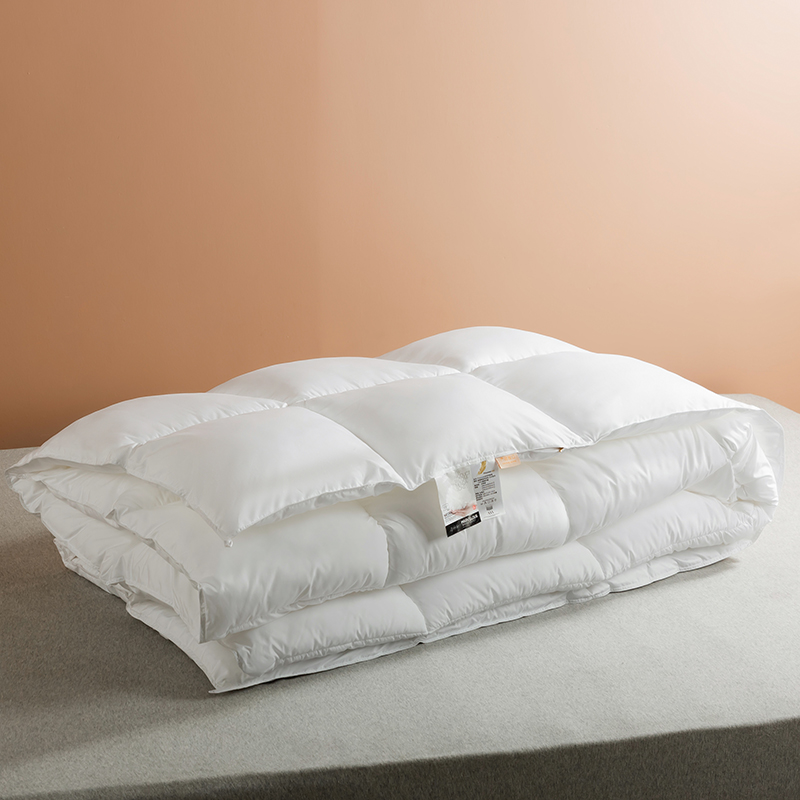 Star Hotel Goose Down Duvet with Cotton ShellA hotel-grade goose down duvet with breathable cotton shell and check quilting that helps maintain even loft through repeated washing.View Product →
Drying Is Where Most People Go Wrong
Washing a down comforter is the easy part. Drying it is where good intentions usually fall apart, because it takes far longer than a normal load of laundry and it cannot be rushed.
- Low heat only. High heat is hard on both the shell and the fill, and it will not speed things up as much as you hope.
- Add two or three dryer balls. Wool balls or clean tennis balls bounce through the drum and break the down back into separate clusters.
- Stop every 20 to 30 minutes and pull the clumps apart by hand. This one habit is the difference between a fluffy comforter and a lumpy one.
- Expect two to four hours. A king-size down comforter can take several cycles, and stopping early is exactly how mildew gets its start.
- If you would rather air dry, lay it flat. Hanging wet down over a line lets the filling slide to the bottom of the shell.
If you can press the comforter flat between your hands and feel no cold, damp patches, it is dry. Any doubt at all, run one more cycle.
Down Pillows Are Even Easier
Pillows fit into almost any machine and dry much faster than a comforter. Wash two at a time so the drum stays balanced, use the same mild detergent and low-heat drying, and give them a pair of dryer balls as well. Most households find twice a year is plenty, and more often if you sleep without a pillow protector.
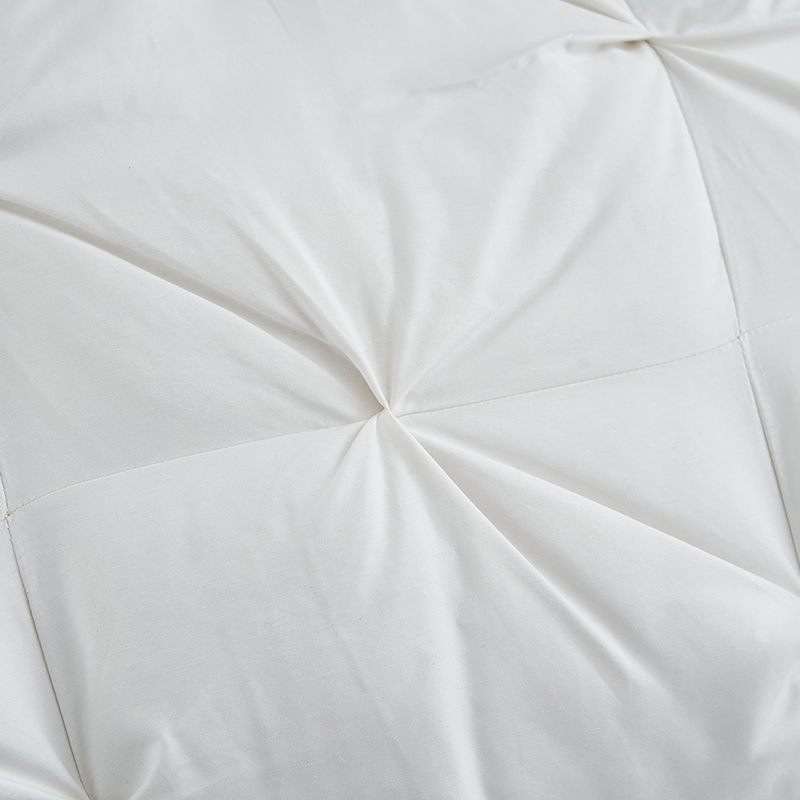 Goose Down Pillow with Twisted Support TechnologyA hotel down pillow with breathable cotton shell and twist filling that adapts to head and neck pressure for back, side, or stomach sleepers.View Product →
When You Should Not Put It in the Wash
There are a few situations where washing is genuinely the wrong call, and it is worth recognising them before you fill the drum:
- The label says dry clean only and the shell is silk, wool or a delicate decorative fabric.
- The comforter already smells musty before washing, which suggests mildew inside the fill.
- There are broken baffles or open seams that you have not repaired yet.
- The comforter is genuinely old and the shell has become thin or brittle.
- Your only option is a small top-loading machine with an agitator that barely fits the comforter.
In any of these cases, a professional cleaner or a replacement comforter will cost less than the damage.
If You Would Rather Not Wash Down at All
Some people simply prefer bedding they can throw in the machine without a second thought, and there is nothing wrong with that. Modern microfiber fills wash and dry in a fraction of the time, handle rougher cycles, and suit allergy-sensitive sleepers who would rather avoid down altogether. A light-and-heavy combination duvet also gives you two weights in one, so you can adjust for the season without buying twice.
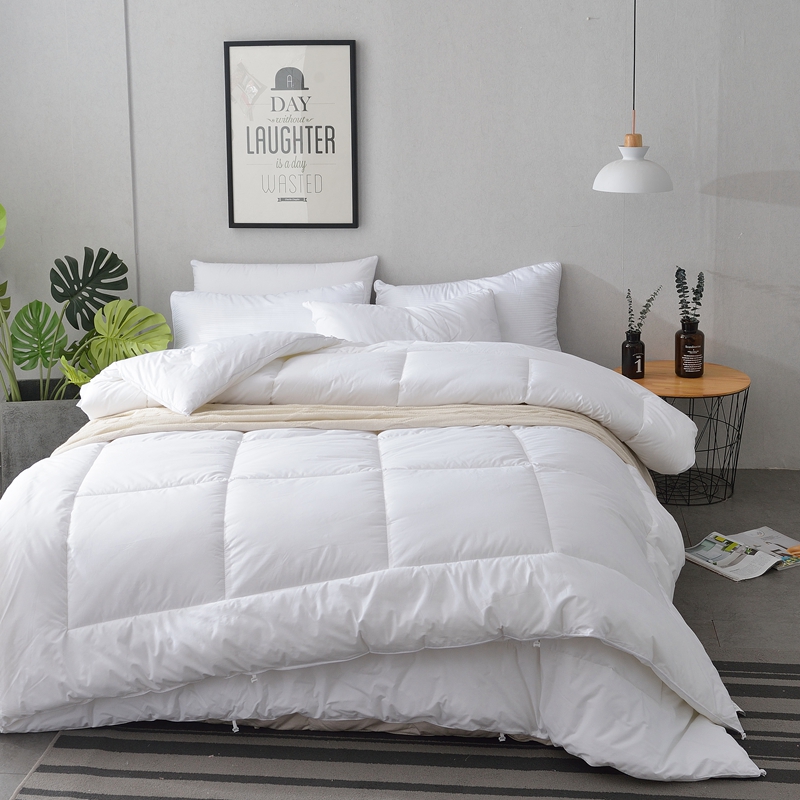 Two-in-One Hotel Microfiber Duvet with Light and Heavy LayersA machine-friendly hotel duvet system pairing lightweight and heavier microfiber layers that can be used separately or combined for seasonal warmth.View Product →
So, are down comforters washable? In short, yes, and the method is not complicated: read the label, mend the seams, wash gently with a mild detergent, rinse well, and dry thoroughly with patience. Do that once a year, keep a duvet cover on it in between, and your comforter will keep its loft for many winters.
If you are choosing new bedding rather than washing old, our guide to choosing the right hotel duvet walks through the fill weights, shell fabrics and construction details that decide how a duvet feels and how well it ages.
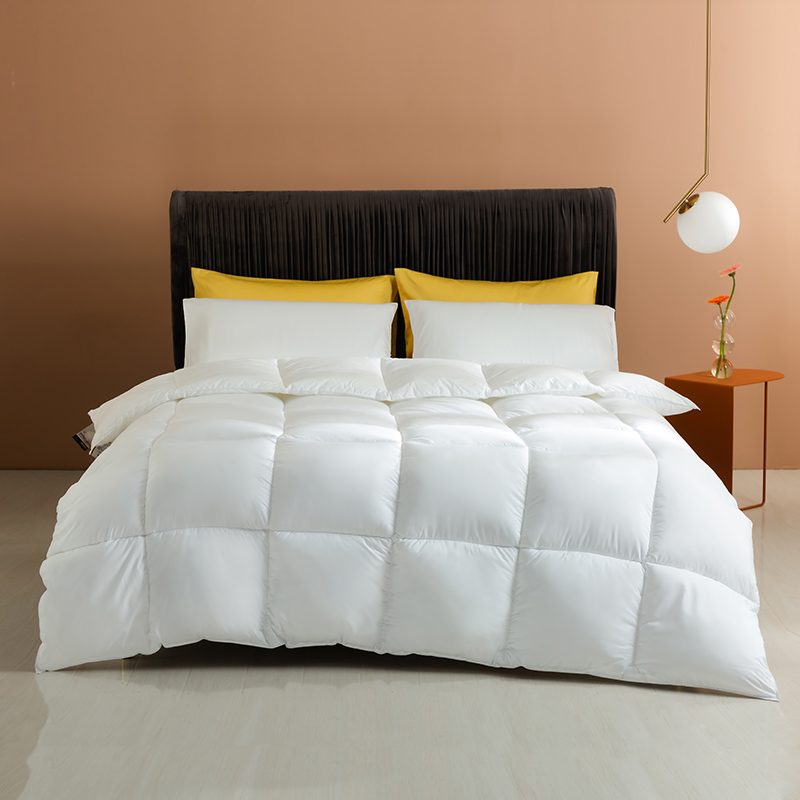



News
-
Hotel Duvet Materials: Microfiber vs Down Explained Introduction to Hotel Duvet Materials Hotel duvets are more than just bedding; they are a critical component of the guest experi...
READ MORE -
Why That Hotel Bed Feels Like Sleeping on a Cloud There's a particular moment every traveler knows. You pull back the crisp white sheets of a luxury hotel bed, sink into the mattre...
READ MORE -
Why Choose Hotel-Style Bedding? Choosing a hotel-style bedding set is one of the easiest ways to instantly elevate your bedroom into a calm, luxurious retreat. Here’s why millions ...
READ MORE

Product List
 Hotel Bedding Set
 +86-180 6864 1189
 +86-(0)513 86311444
 F Zone Chuanjiang Industrial Area, Tongzhou, Nantong City, Jiangsu Province, China