 English
 русский
 Español
 عربى
عربى
Home / News / Industry News / The Ultimate Guide to 5-Star Comfort: Best Hotel Down Duvet for Luxury Sleep at Home
The Ultimate Guide to 5-Star Comfort: Best Hotel Down Duvet for Luxury Sleep at Home


The Ultimate Guide to 5-Star Comfort: Best Hotel Down Duvet for Luxury Sleep at Home
2026-03-04
Content
- 1 Why That Hotel Bed Feels Like Sleeping on a Cloud
- 2 What Makes a Hotel Down Duvet Unique?
- 3 Top 10 Best Hotel Down Duvets Reviewed
- 4 Key Features to Consider Before Buying a Hotel Down Duvet
- 5 How to Care for Your Luxury Hotel Down Duvet
- 6 FAQs
- 6.1 Q1: What fill power do hotels typically use in their down duvets?
- 6.2 Q2: Are hotel down duvets hypoallergenic?
- 6.3 Q3: What is the difference between a duvet and a comforter?
- 6.4 Q4: How do I know if my down duvet has good loft?
- 6.5 Q5: Can I wash my hotel down duvet at home?
- 6.6 Q6: Why do hotel duvets feel heavier yet warmer than regular ones?
- 6.7 Q7: How often should I replace my down duvet?
- 6.8 Q8: Is white goose down worth the premium over duck down?
- 6.9 Q9: What size hotel down duvet should I choose?
- 6.10 Q10: How do I recreate the complete hotel bed experience at home?
Why That Hotel Bed Feels Like Sleeping on a Cloud
There's a particular moment every traveler knows. You pull back the crisp white sheets of a luxury hotel bed, sink into the mattress, and feel the duvet settle over you like a warm, weightless embrace. The room could be anywhere — a Marriott in Manhattan, a Ritz-Carlton overlooking the ocean, a Hilton in the heart of a European city — but that feeling is always the same: pure, effortless comfort. You sleep deeper, longer, and wake up more rested than you do at home. The question most people eventually ask is: why?
The answer, more often than not, comes down to one thing — the hotel down duvet.
Unlike the average bedding you might pick up at a department store, a hotel down duvet is engineered to a precise standard. Luxury hotel chains invest heavily in their sleep experience because they understand a fundamental truth: a guest who sleeps well becomes a loyal guest. The bedding is not an afterthought — it is a core part of the hospitality product. Every element, from the fill power of the down clusters to the weave density of the cotton shell, is chosen with intention.
What makes this even more exciting for the modern consumer is that this level of comfort is no longer exclusive to hotel rooms. The exact duvets used by leading luxury chains — and products built to the same exacting specifications — are now available for home use. With the right knowledge, you can recreate that iconic five-star sleep experience in your own bedroom, every single night.
This guide is designed to give you exactly that knowledge. We will break down what separates a true hotel down duvet from ordinary bedding, review the top 10 products that meet or exceed hotel-grade standards, walk you through the key features to evaluate before buying, and show you how to care for your investment so it lasts for years. Whether you are a frequent traveler chasing that familiar cloud-like feeling at home, or simply someone who refuses to compromise on sleep quality, this is the guide you have been looking for.
"I checked out of the hotel but I couldn't stop thinking about how good the bed felt. Three weeks later, I tracked down the same duvet. Best decision I ever made for my sleep." — Verified customer review
That experience is not luck. It is engineering. And it starts with understanding what goes into a hotel down duvet.
What Makes a Hotel Down Duvet Unique?
Walk into any leading luxury hotel and you will notice that the bed looks almost impossibly inviting. The duvet sits tall, full, and perfectly even across the entire surface. It does not sag in the middle or bunch toward one corner. When you slip beneath it, the warmth envelops you evenly, and yet somehow you never feel too hot. This is not accidental. It is the result of three specific design principles that define every genuine hotel down duvet: high fill power and loft, premium baffle box construction, and a breathable cotton shell. Understanding each of these will permanently change the way you evaluate bedding.
High Fill Power and Loft
Fill power is the single most important number in the world of down bedding, and it is the first metric that luxury hotels use when specifying their duvets. But what exactly does it mean?
Fill power measures the volume in cubic inches that one ounce of down occupies. A higher fill power means that each ounce of down expands to fill more space — which translates directly into a lighter, fluffier, and more thermally efficient duvet. A low-quality duvet might use a fill power of 300–400, which requires significantly more down to achieve the same warmth, resulting in a heavier, denser product. Hotel-grade duvets consistently operate in a much higher range.
Fill Power Comparison Chart:
| Fill Power Rating | Quality Tier | Loft Level | Weight Feel | Typical Use |
|---|---|---|---|---|
| 300 – 400 | Entry-level | Low | Heavy | Budget bedding |
| 500 – 550 | Mid-range | Moderate | Medium | Standard home use |
| 600 – 650 | Hotel-grade | High | Light | Luxury hotels, quality home use |
| 700 – 750 | Premium | Very High | Very Light | Upscale hotels, premium retail |
| 800+ | Ultra-premium | Exceptional | Ultralight | Ritz-Carlton tier, expedition gear |
Luxury hotel chains typically specify duvets in the 600 to 750 fill power range. This sweet spot delivers maximum loft — that signature cloud-like rise you see when the housekeeper smooths the bed — while keeping the duvet lightweight enough that sleepers never feel pinned down or overheated.
Loft itself refers to the physical height and fullness that a duvet achieves when it is laid flat and allowed to expand naturally. A high-loft duvet not only looks visually impressive but performs better thermally, because the air trapped within the down clusters acts as an insulating layer. The more loft, the more warm air retained, and the better the duvet regulates your body temperature through the night.
It is also worth noting that fill power is a measure of quality, not quantity. A 700 fill power duvet filled with four ounces of down will be lighter and loftier than a 400 fill power duvet filled with eight ounces — and yet the lower-quality product will feel heavier and perform worse. This is a critical distinction that hotel procurement teams understand well, and one that every consumer should internalize before making a purchase.
Premium Baffle Box Construction
Once the right down has been selected, the next question is how to keep it in place. This is where construction becomes critical — and where hotel duvets part ways decisively with mass-market alternatives.
The two primary construction methods for down duvets are sewn-through and baffle box.
Sewn-Through Construction stitches the top and bottom panels of the duvet directly together at regular intervals, creating a grid of flat, sealed chambers. It is simple and inexpensive to manufacture, but it has a significant flaw: the stitching compresses the down at every seam, creating cold spots where insulation is minimal. You can often feel these ridges through the duvet, and the fill tends to migrate toward the center of each channel over time.
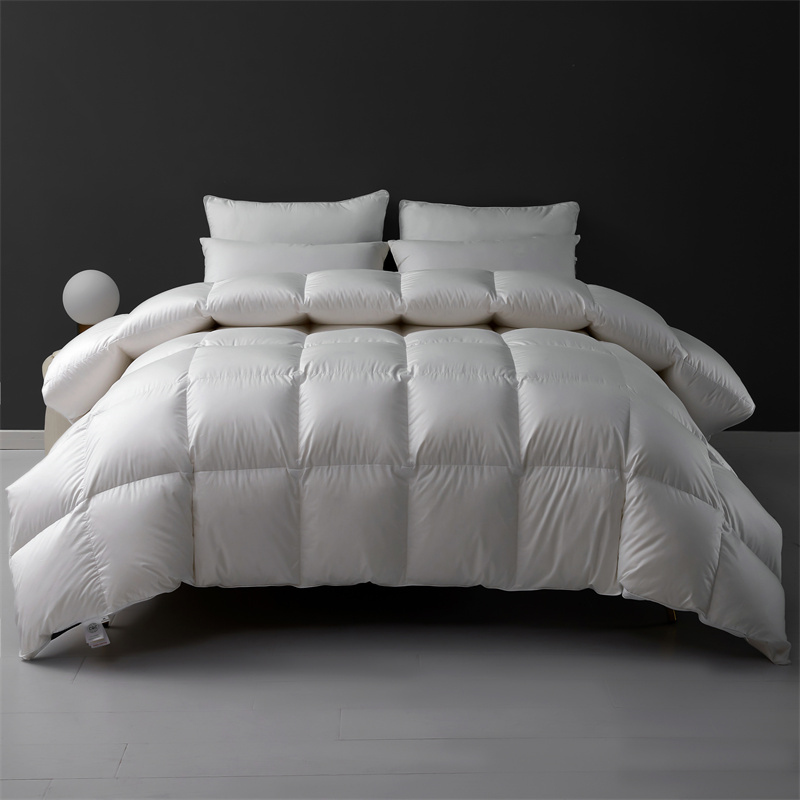
Baffle Box Construction takes a fundamentally different approach. Instead of stitching the top and bottom panels directly together, fabric walls (called baffles) are sewn between the panels, creating three-dimensional box-shaped chambers. The down sits inside these boxes with full vertical space to expand, and the baffles prevent it from shifting into neighboring sections.
Sewn-Through vs. Baffle Box — Direct Comparison:
| Feature | Sewn-Through | Baffle Box |
|---|---|---|
| Construction complexity | Simple | Advanced |
| Cold spots at seams | Yes | No |
| Down migration over time | High | Minimal |
| Loft consistency | Uneven | Uniform across surface |
| Duvet lifespan | Shorter | Longer |
| Price point | Lower | Higher |
| Used in luxury hotels | Rarely | Almost universally |
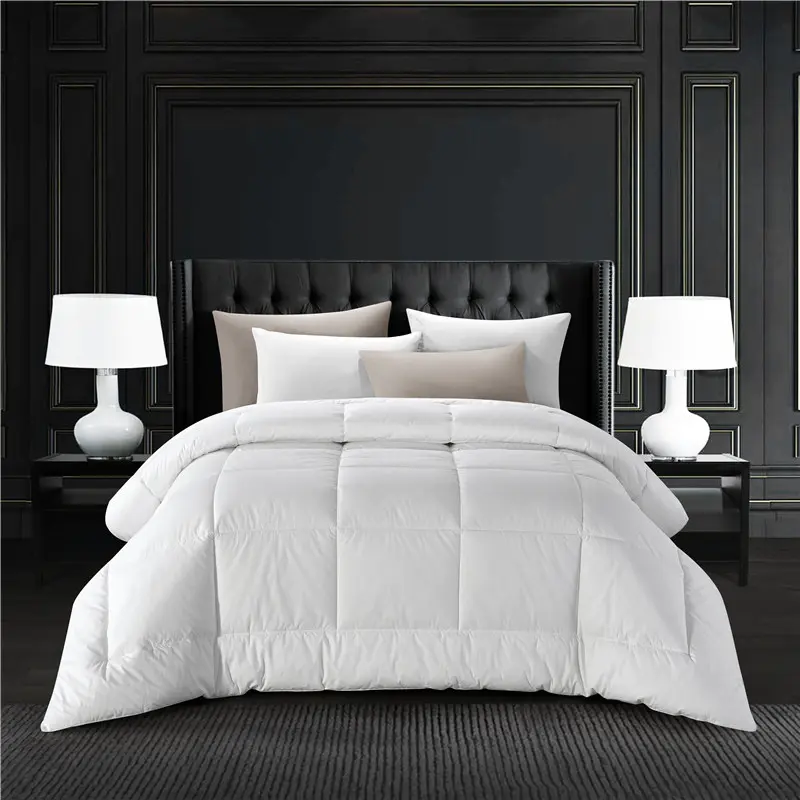
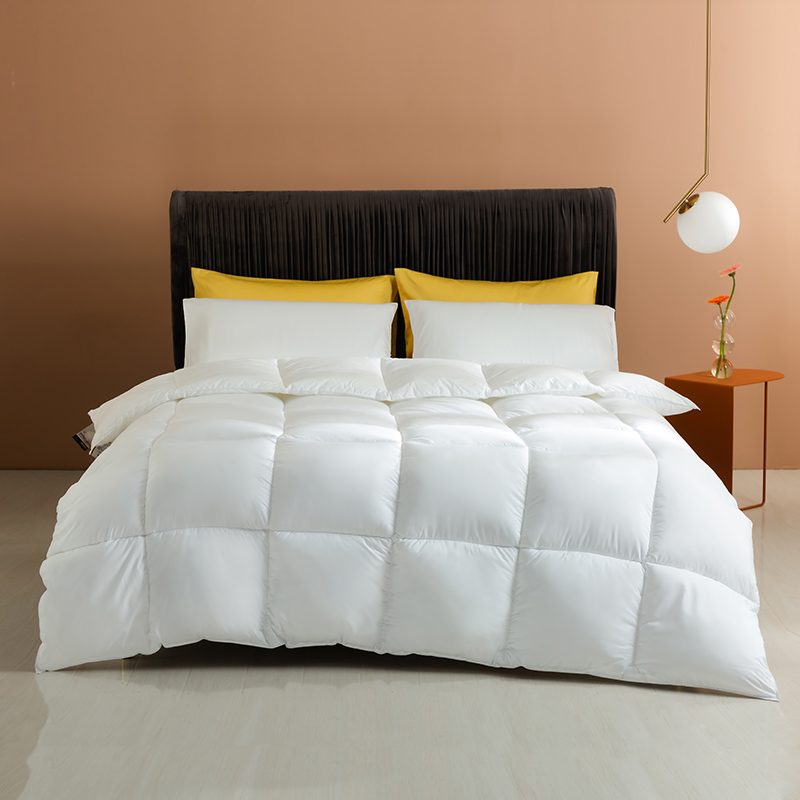
Every reputable hotel down duvet uses baffle box construction. The reason is simple: it is the only method that delivers the consistent, edge-to-edge warmth and loft that defines the hotel sleep experience. When you look at a well-made hotel duvet from above, you can see the neat grid of raised boxes — each one filled with down that has been given the room it needs to do its job properly.
The size of the boxes also matters. Larger baffle boxes (typically 4–6 inches square) allow individual down clusters more freedom to expand fully, which further enhances loft and thermal performance. Smaller boxes can restrict expansion slightly but offer more precise fill distribution. Hotel-grade duvets tend to use boxes in the 4–5 inch range as the optimal balance.
Breathable Cotton Shells
The shell of a hotel down duvet — the outer fabric that encases all that premium fill — is far from a finishing detail. It plays a direct role in how the duvet feels against the skin, how well it breathes through the night, and how effectively it prevents down from escaping.
Luxury hotels almost exclusively use 100% cotton shells, and for good reason. Cotton is naturally breathable, moisture-wicking, and soft to the touch. It allows air to circulate through the duvet while still maintaining the insulating cocoon created by the down fill. Synthetic shell fabrics may be less expensive, but they trap heat and moisture in ways that undermine the temperature-regulating benefits of high-quality down.
Within cotton shells, thread count and weave type further define quality:
Thread Count Guide for Duvet Shells:
| Thread Count | Feel | Breathability | Down-Proof Rating | Best For |
|---|---|---|---|---|
| Under 200 | Rough | High | Low (down leaks) | Not recommended |
| 200 – 300 | Smooth | Very High | Moderate | Budget options |
| 300 – 400 | Soft, crisp | High | Good | Quality home use |
| 400 – 500 | Very soft | Moderate-High | Excellent | Hotel-grade standard |
| 500 – 600 | Silky | Moderate | Excellent | Premium hotel bedding |
| 600+ | Ultra-silky | Lower | Excellent | Luxury/sateen products |
The ideal range for a hotel down duvet shell falls between 300 and 500 thread count. Below this range, the weave is too open to reliably contain fine down clusters, leading to the frustrating "duvet poke" where individual fibers escape through the fabric. Above 600, the weave becomes so dense that breathability begins to suffer.
Egyptian Cotton is the most prized shell material in luxury hotel bedding. Grown in the Nile Delta, Egyptian cotton fibers are naturally longer than standard cotton, which allows them to be spun into finer, stronger yarns. The result is a fabric that is simultaneously softer, more durable, and more breathable than conventional cotton — qualities that justify the premium price point of the finest hotel duvets.
Weave type is the other key variable:
| Weave Type | Texture | Breathability | Typical Use |
|---|---|---|---|
| Percale | Crisp, matte | Excellent | Classic hotel look and feel |
| Sateen | Silky, lustrous | Good | Luxury and premium products |
| Twill | Durable, soft | Good | High-use hotel environments |
| Down-Proof Percale | Crisp, tight | Good | Specifically engineered to prevent down leakage |
Most hotel down duvets use a down-proof percale weave — a tightly woven cotton that combines the crisp, breathable qualities of percale with a construction designed to prevent even the finest down clusters from working their way through the fabric. This is the weave you will find encasing the fill in the best hotel bedding programs worldwide.
Finally, certifications matter. The Oeko-Tex Standard 100 certification guarantees that every component of the duvet — shell, fill, thread, and dyes — has been tested for harmful substances and found safe for skin contact. When a hotel down duvet carries this certification, it signals a commitment to quality and consumer safety that goes beyond marketing language. Look for it on any duvet you are seriously considering.
Top 10 Best Hotel Down Duvets Reviewed
Choosing the right hotel down duvet is an investment in your sleep quality, and with so many options claiming hotel-grade credentials, it pays to know exactly what you are getting. The ten products reviewed below have been selected based on fill power specifications, construction quality, shell material, third-party certifications, and real-world user feedback. Each one meets or exceeds the standards used by leading luxury hotel chains.
Before diving into individual reviews, here is a full comparison overview to help you navigate the field at a glance.
Top 10 Hotel Down Duvets — Master Comparison Table:
| Rank | Product | Fill Power | Fill Type | Shell Material | Construction | Key Certification | Best For |
|---|---|---|---|---|---|---|---|
| 1 | Marriott Down Comforter | 650 | White Goose Down | 300TC Cotton | Baffle Box | Oeko-Tex 100 | Authentic hotel experience |
| 2 | Pacific Coast Hotel Baffle Box | 600 | White Goose Down | 300TC Barrier Weave | Baffle Box | RDS | Value luxury |
| 3 | Brooklinen All-Season Down Duvet | 650 | White Duck Down | 400TC Sateen Cotton | Baffle Box | RDS, Oeko-Tex | DTC luxury |
| 4 | Boll & Branch Reserve Down Duvet | 700 | White Goose Down | 400TC Organic Cotton | Baffle Box | RDS, GOTS | Sustainable luxury |
| 5 | Parachute Home Luxury Down Duvet | 650 | White Duck Down | 400TC Percale Cotton | Baffle Box | Oeko-Tex 100 | Modern minimalist |
| 6 | The Company Store Legends Hotel Geneve | 700+ | White Goose Down | 500TC Cotton Sateen | Baffle Box | RDS | High fill power seekers |
| 7 | Hilton Down Comforter | 600 | White Goose Down | 300TC Cotton Percale | Baffle Box | Oeko-Tex 100 | Signature hotel feel |
| 8 | Ritz-Carlton Pacific Coast Down Duvet | 750 | White Goose Down | 500TC Egyptian Cotton | Baffle Box | RDS, Oeko-Tex | Ultimate opulence |
| 9 | Snowe Down Sateen Comforter | 650 | White Duck Down | 500TC Cotton Sateen | Baffle Box | Oeko-Tex 100 | Silky touch preference |
| 10 | Casper Humidity Fighting Duvet | 600 | White Duck Down | 400TC Percale Cotton | Baffle Box | Oeko-Tex 100 | Hot sleepers |
Key Features to Consider Before Buying a Hotel Down Duvet
Choosing the right hotel down duvet is not simply a matter of picking the highest fill power or the most recognizable brand name. The best duvet for you depends on a precise combination of personal sleep preferences, climate, body type, and lifestyle priorities. This section breaks down every key variable you need to evaluate before making your decision — giving you the same framework that luxury hotel procurement teams use when specifying bedding for their properties.
Fill Power vs. Fill Weight
These two terms are frequently confused, even by experienced bedding shoppers. They measure entirely different things, and understanding the distinction is fundamental to choosing a hotel down duvet that performs the way you expect.
Fill Power measures the quality and loft potential of the down itself — specifically, how many cubic inches one ounce of down occupies when fully expanded. It is a measure of the down cluster's size, resilience, and ability to trap air. Higher fill power means better quality down, better loft, better warmth-to-weight ratio, and longer lifespan.
Fill Weight measures the total quantity of down inside the duvet — the actual number of ounces or grams of fill used in construction. It determines how warm the duvet will be in absolute terms, regardless of fill power. A duvet with a high fill weight will be warmer (and heavier) than one with a low fill weight, even if both use the same fill power down.
Fill Power vs. Fill Weight — Interaction Matrix:
| Scenario | Fill Power | Fill Weight | Result |
|---|---|---|---|
| Hotel standard | High (650–700) | Moderate | Light, lofty, ideally warm |
| Budget duvet | Low (300–400) | High | Heavy, dense, inconsistent warmth |
| Summer duvet | High (650+) | Low | Light, minimal warmth, maximum breathability |
| Winter duvet | High (650+) | High | Lofty AND warm — the premium combination |
| Common mistake | Low (300–400) | Low | Neither warm nor lofty — avoid |
Recommended Fill Weight by Sleeper Type:
| Sleeper Profile | Recommended Fill Weight (Queen size) | Notes |
|---|---|---|
| Hot sleeper | 12–16 oz | Prioritize breathable shell |
| Average sleeper | 16–22 oz | Most hotel duvets fall here |
| Cold sleeper | 22–28 oz | Pair with high fill power for best result |
| Cold climate, winter primary | 28–32 oz | Maximum warmth configuration |
The most common mistake consumers make is assuming that a heavier duvet is automatically a warmer or better-quality one. A 700 fill power duvet filled with 18 ounces of down will be lighter than a 400 fill power duvet filled with 28 ounces — and yet it will perform better thermally, loft more dramatically, and last significantly longer. This is precisely why luxury hotels invest in high fill power rather than simply adding more fill.
Goose Down vs. Duck Down
The second major material decision in any hotel down duvet purchase is the species source of the down fill. Both goose down and duck down are natural insulating materials, but they differ in meaningful ways that affect both performance and price.
Down clusters — the soft, three-dimensional filaments that radiate outward from a central point — are larger in geese than in ducks. This is simply a matter of animal biology: geese are larger birds with correspondingly larger down clusters. Larger clusters trap more air per unit of weight, which translates directly into higher fill power potential and better loft longevity over time.
Goose Down vs. Duck Down — Full Comparison:
| Attribute | White Goose Down | White Duck Down |
|---|---|---|
| Cluster size | Larger | Smaller |
| Maximum achievable fill power | 900+ | 700–750 (practical ceiling) |
| Loft longevity | Superior | Good |
| Natural odor | Minimal | Slightly more present (especially when damp) |
| Hypoallergenic potential | High (when properly washed) | High (when properly washed) |
| Price point | Higher | More accessible |
| Typical hotel usage | Ultra-luxury and premium brands | Mid-tier and value hotel programs |
| Color | White (preferred for light shells) | White or grey |
Why Color Matters: White down — whether from geese or ducks — is preferred for hotel duvets with light-colored cotton shells because dark or grey down clusters can sometimes show through pale fabric, creating an uneven visual appearance. This is a quality control detail that premium hotel bedding programs pay close attention to, and it is reflected in the specifications of every product reviewed in this guide.
When Duck Down Makes Sense: Duck down should not be dismissed as an inferior option. At fill powers of 600–650, high-quality white duck down performs comparably to goose down in the same range for most sleepers in most conditions. The difference becomes more pronounced at the ultra-premium tier (700+), where goose down's larger cluster size gives it a clear advantage. For consumers working within a defined budget, a well-sourced 650 fill power white duck down duvet will deliver an authentically hotel-grade experience at a meaningfully lower price than an equivalent goose down product.
Odor Considerations: One of the most common concerns about down duvets — particularly duck down — is natural odor. All down has a faint animal scent that can become more noticeable when the duvet is first unpacked or when it becomes damp. High-quality processing, including thorough washing and sterilization of the down clusters before filling, eliminates virtually all of this odor in premium products. When you purchase a certified hotel down duvet from a reputable supplier, residual odor should be negligible. If a new duvet has a strong smell that persists after airing, it is a reliable indicator of inadequate processing — which is itself a quality red flag.
Thread Count and Fabric Type
The shell of your hotel down duvet is the element you interact with most directly — it is what your hands feel when you pull the duvet over yourself, what rests against your skin if you sleep without a cover, and what determines how well the duvet breathes through the night. Shell quality deserves as much attention as fill quality.
Thread count measures the number of horizontal and vertical threads woven into one square inch of fabric. It is a useful quality indicator within a specific range, but it is frequently misunderstood and actively misused in marketing. Beyond a certain point, higher thread count does not mean better quality — it can actually indicate the use of thinner, weaker multi-ply yarns that inflate the count number without improving the fabric.
Thread Count Performance Guide for Hotel Down Duvet Shells:
| Thread Count | Fabric Feel | Breathability | Down Containment | Durability | Verdict |
|---|---|---|---|---|---|
| Below 200 | Rough, coarse | High | Poor (down leaks) | Low | Avoid |
| 200–280 | Basic, functional | High | Moderate | Moderate | Budget only |
| 300–360 | Smooth, crisp | Very Good | Good | Good | Solid hotel standard |
| 380–440 | Soft, refined | Good | Excellent | Very Good | Premium hotel standard |
| 460–540 | Very soft, dense | Moderate | Excellent | Excellent | Luxury tier |
| 540–600 | Silky, lustrous | Moderate | Excellent | Excellent | Ultra-premium |
| 600+ | Ultra-silky | Lower | Excellent | Variable | Sateen/luxury specific |
The 300–500 thread count range represents the genuine sweet spot for hotel down duvet shells. This is where breathability, containment, softness, and durability intersect most effectively — which is precisely why the vast majority of hotel bedding programs operate within this window.
Fabric Type Comparison:
| Fabric Type | Weave Structure | Surface Feel | Breathability | Sheen | Best Climate |
|---|---|---|---|---|---|
| Percale Cotton | Plain (1-over-1) | Crisp, cool, matte | Excellent | None | Warm / all-season |
| Sateen Cotton | Satin (4-over-1) | Smooth, silky | Good | Subtle luster | Cool / all-season |
| Egyptian Cotton Percale | Plain (long-staple) | Crisp but softer | Excellent | None | Warm / all-season |
| Egyptian Cotton Sateen | Satin (long-staple) | Ultra-silky | Good | Pronounced | Cool / all-season |
| Down-Proof Percale | Tight plain weave | Crisp, functional | Good | None | All climates |
| Twill | Diagonal weave | Soft, durable | Good | Slight | All climates |
Regardless of thread count or weave type, a hotel down duvet shell must be down-proof — meaning the weave must be tight enough to prevent even the finest down filaments from working their way through the fabric. This is tested by manufacturers and expressed as a down-proof rating. In genuine hotel-grade duvets, the shell will always meet a minimum down-proof standard, which typically requires a thread count of at least 280 with a tight weave. Below this threshold, you will inevitably find loose down fibers on your sheets and pajamas — an irritation that no amount of fill power can compensate for.
Hypoallergenic and Certification Standards
One of the most persistent misconceptions about hotel down duvets is that they are inherently problematic for allergy sufferers. The reality is more nuanced — and more reassuring — than the conventional wisdom suggests.
What Actually Causes Down Allergies: True allergic reactions to down itself are relatively rare. In the majority of cases, what people describe as a "down allergy" is actually a reaction to one or more of the following:
| Perceived Cause | Actual Cause | Solution |
|---|---|---|
| "I'm allergic to down" | Usually dust mites living in the bedding | Wash at 60°C regularly, use dust-mite-proof cover |
| "The duvet makes me sneeze" | Residual proteins from poorly processed down | Choose RDS-certified, thoroughly washed down |
| "I react to the fabric" | Chemical residues from dyes or finishing agents | Choose Oeko-Tex Standard 100 certified shell |
| "I've always had this problem with feathers" | True feather quill allergy (rare, distinct from down) | Down itself may still be tolerable — test carefully |
| Confirmed down protein allergy | Genuine IgE-mediated allergy to avian proteins | Synthetic fill alternative required |
Key Certifications Explained:
| Certification | Issuing Body | What It Verifies | Relevance to Allergy Sufferers |
|---|---|---|---|
| Oeko-Tex Standard 100 | OEKO-TEX Association | Every component tested and free from harmful substances | High — eliminates chemical irritants in shell |
| Responsible Down Standard (RDS) | Textile Exchange | Ethical animal welfare throughout supply chain | Indirect — better welfare often correlates with better processing |
| Global Organic Textile Standard (GOTS) | GOTS Organization | Organic textile supply chain integrity | High — eliminates pesticide residues in cotton shell |
| Downmark | International Down and Feather Bureau | Accurate labeling of down content and fill power | Moderate — quality assurance indicator |
Hypoallergenic Claim Evaluation: The term "hypoallergenic" is used liberally in bedding marketing, but it has no single regulatory definition. When evaluating a hotel down duvet marketed as hypoallergenic, look for these specific indicators rather than the marketing term alone:
| Indicator | What to Look For |
|---|---|
| Down washing process | "Thoroughly washed" or specific wash cycle descriptions |
| Oeko-Tex certification | Present on product labeling or specification sheet |
| Shell thread count | 300TC minimum to prevent dust mite penetration |
| Care instructions | Machine washable at 60°C or higher (kills dust mites) |
| Customer reviews | Specific mentions from known allergy sufferers |
For the small percentage of consumers with a genuine feather or down protein allergy (confirmed by allergy testing), a hotel down alternative duvet — filled with microfiber or other synthetic materials engineered to mimic down's loft and feel — is the appropriate solution. However, before making that assumption, it is always worth trying a properly certified genuine down product first. The results for most self-described "down allergy" sufferers are frequently surprising.
How to Care for Your Luxury Hotel Down Duvet
Investing in a premium hotel down duvet is a long-term commitment. The finest down duvets, properly maintained, will deliver exceptional performance for ten to fifteen years. Neglected, even the highest quality duvet will lose its loft, develop odors, and deteriorate far ahead of its natural lifespan. The good news is that caring for a hotel down duvet correctly is not complicated — it simply requires following a few specific practices consistently.
Daily and Weekly Maintenance
The simplest and most effective daily habit for preserving your hotel down duvet is airing. Each morning, rather than making the bed immediately, pull the duvet back and allow it to breathe for ten to fifteen minutes. This releases the moisture accumulated from body heat and perspiration during the night, preventing the damp conditions in which dust mites thrive and mold can develop.
Daily and Weekly Care Checklist:
| Task | Frequency | Purpose |
|---|---|---|
| Air the duvet (fold back from bed) | Daily — 10–15 minutes | Release overnight moisture |
| Shake and re-fluff | Daily | Redistribute fill, restore loft |
| Use a duvet cover | Always | Protect shell from soiling and abrasion |
| Wash duvet cover | Every 1–2 weeks | Maintain hygiene at the primary contact layer |
| Spot clean shell if needed | As required | Address isolated soiling without full wash |
Using a duvet cover is not optional for a hotel down duvet — it is essential. The duvet cover absorbs the vast majority of body oils, sweat, and environmental dust before they reach the duvet shell. A duvet that is used without a cover will require full washing far more frequently, which accelerates wear on both the shell and the fill. Every luxury hotel protects its duvets with a cover for exactly this reason.
Washing Your Hotel Down Duvet
Even with a duvet cover and regular airing, your hotel down duvet will need a full wash periodically. For most home users, two to three times per year is appropriate. Seasonal transitions — spring and autumn — are natural points to schedule a wash.
Complete Washing Guide:
| Step | Instruction | Why It Matters |
|---|---|---|
| Check care label | Follow manufacturer's specific guidance first | Some premium shells have specific requirements |
| Machine selection | Front-loading drum washer only | Agitator top-loaders can damage baffle box stitching |
| Drum size | Minimum 8kg capacity | Down needs space to move freely during washing |
| Water temperature | 30–40°C (86–104°F) | Cleans effectively without damaging down clusters |
| Detergent type | Specialist down wash detergent | Standard detergents strip the natural oils from down clusters |
| Detergent quantity | Half the normal amount | Excess detergent is difficult to rinse from thick fill |
| Spin cycle | Low speed | High spin can stress baffle box seams |
| Rinse cycles | Two full rinse cycles | Ensures complete detergent removal |
What to Avoid:
| Action | Risk |
|---|---|
| Using standard laundry detergent | Strips natural lanolin oils from down, reducing loft and lifespan |
| Washing in cold water | Insufficient to kill dust mites or remove body oils effectively |
| Top-loading agitator machine | Mechanical agitation tears baffle stitching and damages fill |
| Wringing or twisting when wet | Permanently damages down clusters and shell fabric |
| Dry cleaning with harsh solvents | Chemical residues damage down and shell |
Drying — The Most Critical Step
Drying is where most people make mistakes with their hotel down duvet, and where the most damage typically occurs. Down that is not completely dry before storage or use will develop mold, mildew, and permanent odor — conditions that cannot be reversed. This step requires patience.
Complete Drying Protocol:
| Step | Action | Detail |
|---|---|---|
| Initial tumble dry | Low heat setting | Begin the drying process gently |
| Add dryer balls | 2–3 clean tennis balls or wool dryer balls | Break up clumping down clusters as they dry |
| Drying duration | 2–3 hours minimum | Down holds moisture far longer than it appears to |
| Mid-cycle check | Remove, shake, redistribute fill manually | Prevents fill from remaining bunched in corners |
| The "dry test" | Squeeze a section firmly — it must spring back completely | Any dense, damp sections need more drying time |
| Final check | Smell the duvet — no musty notes should be present | Any mustiness indicates remaining moisture |
| Air finishing | Lay flat or hang in fresh air for 1–2 hours after tumble dry | Allows any residual moisture to evaporate fully |
Drying Temperature Guide:
| Temperature Setting | Effect on Down | Recommendation |
|---|---|---|
| No heat / Air only | Safe but very slow | Use only for final air-dry stage |
| Low heat (40–50°C) | Ideal — gentle and effective | Primary drying setting |
| Medium heat (60°C) | Acceptable for short periods | Use cautiously, check frequently |
| High heat (70°C+) | Damages down clusters and shell fabric | Avoid entirely |
The dryer ball technique deserves specific emphasis. As down dries, the clusters clump together into dense masses that the outer layers of heat cannot penetrate. Dryer balls — whether wool or clean tennis balls — physically break these clumps apart with each tumble cycle, exposing the interior clusters to the drying air. Without them, you will consistently pull a duvet from the dryer that feels dry on the outside but contains damp, compressed fill at its core.
Storage
Proper storage during periods of non-use — typically summer months for a winter-weight duvet — is the final element of a complete care routine.
Storage Comparison:
| Storage Method | Effect on Down | Recommendation |
|---|---|---|
| Large breathable cotton bag | Allows air circulation, maintains loft | Best option |
| Original packaging (large box) | Adequate if breathable | Good option |
| Linen closet, loosely folded | Acceptable for short periods | Acceptable |
| Plastic bag (sealed) | Traps moisture, compresses fill permanently | Avoid entirely |
| Vacuum compression bag | Destroys down clusters through extreme compression | Never use |
The single most damaging thing you can do to a hotel down duvet is store it in a sealed plastic or vacuum compression bag. Down clusters are three-dimensional structures that derive their insulating power from their physical shape. Extended compression — particularly in a moisture-trapping sealed environment — permanently deforms these structures. A duvet stored this way for a season will emerge flat, dense, and incapable of recovering its original loft regardless of how long it is aired or tumbled.
Ideal Storage Conditions:
| Condition | Target |
|---|---|
| Container type | Breathable fabric bag (cotton or linen) |
| Storage location | Cool, dry, dark space |
| Humidity level | Below 50% relative humidity |
| Duration before use | Air and tumble dry before returning to bed |
| Moth protection | Cedar blocks or lavender sachets (not mothballs — chemical odor) |
Lifespan and Replacement Indicators
A well-maintained hotel down duvet from a reputable manufacturer should deliver excellent performance for ten to fifteen years. Hotels themselves typically replace their duvets on a three to five year cycle — not because the bedding has failed, but because the high-frequency commercial washing schedule accelerates wear beyond what home use produces.
Signs Your Hotel Down Duvet Needs Replacing:
| Indicator | Description | Action |
|---|---|---|
| Persistent flat sections | Fill no longer recovers loft after airing and drying | Replace — fill clusters have broken down |
| Permanent musty odor | Survives washing and drying | Replace — mold or mildew has established in fill |
| Visible fill clumping | Dense, irregular lumps that cannot be broken up | Replace — clusters are degraded |
| Shell thinning or pilling | Fabric becomes worn, rough, or translucent | Replace — shell integrity is compromised |
| Reduced warmth | Noticeably less insulating than when new | Replace — fill density has deteriorated |
| Loft height under 50% of original | Visual assessment when laid flat | Replace — structural life is at end |
FAQs
The following questions represent the most common concerns, misconceptions, and knowledge gaps that consumers encounter when researching a hotel down duvet purchase. Each answer is designed to give you clear, practical information grounded in the same technical standards used by luxury hotel bedding programs worldwide.
Q1: What fill power do hotels typically use in their down duvets?
The majority of luxury hotel chains specify hotel down duvets in the 600 to 750 fill power range, with the precise number depending on the brand's positioning and target sleep experience.
Hotel Tier vs. Typical Fill Power:
| Hotel Tier | Typical Fill Power Range | Example Positioning |
|---|---|---|
| Budget / Economy hotels | 300 – 450 | Basic warmth, high durability priority |
| Midscale hotels | 450 – 550 | Functional comfort, cost-managed |
| Upscale hotels | 550 – 650 | Genuine hotel-grade loft and warmth |
| Luxury hotels | 650 – 700 | Premium sleep experience, brand differentiation |
| Ultra-luxury hotels | 700 – 750+ | Maximum loft, finest fill quality, full certification |
The 600–650 range is the most widely used across global upscale and luxury hotel programs because it delivers the recognizable cloud-like loft and warmth that guests associate with a great hotel sleep, while remaining practical for the high-frequency washing that commercial hospitality demands. Ultra-luxury brands such as Ritz-Carlton typically operate at 700–750, where the difference in loft and warmth-to-weight ratio is genuinely perceptible to even a casual sleeper.
For home use, a 650 fill power white goose down duvet with baffle box construction replicates the experience of the vast majority of high-end hotel beds with exceptional accuracy. If you tend to sleep cold or want the most dramatic loft possible, stepping up to 700+ is a worthwhile investment.
Q2: Are hotel down duvets hypoallergenic?
This is one of the most misunderstood questions in bedding, and the answer requires a clear distinction between different types of reactions. Premium hotel down duvets — those carrying Oeko-Tex Standard 100 certification and using thoroughly processed down — are hypoallergenic for the overwhelming majority of users, including most people who believe they are sensitive to down.
The Real Sources of "Down Allergies":
| Perceived Cause | Actual Cause | Solution |
|---|---|---|
| "I'm allergic to down" | Usually dust mites living in the bedding | Wash at 60°C regularly, use dust-mite-proof cover |
| "The duvet makes me sneeze" | Residual proteins from poorly processed down | Choose RDS-certified, thoroughly washed down |
| "I react to the fabric" | Chemical residues from dyes or finishing agents | Choose Oeko-Tex Standard 100 certified shell |
| "I've always had this problem with feathers" | True feather quill allergy (rare, distinct from down) | Down itself may still be tolerable — test carefully |
| Confirmed down protein allergy | Genuine IgE-mediated allergy to avian proteins | Synthetic fill alternative required |
Practical Guidance by Sensitivity Level:
| Sensitivity Profile | Recommended Approach |
|---|---|
| Mild seasonal allergies | Oeko-Tex certified hotel down duvet + regular washing |
| Self-described "down sensitivity" | Try RDS-certified, thoroughly washed down before assuming incompatibility |
| Known dust mite allergy | Hotel down duvet + dust-mite-proof duvet cover + 60°C wash cycle |
| Confirmed avian protein allergy (tested) | Down alternative duvet required |
Q3: What is the difference between a duvet and a comforter?
These two terms are frequently used interchangeably, particularly in North American markets, but they describe different products with distinct usage systems.
Duvet vs. Comforter — Core Differences:
| Attribute | Duvet (Duvet Insert) | Comforter |
|---|---|---|
| Definition | A plain insert designed to be used inside a removable cover | A finished, self-contained bedding item with decorative exterior |
| Used with cover | Yes — always used inside a duvet cover | Optional — often used directly on the bed |
| Washing frequency | Cover washed regularly; insert washed 2–3x per year | Entire piece must be washed |
| Design flexibility | Change look by changing cover | Fixed appearance |
| Typical fill | Down or down alternative | Down, down alternative, or synthetic |
| Hotel industry standard | Duvet insert + white cover system | Less common in luxury hotels |
| Price point | Insert and cover purchased separately | Single purchase |
The hotel industry overwhelmingly favors the duvet system — a plain white insert inside a crisp white duvet cover — for two practical reasons. First, the cover can be laundered after every guest without subjecting the down insert to unnecessary wear. Second, the system allows for fast, standardized bed-making that consistently produces the immaculate visual result guests expect.
Q4: How do I know if my down duvet has good loft?
Loft is both a visual and tactile quality, and testing it does not require any specialist equipment. There are several simple assessments you can perform at home.
The Home Loft Assessment Tests:
| Test | Method | What Good Loft Looks / Feels Like |
|---|---|---|
| Visual flat test | Lay duvet flat on bed, allow 30 minutes to expand fully | Surface should rise evenly to 4–6+ inches, no flat sections |
| Hand compression test | Press firmly with both hands into the center, then release | Should spring back to full height within 2–3 seconds |
| Corner fill test | Squeeze each corner firmly | Fill should be present and resilient in all four corners equally |
| Edge distribution test | Run hand along all edges | No empty or flat zones — fill should reach all perimeters |
| Post-wash loft test | Assess immediately after tumble drying with dryer balls | Should return to pre-wash loft level fully |
Loft Decline Over Time — What Is Normal:
| Timeframe | Expected Loft Retention | Action Required |
|---|---|---|
| First 6 months | 100% — full original loft | Routine airing only |
| 1–3 years | 90–95% — negligible change | Regular washing maintains performance |
| 3–7 years | 80–90% — slight softening | Annual professional cleaning beneficial |
| 7–10 years | 70–80% — noticeable reduction | Assess whether performance still meets needs |
| 10–15 years | 60–70% — meaningful reduction | Consider replacement |
| 15+ years | Below 60% | Replace — fill clusters have exceeded useful life |
Q5: Can I wash my hotel down duvet at home?
Yes — with the right equipment and technique. Home washing is entirely appropriate for most hotel down duvets and, done correctly, will not damage the fill or shell. The key requirements are a front-loading drum washing machine with sufficient capacity and the use of specialist down detergent.
Home Washing Decision Guide:
| Factor | Requirement | If Requirement Not Met |
|---|---|---|
| Washing machine type | Front-loading drum washer | Use a laundromat with commercial front-loaders |
| Drum capacity | Minimum 8kg / 17.6 lbs | Use a larger commercial machine |
| Detergent type | Down-specific wash product | Do not substitute — use correct product or go to professional cleaner |
| Water temperature | 30–40°C | Do not exceed 40°C for the wash cycle |
| Drying capacity | Large tumble dryer with low heat | Air dry flat if dryer unavailable (allow 24+ hours) |
| Shell condition | No tears, open seams, or significant damage | Repair before washing or take to professional cleaner |
When to Use a Professional Cleaner Instead:
| Situation | Recommendation |
|---|---|
| Shell has tears or open seams | Professional repair and clean |
| Severe staining across large area | Professional wet cleaning |
| No access to suitable home machine | Professional laundromat or specialist cleaner |
| Manufacturer specifies dry clean only | Follow label — use specialist down cleaner |
| Duvet has not been washed in 3+ years | Professional cleaning recommended for first wash |
Q6: Why do hotel duvets feel heavier yet warmer than regular ones?
This question gets to the heart of what separates a genuine hotel down duvet from mass-market alternatives — and the answer involves the interaction between fill power, fill weight, and baffle box construction working together as a system.
The perception of a hotel duvet feeling "heavier" is often a misinterpretation of what is actually happening. A true hotel down duvet is not necessarily heavier than a standard duvet in terms of absolute weight — it frequently weighs less. What it delivers is a more consistent, enveloping pressure across the entire body, which the brain interprets as substantial and comforting rather than light and insubstantial.
Why This Happens — The Physics:
| Factor | Standard Duvet | Hotel Down Duvet | Perceived Result |
|---|---|---|---|
| Fill distribution | Uneven — migrates to center | Even — locked in baffle boxes | Hotel duvet feels consistent across the whole body |
| Loft height | Low — fill compresses easily | High — clusters fully expanded | Hotel duvet creates more contact surface against the body |
| Fill weight | Often higher (compensating for low fill power) | Optimized — less fill, higher quality | Hotel duvet is often actually lighter in absolute weight |
| Warmth delivery | Patchy — cold spots at seams | Even — no cold spots | Hotel duvet feels uniformly warm |
| Weight distribution | Dense and heavy in places | Even and light throughout | Hotel duvet's weight feels purposeful rather than burdensome |
Q7: How often should I replace my down duvet?
A premium hotel down duvet from a reputable manufacturer, properly maintained, has an expected useful lifespan of ten to fifteen years for home use.
Replacement Timeline by Usage Pattern:
| Usage Pattern | Expected Lifespan | Key Maintenance Factor |
|---|---|---|
| Primary bed, nightly use, cover always used | 12–15 years | Annual professional clean beneficial |
| Guest room, occasional use | 15–20 years | Air thoroughly before and after use |
| No duvet cover, direct contact | 7–10 years | Requires more frequent washing |
| Frequently washed (monthly+) | 8–12 years | Use correct detergent and low heat consistently |
| Infrequently washed (annually) | 10–15 years | Compensate with regular airing |
Definitive Replacement Checklist:
| Sign | Severity | Action |
|---|---|---|
| Flat sections that do not recover after washing and drying | High | Replace |
| Persistent musty or sour odor after full wash cycle | High | Replace |
| Visible fill clumping that cannot be broken up by hand or dryer | High | Replace |
| Shell fabric thinning, pilling, or becoming translucent | Medium-High | Replace |
| Noticeable reduction in warmth compared to when new | Medium-High | Assess fill weight — may indicate cluster breakdown |
| Fill migrating to edges despite baffle box construction | Medium | Have professionally cleaned and assessed first |
| Loft at less than half of original height | High | Replace |
The honest answer is: it depends on the fill power level you are targeting and your budget.
At fill powers of 600–650 — which covers the majority of hotel-grade duvets — the practical performance difference between high-quality white goose down and high-quality white duck down is relatively modest for most sleepers in most conditions. Both materials will deliver genuine hotel-grade loft, warmth, and longevity at this fill power level. The goose down version will typically cost 20–40% more for comparable fill power and weight.
Where the Premium Becomes Clearly Justified:
| Fill Power Target | Goose Down Advantage | Verdict |
|---|---|---|
| 600–650 | Marginal — duck down performs similarly | Duck down offers strong value |
| 700 | Noticeable — goose clusters larger and more resilient | Goose down recommended |
| 750+ | Significant — only goose down achieves this reliably | Goose down essential |
| Maximum loft priority | Decisive — goose clusters simply expand more | Goose down only |
| Long-term loft retention (10+ years) | Meaningful — larger clusters degrade more slowly | Goose down preferred |
Summary Recommendation by Consumer Profile:
| Consumer Profile | Recommendation | Reasoning |
|---|---|---|
| First-time hotel down duvet buyer | White duck down, 600–650 fill power | Excellent performance, better value entry point |
| Replacing existing hotel duvet, satisfied with it | Match original fill type and power | No need to change what works |
| Seeking maximum loft and warmth | White goose down, 700+ fill power | Only option at this performance tier |
| Sustainability priority | White goose down, RDS certified | Larger clusters mean less fill needed — lower material impact |
| Budget-conscious luxury | White duck down, 650 fill power, Oeko-Tex certified | Best quality-to-cost ratio in the category |
Q9: What size hotel down duvet should I choose?
Sizing is more nuanced than simply matching your mattress size. Luxury hotels consistently use oversized duvets relative to the mattress — a deliberate choice that produces the generous, draped appearance of a perfectly made hotel bed and ensures both partners in a shared bed have adequate coverage without competition.
Duvet Size Guide:
| Mattress Size | Standard Duvet Size | Hotel-Style Oversized | Recommended for Hotel Look |
|---|---|---|---|
| Twin (38" × 75") | 68" × 86" | 68" × 90" | Standard twin size sufficient |
| Full (54" × 75") | 76" × 86" | 86" × 92" | Size up to Queen duvet |
| Queen (60" × 80") | 86" × 92" | 92" × 96" | King duvet on Queen bed |
| King (76" × 80") | 102" × 90" | 108" × 96" | Cal King duvet on King bed |
| California King (72" × 84") | 104" × 92" | 110" × 96" | Cal King oversized where available |
The hotel industry standard is to use a duvet that overhangs the mattress by at least 12–15 inches on each side. This creates the full, draped effect that makes a hotel bed look so inviting from across the room, and it ensures that the duvet naturally falls to cover the sides of the mattress and the top of any pillows tucked beneath it.
For couples who find themselves pulling the duvet back and forth during the night, sizing up to the next duvet size — a King duvet on a Queen mattress, for example — solves the problem entirely and is exactly the approach taken by hotel housekeeping teams worldwide.
Q10: How do I recreate the complete hotel bed experience at home?
A premium hotel down duvet is the centerpiece of the hotel sleep experience, but it performs best as part of a coordinated bedding system. Understanding how the complete hotel bed is constructed helps you replicate it with precision at home.
The Complete Hotel Bed System:
| Layer | Hotel Standard | Home Equivalent | Priority |
|---|---|---|---|
| Mattress protector | Waterproof, fitted | Waterproof cotton-topped protector | Essential |
| Bottom sheet | 300–400TC percale, fitted | 300–400TC long-staple cotton fitted sheet | High |
| Top sheet | 300–400TC percale, flat | Matching flat sheet | Medium |
| Down duvet insert | 600–750 fill power, baffle box | Hotel down duvet from this guide | Essential |
| Duvet cover | 300–400TC white cotton percale | Matching white percale duvet cover | Essential |
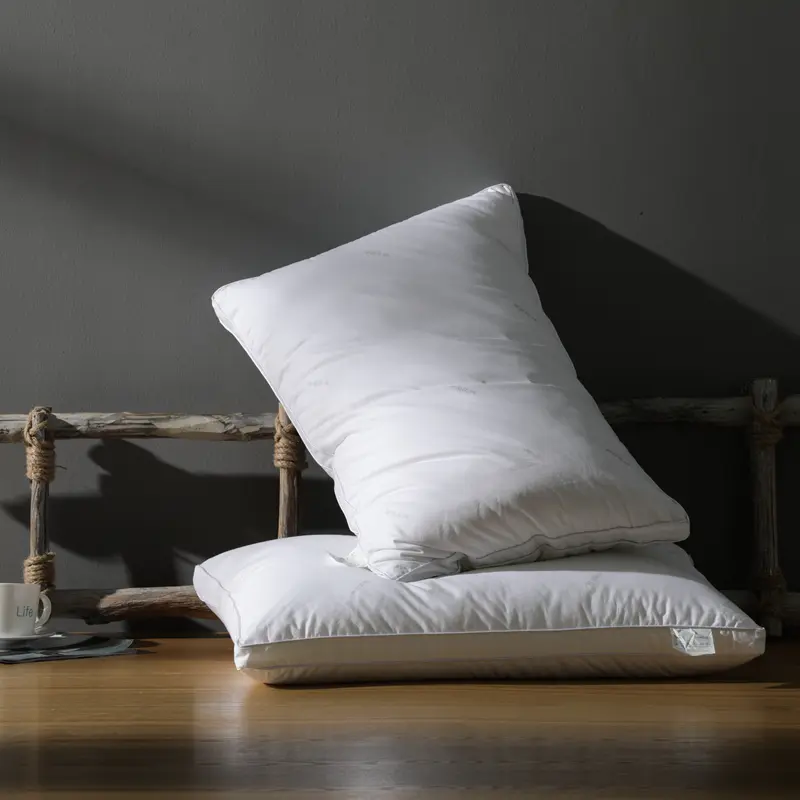
| Pillows | Medium-firm, down or down alternative | 2–4 pillows layered for visual depth | High |
| Pillow covers | 300–400TC percale | Matching percale pillowcases | High |
| Decorative cushions | 2–4 accent cushions | Optional but adds visual hotel aesthetic | Low |
The Final Touches That Hotels Use:
| Detail | Technique | Effect |
|---|---|---|
| Duvet fold-down | Fold top 12 inches of duvet and cover back toward foot of bed | Creates the inviting "turn-down" look |
| Pillow stacking | Two sleeping pillows upright, two decorative in front | Adds visual height and luxury depth |
| Sheet hospital corners | Tuck flat sheet tightly at foot and corners | Creates the crisp, structured hotel look |
| Duvet smoothing | Smooth surface from center outward with flat hands | Eliminates wrinkles, ensures even loft display |
| Room temperature | 18–20°C (64–68°F) — the standard hotel sleep environment | Optimizes the thermal performance of the duvet |
The most important single upgrade you can make to your home sleep environment remains the hotel down duvet itself. No thread count, no pillow arrangement, and no mattress upgrade will replicate the experience of sleeping beneath a properly constructed, hotel-grade down duvet with 650+ fill power in a baffle box shell. It is the element that guests remember most vividly from their hotel stays, and the one that makes the most immediate and lasting difference when introduced into a home bedroom.

News
-
Hotel Duvet Materials: Microfiber vs Down Explained Introduction to Hotel Duvet Materials Hotel duvets are more than just bedding; they are a critical component of the guest experi...
READ MORE -
Why That Hotel Bed Feels Like Sleeping on a Cloud There's a particular moment every traveler knows. You pull back the crisp white sheets of a luxury hotel bed, sink into the mattre...
READ MORE -
Why Choose Hotel-Style Bedding? Choosing a hotel-style bedding set is one of the easiest ways to instantly elevate your bedroom into a calm, luxurious retreat. Here’s why millions ...
READ MORE

Product List
 Hotel Bedding Set
 +86-180 6864 1189
 +86-(0)513 86311444
 F Zone Chuanjiang Industrial Area, Tongzhou, Nantong City, Jiangsu Province, China