 English
 русский
 Español
 عربى
عربى
Home / News / Industry News / What Makes Hotel Pillows So Much More Comfortable Than Regular Pillows?
What Makes Hotel Pillows So Much More Comfortable Than Regular Pillows?


What Makes Hotel Pillows So Much More Comfortable Than Regular Pillows?
2026-05-04
Content
- 1 The Fill Material Makes the Biggest Difference
- 2 The Pillow Shell: Thread Count and Fabric Quality
- 3 Hotel Pillow Specifications vs. Typical Retail Pillows
- 4 Why Hotels Use More Pillows — and Why It Works
- 5 Rigorous Laundering Keeps Hotel Pillows Fresh and Lofty
- 6 Frequent Replacement Ensures Consistent Loft
- 7 How to Recreate the Hotel Pillow Experience at Home
- 8 Key Takeaways
Hotel pillows feel noticeably more comfortable than most pillows at home because of a deliberate combination of higher-quality fill materials, heavier and softer cotton shells, rigorous laundering standards, and strategic layering — not because hotels have access to some secret product unavailable to consumers. The primary factors are fill quality, shell thread count, pillow loft maintenance, and the sheer number of pillows used per bed. Understanding each factor makes it entirely possible to replicate the hotel pillow experience at home.
The Fill Material Makes the Biggest Difference
The single most important factor in pillow comfort is what's inside. Most budget pillows sold in retail stores use low-grade polyester fiberfill that compresses quickly and loses its loft within months. Luxury hotels invest in significantly better fill options.
Down and Down-Alternative Fill
The majority of upscale hotels — including chains like Marriott, Hilton, and Westin — use either genuine down, a down-alternative microfiber fill, or a down/feather blend. Genuine goose down with a fill power of 600 or higher is the benchmark for luxury pillow performance. Fill power measures how much space one ounce of down occupies: the higher the number, the loftier and more resilient the pillow.
- 550–650 fill power: Standard hotel quality — good loft, soft feel, durable over repeated washing.
- 650–750 fill power: Premium hotel quality — used in five-star and luxury boutique properties. Noticeably fluffier and lighter.
- 750+ fill power: Ultra-luxury tier — found in flagship suites and top-tier hotel brands. Exceptional loft-to-weight ratio.
For guests with allergies, most major hotel chains now offer a high-quality down-alternative option using gel fiber or microfiber clusters engineered to mimic the loft and softness of down without the allergen risk.
The Feather-to-Down Ratio
Many hotel pillows use a blend rather than pure down. A common hotel specification is a 75% down / 25% feather blend. The feathers add structure and support while the down provides softness. Pure down pillows, by contrast, can feel too soft and unsupportive for some sleepers — the blend addresses both comfort and function.
The Pillow Shell: Thread Count and Fabric Quality
The outer shell of a pillow affects both how it feels against the skin and how well it contains the fill. Hotel pillows consistently use cotton shells with a thread count between 300 and 500 — significantly higher than the 150–200 thread count shells found on many retail pillows.
Higher thread count cotton shells offer three practical benefits:
- Softer touch: Finer, more tightly woven cotton feels noticeably smoother against the face and neck.
- Better fill containment: A tighter weave prevents down clusters or fiberfill from poking through the shell — a common complaint with cheaper pillows.
- Longevity: High-thread-count cotton withstands industrial laundering far better than low-count alternatives, maintaining integrity through hundreds of wash cycles.
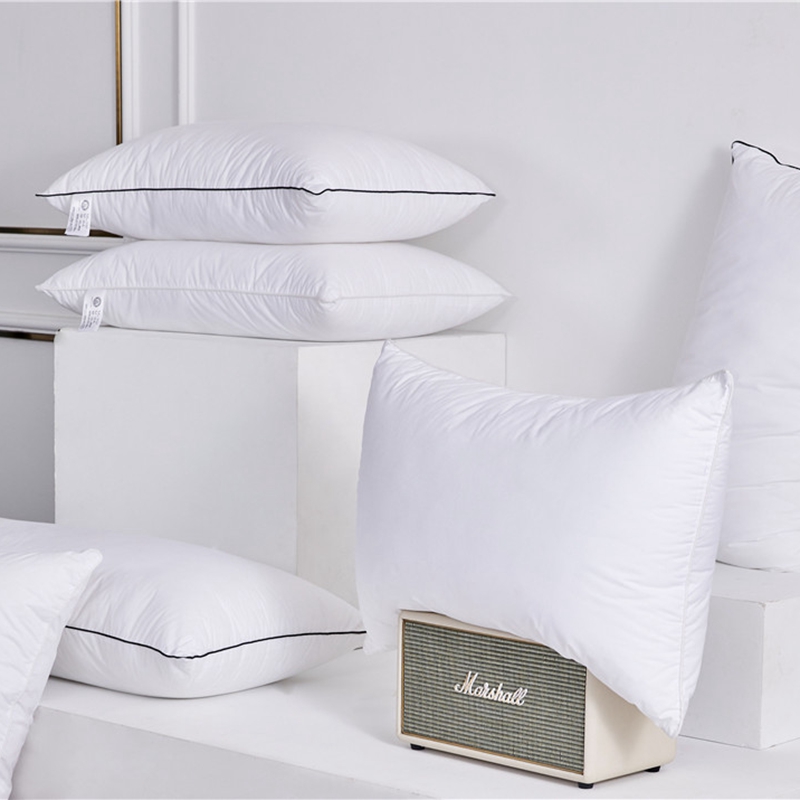
Most luxury hotel pillows also use a double-stitched or piped edge construction at the seams to prevent splitting under repeated compression and washing.
Hotel Pillow Specifications vs. Typical Retail Pillows
| Feature | Typical Hotel Pillow | Average Retail Pillow |
|---|---|---|
| Fill material | Down, down blend, or premium microfiber | Standard polyester fiberfill |
| Fill power (if down) | 550–750+ | N/A or 400–500 |
| Shell thread count | 300–500 TC cotton | 150–200 TC cotton or polyester |
| Pillow weight (standard) | 28–34 oz (800–960g) | 16–24 oz (450–680g) |
| Pillows per bed (queen) | 4–6 | 2 |
| Replacement cycle | Every 1–2 years | Every 3–5 years (often longer) |
| Laundering frequency | Every 3–6 months (industrial) | Rarely (most consumers never wash) |
Why Hotels Use More Pillows — and Why It Works
One of the most underappreciated reasons hotel beds feel so inviting is the sheer volume of pillows. A standard hotel queen bed typically has 4 to 6 pillows, compared to the 2 most home sleepers use. This layering serves a specific purpose beyond aesthetics.
Hotels typically layer two types of pillows:
- Sleeping pillows (back row): Firmer, higher-loft pillows designed for head and neck support during sleep. Usually filled with a down/feather blend or firm microfiber.
- Comfort or accent pillows (front row): Softer, fluffier pillows used for lounging, reading, or added softness. Often pure down or high-fill-power down alternative.
This combination means every guest — regardless of sleep position — can find their ideal support level simply by choosing which pillows to use and how to arrange them. The abundance of choice is itself a comfort feature.
Rigorous Laundering Keeps Hotel Pillows Fresh and Lofty
A pillow that was once high quality but has never been properly washed will feel flat, lumpy, and unpleasant. Hotels launder pillows on a strict schedule using commercial-grade machines and techniques that most consumers never apply at home.
Standard hotel pillow care protocol typically includes:
- Washing every 3 to 6 months in large-capacity commercial washers with hot water (140°F / 60°C) to eliminate dust mites and bacteria.
- High-heat tumble drying with dryer balls to re-fluff fill clusters and restore loft — a step that dramatically revives a flat pillow.
- Pillow protectors between the pillow shell and pillowcase, which absorb sweat and oils and are washed with every linen change — protecting the pillow itself from soiling.
By contrast, surveys suggest that more than 50% of consumers never wash their pillows — only their pillowcases. Over time, unwashed pillows absorb body oils, dead skin, and moisture, causing fill to clump and the pillow to lose both loft and hygiene. The freshness guests experience in a hotel bed is largely the result of this disciplined maintenance routine.
Frequent Replacement Ensures Consistent Loft
Even with excellent care, pillows degrade over time. Most hotels replace pillows on a 12 to 24 month cycle, regardless of apparent condition. This ensures guests always sleep on pillows that are within their optimal performance window — before fill compression becomes noticeable.
At home, most people keep pillows for 3 to 5 years or longer, well past the point where fill has permanently compressed and support has diminished. This gap in replacement frequency is one of the most significant — and most overlooked — reasons hotel pillows feel so much better.
A simple test: fold your pillow in half and release it. If it springs back immediately, it still has life left. If it stays folded, it's overdue for replacement.
How to Recreate the Hotel Pillow Experience at Home
Replicating the hotel pillow feel is straightforward once you know what to replicate:
- Invest in fill quality: Choose pillows with 600+ fill power down or a premium gel-fiber down alternative. Expect to spend $50–$150 per pillow for hotel-equivalent quality.
- Add pillow protectors: Use a zippered, waterproof or cotton pillow protector under every pillowcase. Wash them weekly with your sheets.
- Use more pillows: Layer a firmer sleeping pillow with a softer comfort pillow for a true hotel-style arrangement.
- Wash pillows every 3–4 months: Use a front-loading washer (top-loaders with agitators can damage fill) on a gentle cycle with mild detergent. Dry thoroughly with dryer balls on low-to-medium heat.
- Replace on schedule: Set a reminder to replace pillows every 18–24 months — the same interval most quality hotels use.
Key Takeaways
- Fill quality is the primary driver — hotels use high fill power down or premium down-alternative, not basic polyester fiberfill.
- Higher thread count cotton shells (300–500 TC) make pillows softer against the skin and more durable through repeated washing.
- Hotels layer 4–6 pillows per bed, combining firm sleeping pillows with softer comfort pillows to accommodate all sleep preferences.
- Regular industrial laundering every 3–6 months and pillow protectors maintain hygiene and loft — most home pillows never receive equivalent care.
- Replacing pillows every 12–24 months ensures guests always sleep on fill that hasn't yet permanently compressed — a standard almost no home sleeper maintains.
- The hotel pillow experience is fully replicable at home with the right fill, proper care habits, and timely replacement.


News
-
Hotel Duvet Materials: Microfiber vs Down Explained Introduction to Hotel Duvet Materials Hotel duvets are more than just bedding; they are a critical component of the guest experi...
READ MORE -
Why That Hotel Bed Feels Like Sleeping on a Cloud There's a particular moment every traveler knows. You pull back the crisp white sheets of a luxury hotel bed, sink into the mattre...
READ MORE -
Why Choose Hotel-Style Bedding? Choosing a hotel-style bedding set is one of the easiest ways to instantly elevate your bedroom into a calm, luxurious retreat. Here’s why millions ...
READ MORE

Product List
 Hotel Bedding Set
 +86-180 6864 1189
 +86-(0)513 86311444
 F Zone Chuanjiang Industrial Area, Tongzhou, Nantong City, Jiangsu Province, China