 English
 русский
 Español
 عربى
عربى
Home / News / Industry News / What is Hotel Duvet? Features and Buying Guide for Hotel-Quality Down Comforters
What is Hotel Duvet? Features and Buying Guide for Hotel-Quality Down Comforters


What is Hotel Duvet? Features and Buying Guide for Hotel-Quality Down Comforters
2026-06-29
Content
- 1 What Is a Hotel Duvet?
- 2 Hotel Duvet vs. Regular Comforter: What's the Real Difference?
- 3 Key Features That Define Hotel-Quality Down Comforters
- 4 Down vs. Down-Alternative: Which Hotel Duvet Fill Is Right for You?
- 5 How a Hotel Duvet Cover Completes the Hotel Look
- 6 Building Complete Hotel Bedding Sets at Home
- 7 Buying Guide: How to Choose the Right Hotel Duvet
- 8 Caring for Your Hotel Duvet and Cover
- 9 Final Takeaway
What Is a Hotel Duvet?
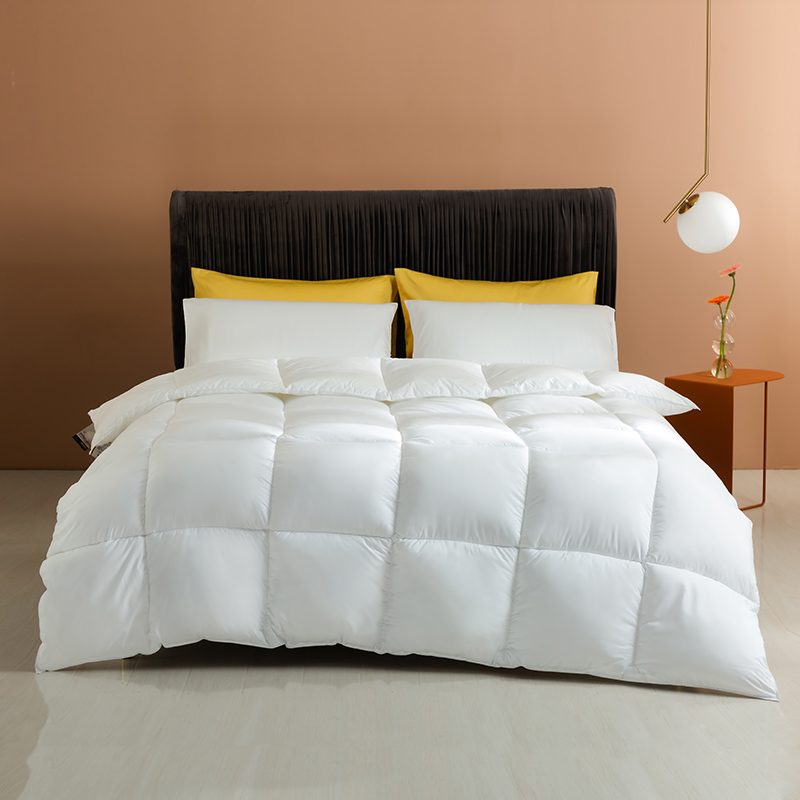
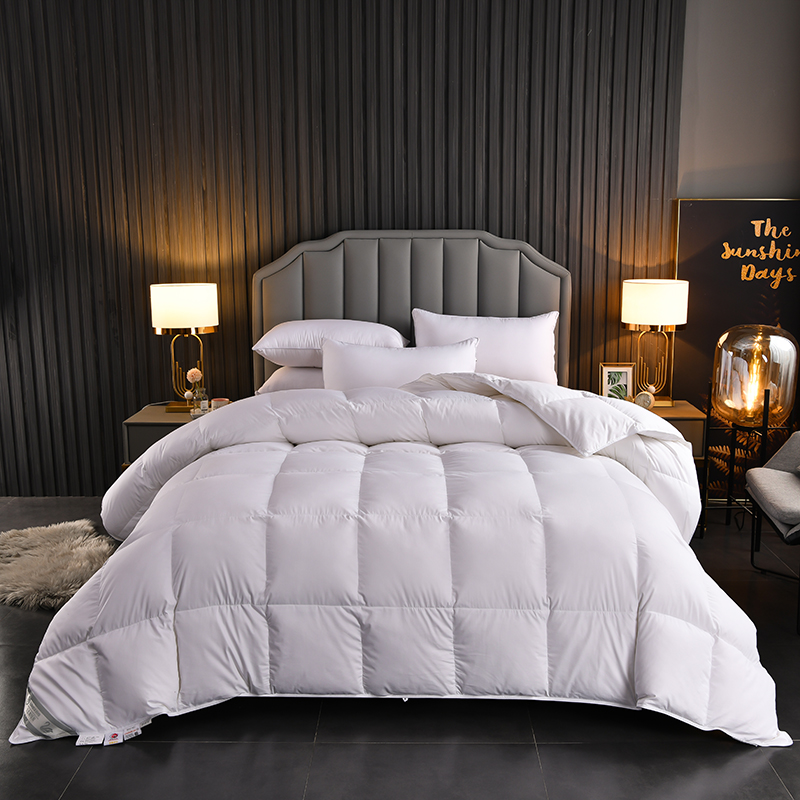
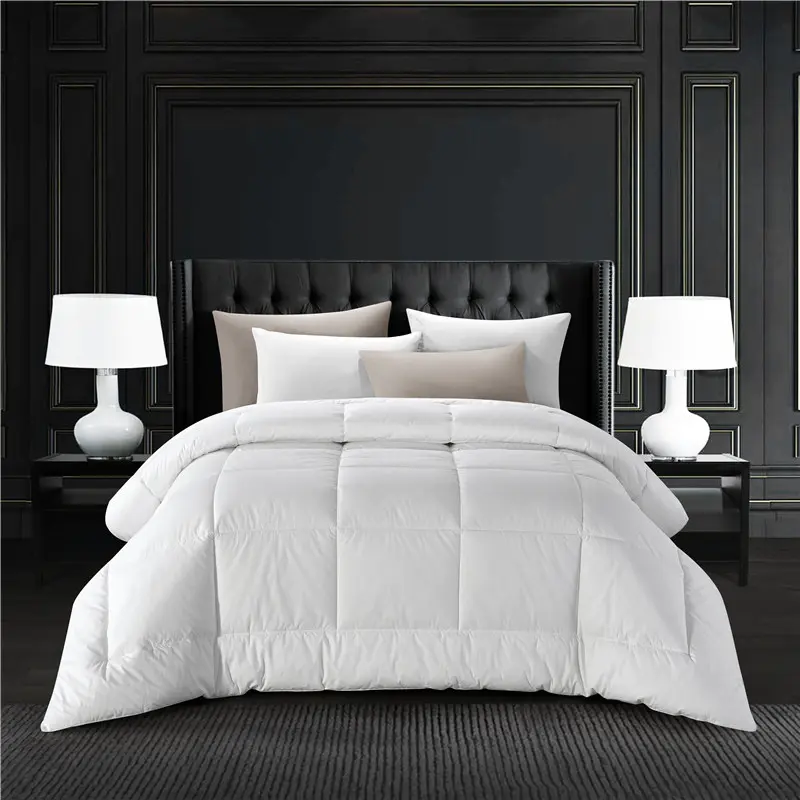
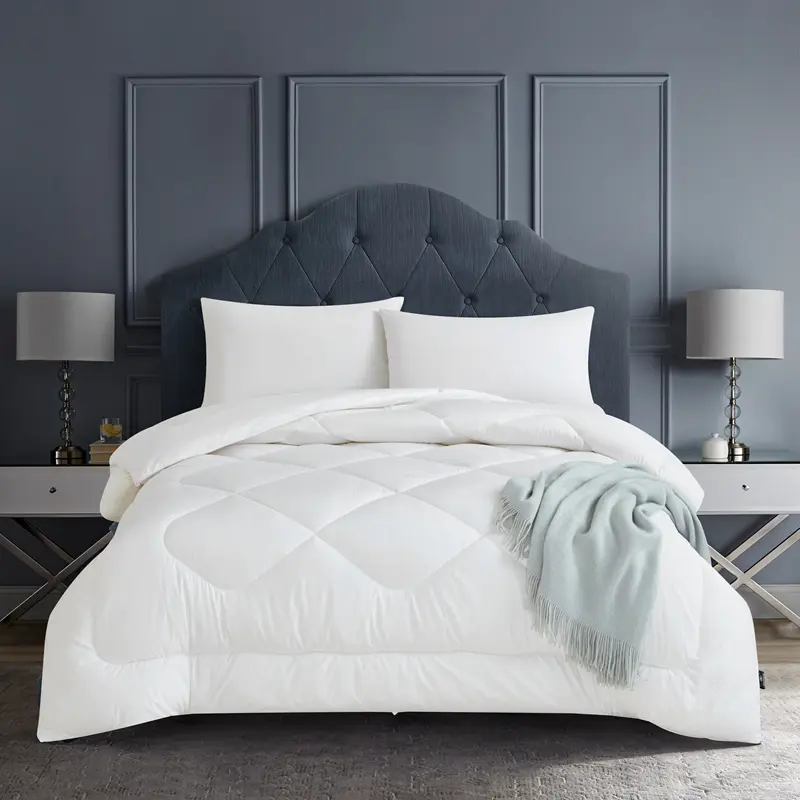
A hotel duvet is a thick, fluffy insert—usually filled with down, down-alternative fiber, or a feather-and-down blend—that is designed to be slipped inside a duvet cover and used as the top layer of a bed. Unlike a standard comforter that is sewn shut with a permanent fabric shell, a true hotel duvet is meant to be paired with a removable, washable duvet cover, which is exactly why five-star hotels rely on this system: it keeps bedding hygienic, replaceable, and consistently soft for every guest.
The short answer is this: a hotel duvet is the insert, while a hotel duvet cover and the surrounding hotel bedding sets are what give it the polished, "five-star" look guests remember. The two work together. A duvet without a quality cover looks flat and unfinished, while a beautiful cover without a properly filled duvet will never feel like the plush layer you sink into at a luxury resort.
Hotels favor this duvet-and-cover system for three practical reasons:
- Covers can be laundered after every guest without washing the bulky insert, extending the duvet's lifespan to 3–5 years.
- A single duvet can rotate through multiple covers, allowing properties to refresh a room's look without buying new comforters for hotels each season.
- Down and down-alternative fills trap air efficiently, giving a "cloud-like" loft that standard quilted blankets rarely achieve.
Hotel Duvet vs. Regular Comforter: What's the Real Difference?
Many shoppers use "duvet" and "comforter" interchangeably, but in the context of hotel collection comforters and hotel-grade bedding, there are meaningful construction differences that affect comfort, durability, and price.
Construction Differences
A regular comforter is typically one finished piece: the decorative outer fabric and the filling are stitched together permanently, often with quilting patterns to keep the fill from shifting. A hotel duvet, by contrast, is a plain white or cream insert—no decorative pattern needed—because it's always concealed inside a separate hotel duvet cover.
Maintenance Differences
Comforters generally need to be dry-cleaned or washed as a whole bulky unit, which is time-consuming and can compress the fill over repeated washes. Duvets only require the cover to be washed regularly, while the insert itself is cleaned far less often (every 2–3 months for personal use, more frequently in hospitality settings).
| Feature | Hotel Duvet | Regular Comforter |
|---|---|---|
| Outer Fabric | Plain, hidden under a cover | Decorative, exposed fabric |
| Washing Frequency | Insert: every 2–3 months | Whole piece: every 1–2 months |
| Average Lifespan | 3–5 years | 1.5–3 years |
| Style Flexibility | High (swap covers anytime) | Low (fixed design) |
Key Features That Define Hotel-Quality Down Comforters
Not every duvet labeled "luxury" actually performs like one. True hotel-quality down comforters are defined by four measurable features: fill power, fill weight, thread count, and baffle-box construction. Understanding these specs is the only reliable way to compare products when shopping online.
Fill Power
Fill power measures how much space one ounce of down occupies—essentially its loft and insulating efficiency. Most hotel collection duvet sets used in upscale properties use fill power between 600 and 800. Anything below 500 tends to feel flat and heavy rather than airy.
Fill Weight and Warmth Rating
Fill weight (measured in grams or ounces per square meter, GSM) determines warmth. Hotels typically stock at least two duvet weights to suit different seasons and guest preferences:
- Lightweight/Summer: around 200–300 GSM, ideal for warm climates or air-conditioned rooms.
- All-Season: around 300–400 GSM, the most common choice for general comforters for hotels.
- Winter/Heavyweight: 400 GSM and above, used in cooler climates or mountain resorts.
Shell Fabric and Thread Count
The outer shell of the duvet should be tightly woven enough to prevent down from leaking through (called "down-proofing"), while still feeling soft. A thread count between 300 and 600 is generally considered hotel quality bedlinen standard—high enough for durability and softness, without the diminishing returns of marketing-driven thread counts above 800, which often don't improve actual feel.
Baffle-Box Construction
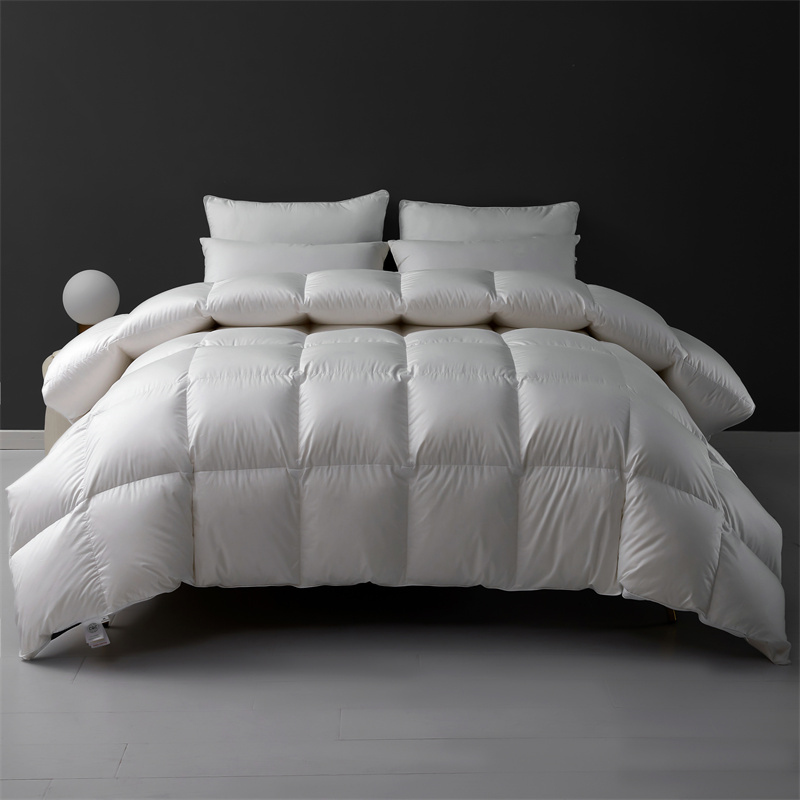
Cheaper duvets are often sewn flat or in simple quilted squares, which lets down clump and creates cold spots. Premium hotel duvets use baffle-box construction—internal fabric walls that create individual 3D chambers—keeping fill evenly distributed across the entire surface, even after years of use.
Down vs. Down-Alternative: Which Hotel Duvet Fill Is Right for You?
The fill type is the single biggest factor affecting price, feel, and maintenance in any hotel duvet. Real down offers the lightest, most compressible warmth, while down-alternative fill offers easier care and is allergy-friendly.
| Criteria | Real Down | Down-Alternative (Microfiber) |
|---|---|---|
| Warmth-to-Weight Ratio | Excellent | Good |
| Allergy-Friendly | No (unless hypoallergenic-treated) | Yes |
| Care | Dry clean or specialty wash | Machine washable |
| Price Range | Higher | Lower to mid |
| Common Use | Luxury hotel bedding sets, resorts | Mid-range hotels, allergy-conscious guests |
Many upscale properties now blend the two approaches: real down at the core for loft, surrounded by a hypoallergenic barrier layer, giving guests the luxury feel without the allergy risk. If you're shopping for home use and want a true hotel collection comforters experience, look for products that disclose both fill power and fill weight, not just generic words like "plush" or "luxury."
How a Hotel Duvet Cover Completes the Hotel Look
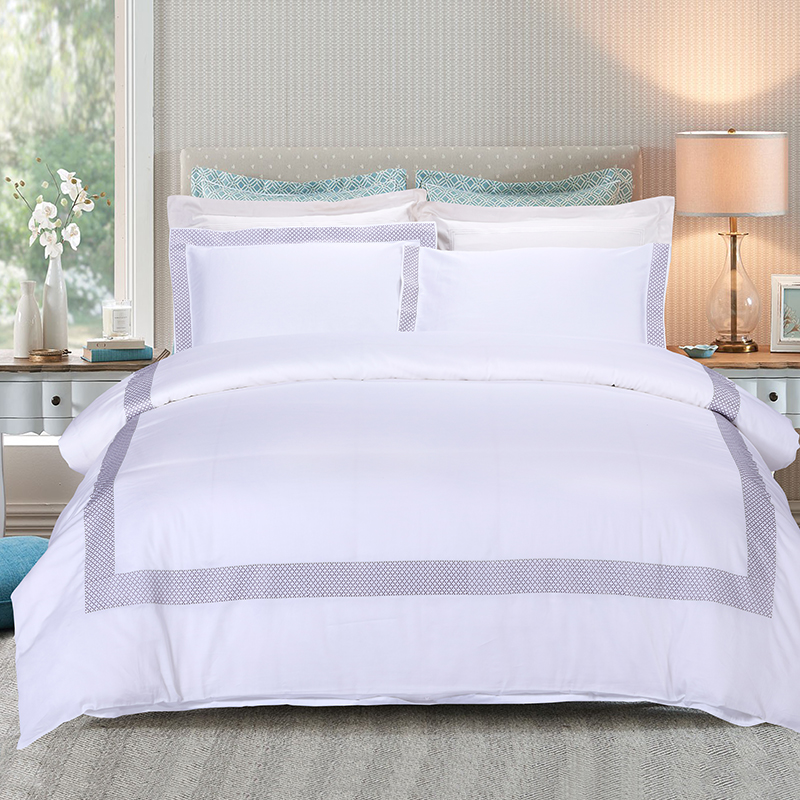
A duvet insert alone will never replicate the hotel aesthetic. It's the hotel duvet cover, paired with coordinating sheets and shams, that creates the crisp, layered look guests associate with five-star stays.
Material Choices
Most genuine hotel quality bedlinen uses 100% cotton, cotton-percale, or cotton-sateen weaves. Percale (a tight, plain weave) gives a crisp, cool, "hotel-crisp" feel, while sateen offers a slightly silkier, warmer drape. Hotels rarely use heavy synthetic blends for covers because they don't breathe as well overnight.
Closure and Corner Ties
A well-made cover includes interior corner ties or loops that anchor the duvet insert in place, preventing it from bunching or sliding to one side—a common complaint with budget bedding set hotel options. Button or zipper closures should run the full width of the opening, not just a partial section, to keep the insert fully concealed.
Color and Pattern
Most hotels intentionally choose white or neutral tones for duvet covers. This isn't just aesthetic—white linens can be bleached and sanitized at high temperatures without color fading, which is a major reason hospitality-grade laundering remains effective over hundreds of wash cycles.
Building Complete Hotel Bedding Sets at Home
A duvet and cover are only two pieces of the puzzle. To fully recreate luxury hotel bedding sets at home, you need a coordinated system: fitted sheet, flat sheet (optional), duvet insert, duvet cover, pillow shams, and a decorative top layer such as a runner or extra pillows.
The Standard Hotel Layering Formula
- Fitted sheet (cotton, 250–400 thread count)
- Hotel duvet insert (down or down-alternative, 300–400 GSM for most climates)
- Hotel duvet cover in white or neutral tone
- 2–4 sleeping pillows plus 2 decorative shams
- Optional folded throw or bed runner across the foot of the bed
Why Hotels Avoid Mismatched Sets
Properties purchase bedding set hotel collections in bulk from a single supplier specifically to ensure consistent color, weight, and texture across every room. When shopping for home use, buying your duvet, cover, and sheets from the same hotel collection duvet set line (rather than mixing random brands) is the easiest way to avoid color mismatches and texture clashes.
Buying Guide: How to Choose the Right Hotel Duvet
When comparing hotel collection comforters or duvet inserts, focus on five concrete decision points rather than marketing language.
1. Match Fill Weight to Your Climate
If your bedroom averages below 18°C (65°F) at night, choose a duvet rated 400 GSM or higher. For warmer climates or heated rooms, 200–300 GSM is usually sufficient.
2. Check the Baffle-Box Construction
Look at product photos or descriptions for "box-stitched" or "baffle-box" construction rather than flat quilting—this single detail separates true comforters for hotels from inexpensive imitations.
3. Confirm Cover Compatibility
Make sure the duvet's dimensions match standard cover sizes (Twin, Queen, King, or California King) and check for interior corner ties, which prevent shifting inside the cover.
4. Review Certifications
For down-filled products, look for Responsible Down Standard (RDS) certification. For down-alternative or cotton shells, OEKO-TEX certification confirms the materials are free from harmful chemical residues.
5. Compare Price Against Longevity
A well-made hotel duvet costing slightly more upfront but lasting 4–5 years often costs less per year of use than a budget option that needs replacing every 12–18 months. Calculate cost-per-year, not just sticker price, when comparing options.
| Factor | What to Look For |
|---|---|
| Fill Power | 600–800 for luxury feel |
| Fill Weight | 300–400 GSM all-season |
| Shell Thread Count | 300–600 |
| Construction | Baffle-box, not flat-quilted |
| Certification | RDS or OEKO-TEX |
Caring for Your Hotel Duvet and Cover
Proper care preserves loft and extends product life significantly. Wash the duvet cover weekly to biweekly, but only deep-clean or refresh the duvet insert itself every 2–3 months, unless spills or stains require immediate attention.
Cover Care
Machine wash hotel duvet covers in cold or warm water with mild detergent, and tumble dry on low. Avoid bleach unless the fabric is specifically labeled bleach-safe, even on white hotel quality bedlinen.
Insert Care
Down-alternative duvets are typically machine washable on a gentle cycle, then dried with a few clean tennis balls to redistribute fill and restore loft. Real down duvets generally require professional or specialty down-cycle washing to avoid clumping.
Storage Between Seasons
Store off-season duvets in a breathable cotton storage bag rather than a sealed plastic bag, which can trap moisture and lead to mildew or flattened fill over time.
Final Takeaway
A hotel duvet is more than a soft blanket—it's a system built on fill quality, construction technique, and a coordinated cover that together recreate the rested, weightless feeling of a luxury stay. Whether you're outfitting a single bedroom or sourcing complete luxury hotel bedding sets for a property, the same rules apply: prioritize fill power and weight over marketing buzzwords, confirm baffle-box construction, and pair your duvet with a properly fitted cover from a matching hotel collection duvet set. Get these fundamentals right, and the hotel-quality sleep experience becomes easy to replicate, night after night.
News
-
Hotel Duvet Materials: Microfiber vs Down Explained Introduction to Hotel Duvet Materials Hotel duvets are more than just bedding; they are a critical component of the guest experi...
READ MORE -
Why That Hotel Bed Feels Like Sleeping on a Cloud There's a particular moment every traveler knows. You pull back the crisp white sheets of a luxury hotel bed, sink into the mattre...
READ MORE -
Why Choose Hotel-Style Bedding? Choosing a hotel-style bedding set is one of the easiest ways to instantly elevate your bedroom into a calm, luxurious retreat. Here’s why millions ...
READ MORE

Product List
 Hotel Bedding Set
 +86-180 6864 1189
 +86-(0)513 86311444
 F Zone Chuanjiang Industrial Area, Tongzhou, Nantong City, Jiangsu Province, China