 English
 русский
 Español
 عربى

Home / News / Industry News / The Benefits of a Down Comforter: Warmth, Breathability, and Long-Term Value
The Benefits of a Down Comforter: Warmth, Breathability, and Long-Term Value


The Benefits of a Down Comforter: Warmth, Breathability, and Long-Term Value
2026-10-26
Content
Step into a well-run five-star hotel room and the bed tells you something before you even sit down. The covers look full but not heavy, the surface is smooth, and when you finally slide in, the whole thing feels lighter than it looks. That is usually down at work.
We have spent more than twenty years making bedding for hotels, and the question we hear most often from buyers is simple: is down worth the extra cost? The honest answer is yes, provided the filling, the shell, and the construction are all right. Here is what makes a down comforter different, and why it has stayed the first choice in serious hotel bedrooms for so long.
What Makes Down Different From Other Fillings
Down is not the same as feather. Down is the light, fluffy undercoating that geese and ducks grow beneath their outer feathers. It has no quill, and each cluster opens into a three-dimensional shape that traps air in countless tiny pockets. Feathers, by contrast, have a stiff central shaft, which adds weight without adding much loft.
That structure explains nearly all of the benefits. Warmth in bedding does not come from the filling itself; it comes from the air the filling holds still. Down holds more air per gram than almost any other natural or synthetic filling, which is why a down comforter can feel almost weightless while keeping a sleeper warm on a cold night.
Down alternative comforters use polyester microfibre or similar synthetics. They cost less, wash more easily, and are a reasonable choice for allergy-sensitive guests, but they do not loft in the same way, and they tend to flatten faster. One term is worth knowing before you compare anything: fill power, which measures how many cubic inches one ounce of down occupies. Two comforters can weigh the same, yet the one with the higher fill power will trap more air and deliver more warmth for that weight.
The Benefits of a Down Comforter
Once the structure makes sense, the practical advantages follow naturally.
Warmth Without the Weight
Because down traps air so efficiently, you need less of it to reach a given level of warmth. A guest sleeping under a 700 fill power comforter feels covered rather than pressed down, and the comforter is easier to turn over during the night. For hotels, that also means faster bed-making and a tidier linen stack.
Breathability and Temperature Regulation
Down is breathable. Air and moisture vapour move through the clusters instead of being trapped against the body, so the sleeper stays dry rather than clammy. That is why the same material works in a hot climate at a light fill weight and in a cold one at a heavier fill weight, and why a down comforter rarely feels as stifling as a thick synthetic quilt on a mild night.
Durability That Earns Its Price
A good down comforter, protected by a duvet cover and cared for properly, can stay in service for a decade or more. Down clusters spring back after compression, while polyester batting gradually loses loft and develops flat spots. For a property replacing bedding on a fixed cycle, that difference in lifespan often decides the purchase.
Softness, Quiet, and Easy Storage
Down drapes softly over the body without the crisp, papery rustle that some synthetic fills produce. It also compresses into a small bundle for storage or shipping and shakes back into shape quickly, which matters when a hotel rotates between summer and winter bedding twice a year.
Understanding Fill Power and Fill Weight
The two numbers that matter most when comparing comforters are fill power and fill weight. Fill power describes quality and loft; fill weight describes how much down is actually inside a given comforter. A high fill power with a low fill weight makes a light summer duvet, while a moderate fill power with a high fill weight can be just as warm but noticeably heavier.
| Fill Power | Loft and Warmth | Typical Use | Fill Weight Needed |
|---|---|---|---|
| 500-550 | Moderate | Summer and warm climates | Higher |
| 600-650 | Medium | Three-season guest rooms | Medium |
| 700-750 | High | Winter and premium rooms | Lower |
| 800 and above | Very high | Cold climates and luxury suites | Lowest |
Fill weight is usually quoted in total grams for a standard size or in grams per square metre. Two comforters can share the same fill power and still feel completely different once the fill weight changes, so it is worth checking both before comparing prices.
What Twenty Years of Hotel Bedding Taught Us
Working with more than 300 star-rated hotels, including international brands such as InterContinental and Marriott properties, teaches you quickly that guests notice bedding quality even when they never comment on it. As a hotel bedding supplier, we run twelve production lines in Nantong covering weaving, cutting, sewing, and final inspection, with daily capacity of roughly 500 bedding sets and 2,000 duvets. That volume exists because hotels replace and top up bedding constantly.
Down comforters also have to survive repeated laundering and years of handling. That is why raw materials are checked at 36 points on arrival and seven inspection stages run during production, and why we work with 100% cotton shells tight enough to keep down from working its way through the seams. Construction matters just as much: baffle box panels stop the filling from sliding into one corner of the bed. If you would like a fuller walkthrough of the selection process, our article on the ultimate guide to five-star comfort covers the same ground from a purchasing angle.
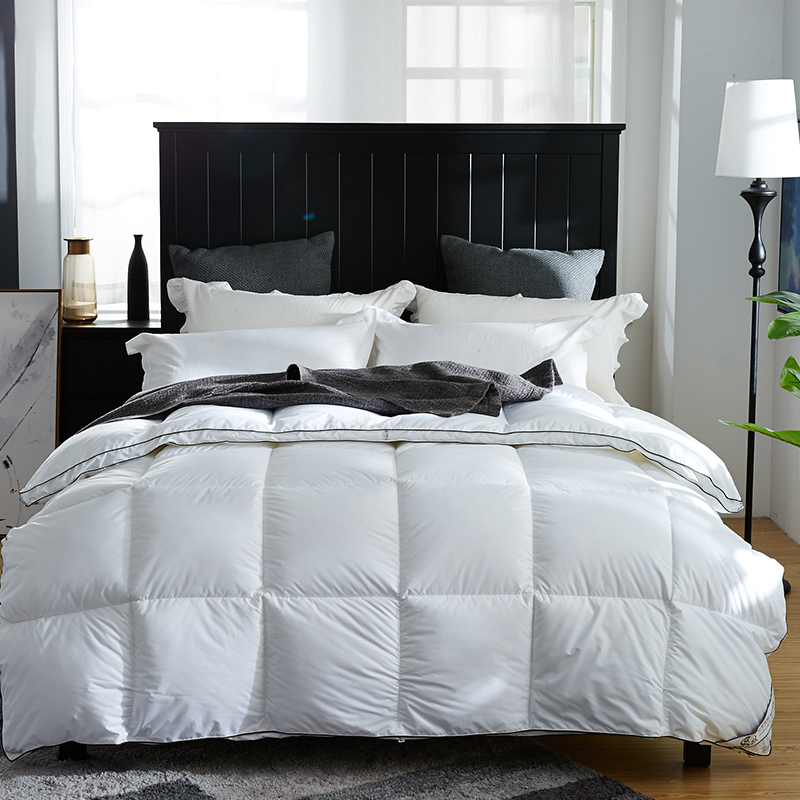
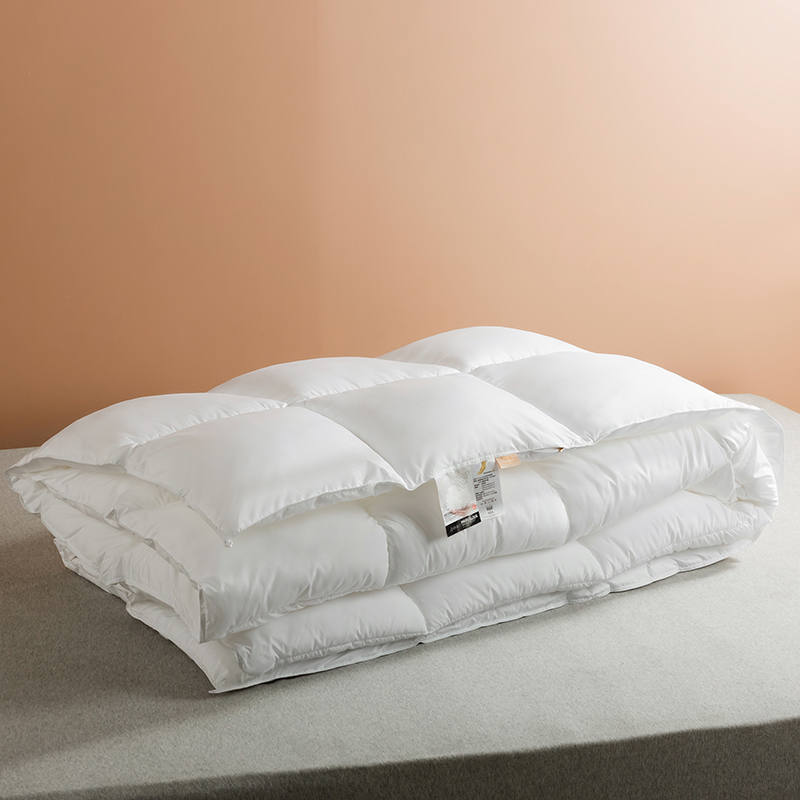 Star Hotel Goose Down Duvet in 100% CottonA hotel-grade goose down duvet with 100% cotton shell and checkered quilting that helps keep filling evenly distributed for durable warmth.View Product →
What to Look For in a Down Comforter
If you are choosing bedding for a home or a property, these are the details worth checking in order.
- Fill power. Around 600 and above is a sensible starting point for hotel-grade bedding; 700 to 800 suits premium rooms where loft and lightness are part of the experience.
- Fill weight and season. Match the weight to your climate, or choose a two-in-one system if you need one comforter to cover both summer and winter.
- Shell fabric. Look for tightly woven 100% cotton, often 300 thread count or higher, that is soft but dense enough to be downproof.
- Construction. Baffle box panels suit larger sizes because they prevent shifting; sewn-through construction is fine for lighter, thinner duvets.
- Sizing and finishing. Corner loops or ties keep the comforter in place inside a duvet cover, so check measurements against the mattress before ordering.
- Testing and washability. Ask about ecological textile testing and confirm the shell can handle the laundering method you plan to use.
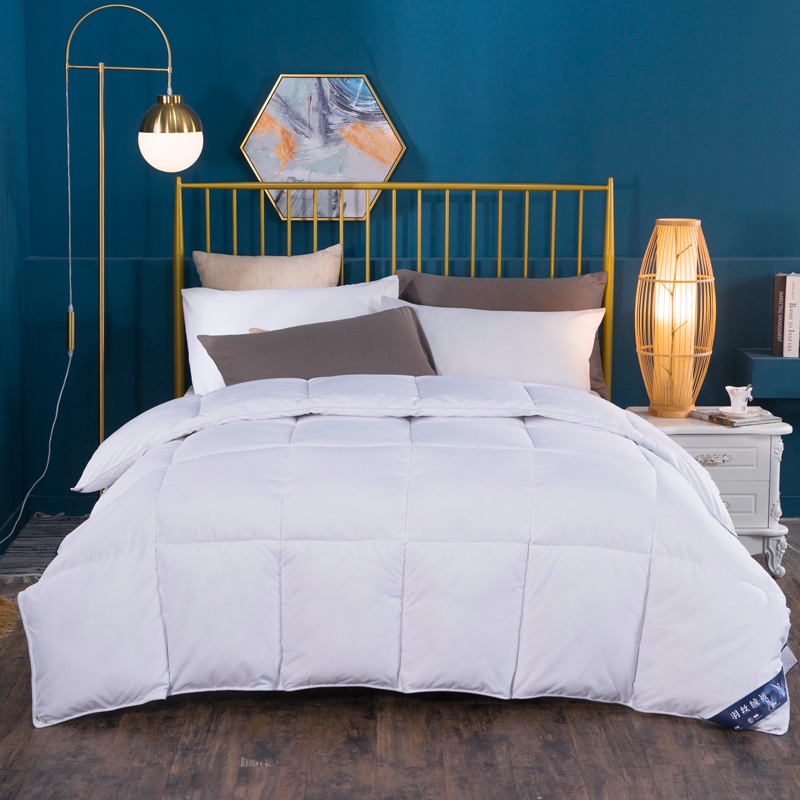
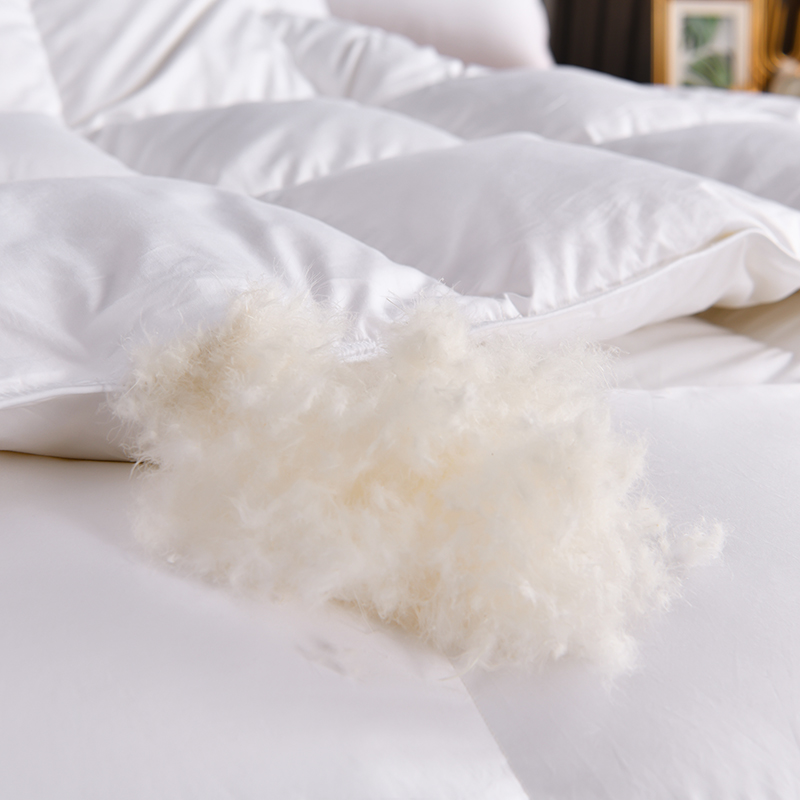 White Goose Down Hotel Bedroom Quilted DuvetA quilted white goose down duvet with breathable cotton cover and compartmentalized check design for even, comfortable hotel bedding.View Product →
Caring for a Down Comforter
Down is not fragile, but it does respond to how it is treated over the years.
- Always use a duvet cover and wash that instead, which protects the comforter and reduces how often it needs cleaning.
- Wash rarely and only when necessary, on a gentle cycle with a mild down-safe detergent. Skip fabric softener entirely.
- Dry on low heat with dryer balls or clean tennis balls to break up clumps, and make sure it is completely dry before storing.
- Store loosely in a breathable cotton bag rather than a vacuum-sealed one, so the clusters can recover their loft.
- Air it out in dry weather now and then, and rotate between weights if you keep more than one.
 Duck Down Hotel Duvet with Cotton Cover and PipingA warm duck down duvet with 100% cotton fabric, embroidered detailing, and reinforced piping for hospitality bedding where down suits most guests.View Product →
Who Down Is Right For
Down suits most sleepers, but not every one. Guests with a genuine dust-mite allergy are sometimes advised to choose a synthetic filling, which can be washed at higher temperatures. If you are buying for a mixed guest population, a two-track programme works well: down for premium and executive rooms, and a good microfibre alternative where allergy requests are more common. What is worth avoiding is treating a cheap synthetic quilt as a substitute for down in a room you are charging a premium for. The two perform differently, and guests feel the difference even if they cannot explain it.
The benefits of a down comforter come down to the structure of the clusters, and everything else, from fill power and fill weight to shell and construction, exists to protect that structure. Get those details right and you end up with bedding that sleeps cool in summer, warm in winter, and holds its shape far longer than most synthetics. That is a fair return for something that spends its life under a duvet cover, doing its job quietly every night.
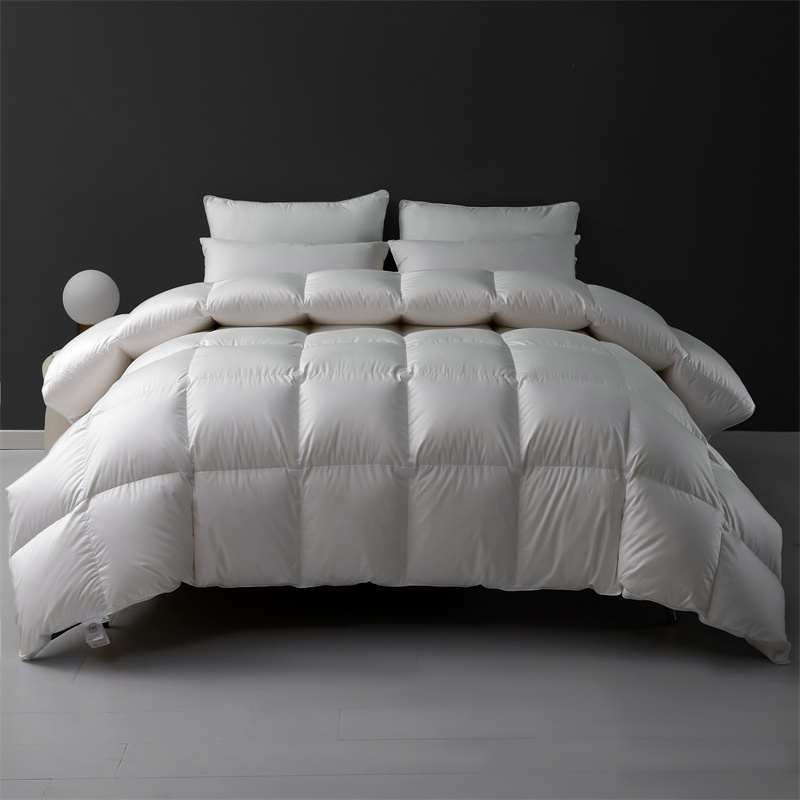
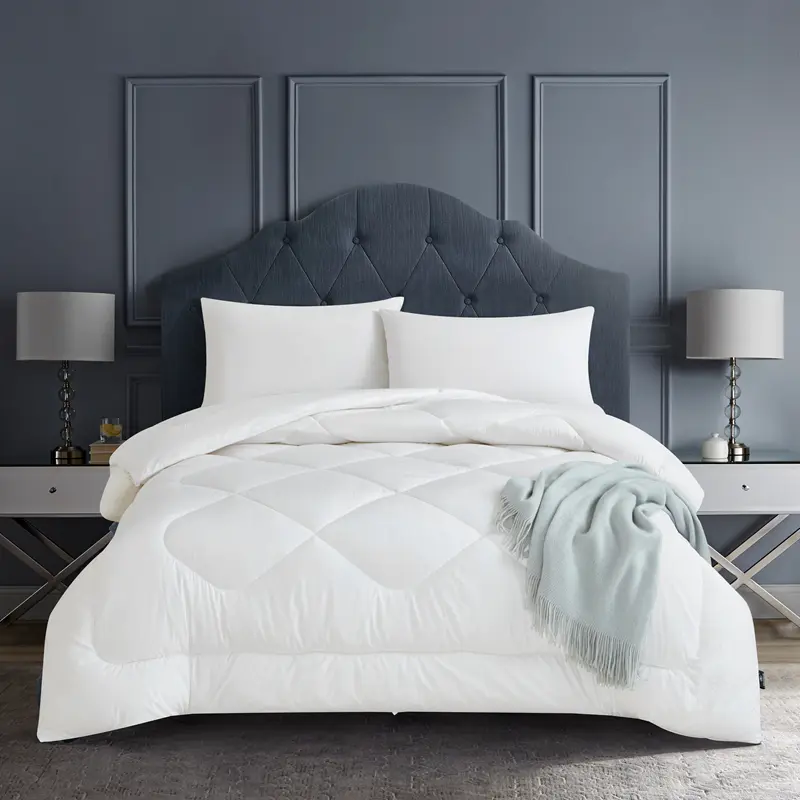
News
-
Hotel Duvet Materials: Microfiber vs Down Explained Introduction to Hotel Duvet Materials Hotel duvets are more than just bedding; they are a critical component of the guest experi...
READ MORE -
Why That Hotel Bed Feels Like Sleeping on a Cloud There's a particular moment every traveler knows. You pull back the crisp white sheets of a luxury hotel bed, sink into the mattre...
READ MORE -
Why Choose Hotel-Style Bedding? Choosing a hotel-style bedding set is one of the easiest ways to instantly elevate your bedroom into a calm, luxurious retreat. Here’s why millions ...
READ MORE

Product List
 Hotel Bedding Set
 +86-180 6864 1189
 +86-(0)513 86311444

 F Zone Chuanjiang Industrial Area, Tongzhou, Nantong City, Jiangsu Province, China
