 English
 русский
 Español
 عربى

Home / News / Industry News / Bed Protector Buying Guide: Choosing Durable Mattress Protection for Hotels and Homes
Bed Protector Buying Guide: Choosing Durable Mattress Protection for Hotels and Homes


Bed Protector Buying Guide: Choosing Durable Mattress Protection for Hotels and Homes
2026-10-19
Content
Most people never think twice about the bed protector. They notice the sheets, the pillows, the weight of the duvet. But the layer sitting quietly between the mattress and the fitted sheet is the one piece of bedding that decides whether a mattress lasts five comfortable years or starts showing stains and compression marks within eighteen months.
We have spent more than twenty years making bedding for hotels, from quilted mattress protectors and toppers through to sheets, duvets and pillows. The conversations we have with housekeeping and procurement teams rarely begin with thread count. They begin with leakage, laundry cycles, and how quickly a replacement can be delivered. That is the angle this guide takes.
What a Bed Protector Is Actually For
A bed protector is a thin fitted layer that covers the top and sides of a mattress. Its job is straightforward: absorb accidents, block liquids from reaching the mattress core, and add a small amount of cushioning. In a hotel, that same layer protects a capital asset. A stained mattress usually cannot be cleaned back to a presentable standard, and replacing one mid-season is expensive and disruptive.
A good protector handles four things at once:
- Liquid barrier: spills, sweat and cleaning fluids stay on the surface and wash out.
- Hygiene: a washable top layer reduces the dust mites, skin cells and allergens held inside a mattress.
- Comfort: quilting and fill soften the feel of a firm commercial mattress.
- Warranty compliance: many mattress manufacturers require a protector to keep the warranty valid.
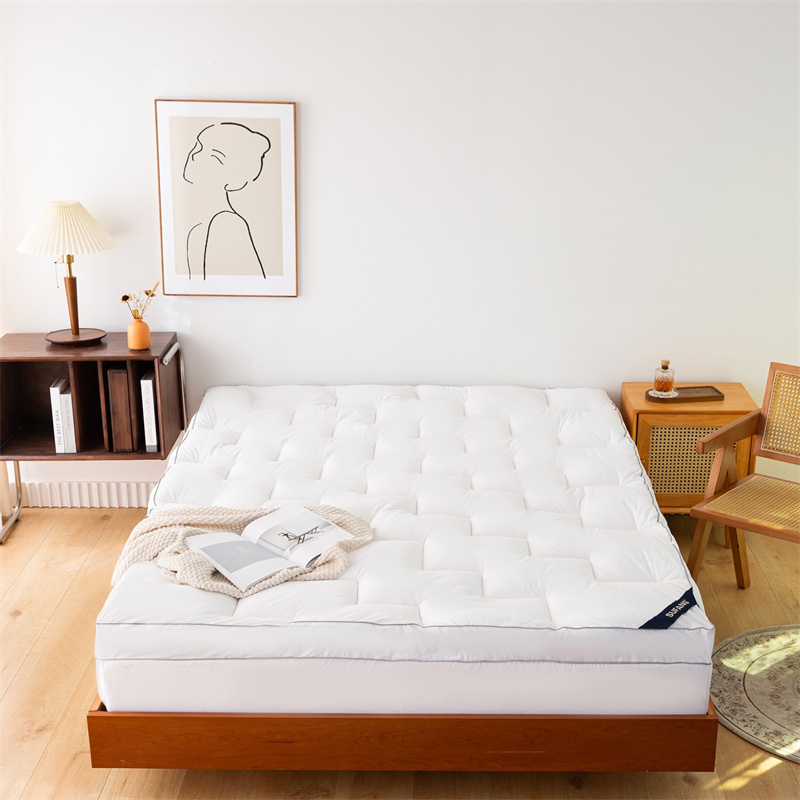
It is worth separating the protector from the mattress topper. A topper is a comfort product, usually 5 cm to 10 cm thick, designed to change how the bed feels. A protector is a protection product, usually under 2 cm thick. A few designs combine the two, but they are bought for very different reasons.
The Main Types of Bed Protector
Almost everything on the market falls into one of five formats. The right one depends on whether you are protecting a guest bed, a child's bed, or a mattress you intend to keep for a decade.
| Format | Typical construction | Water resistance | Best suited to |
|---|---|---|---|
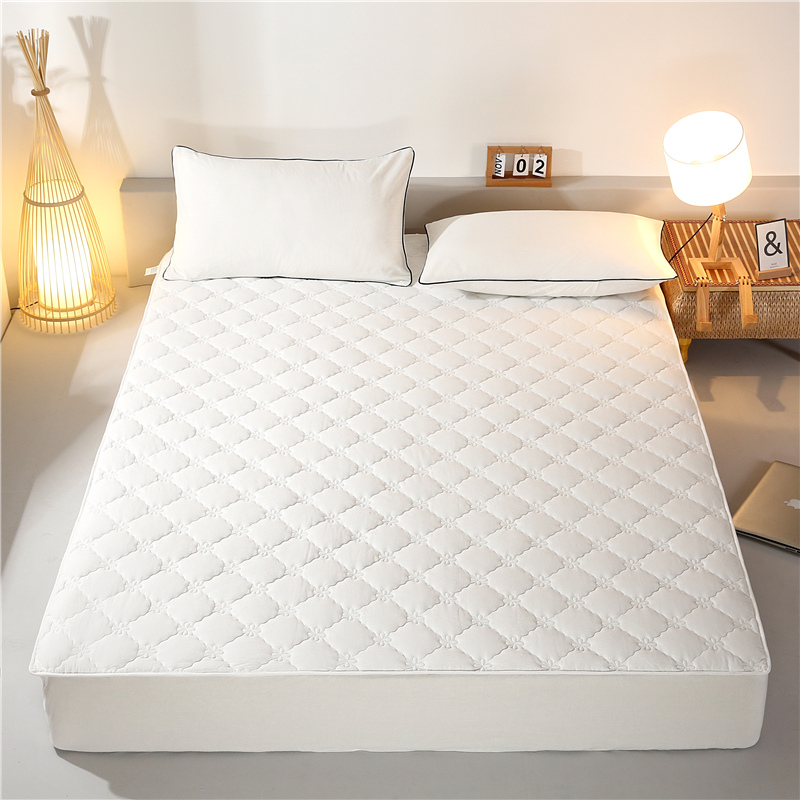
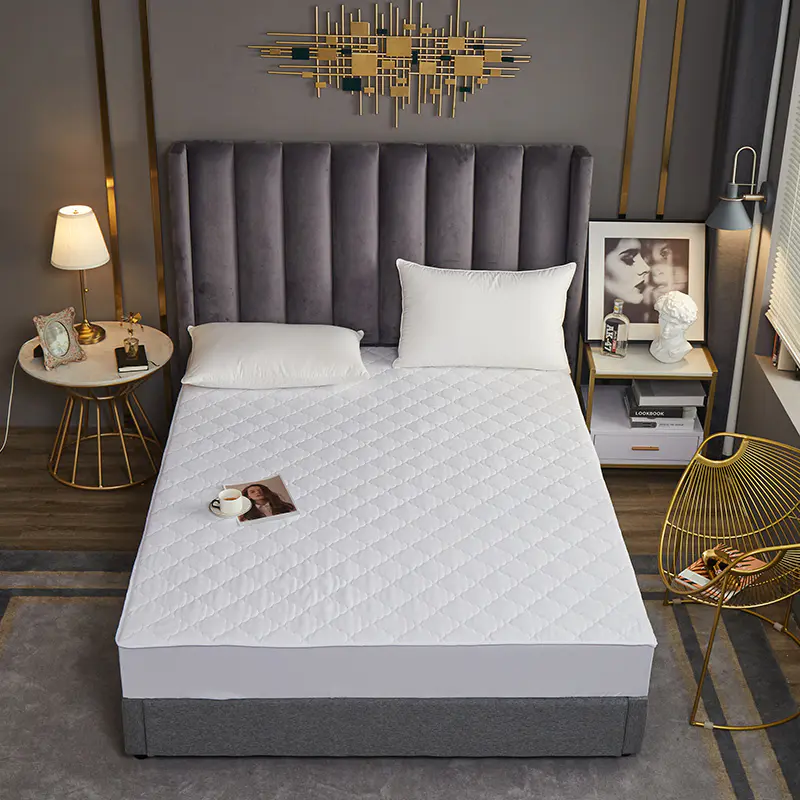
| Quilted fitted protector | Cotton or microfiber face, polyester fill, elasticated skirt | Splash resistant | Guest rooms and family beds |
| Waterproof fitted protector | Bamboo viscose or knit face laminated to a thin film | Fully waterproof | Children's rooms and high-occupancy beds |
| Flat pad or anchor-band protector | Quilted panel with corner straps or a tuck-in tail | Splash resistant | Low-profile mattresses, occasional use |
| Zippered encasement | Six-sided shell with a full zip | Fully waterproof all round | Allergen control, care and clinical settings |
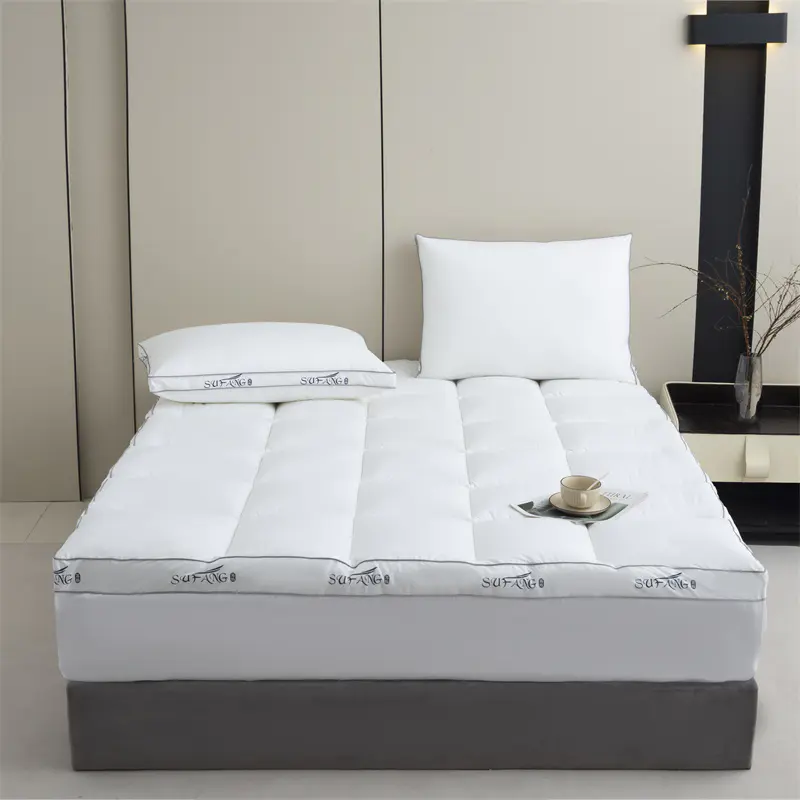
| Mattress topper | Thick microfiber or down-feather fill, fitted skirt | Not waterproof | Comfort upgrades only |
For a hotel, the first two do most of the work. A quilted fitted protector is the default for guest rooms because it feels like part of the bed rather than an accessory. A waterproof fitted protector goes on beds where accidents are more likely, and in rooms that need the fastest possible turnaround between guests.
Materials and What They Feel Like
The face fabric is what guests actually touch, so it matters as much as the membrane underneath.
Waterproof bamboo
Bamboo viscose is soft, breathable and naturally temperature-neutral, which makes it a popular surface for waterproof protectors. The waterproofing itself usually comes from a thin polyurethane film bonded to the back of the knit. Look for a laminate that stays quiet when someone rolls over, because cheap films crinkle loudly and guests notice immediately.
Cotton and cotton-rich quilting
A cotton face with a light polyester fill gives a dry, crisp feel that matches cotton sheets. It is not waterproof on its own, so it is normally paired with a separate waterproof layer or a laminated backing.
Microfiber and brushed polyester
Microfiber is the workhorse of the category. It is inexpensive, dries quickly and resists pilling through repeated industrial washing. In hotel use, a 40s downproof fabric with microfiber fill holds its shape well and keeps the quilting from shifting to one end of the bed.
Fit, Noise and Other Details Guests Complain About
Most complaints about protectors come down to three things: it moved, it crinkled, or it slept too warm.
- Skirt depth: measure the mattress including any topper. A 35 cm skirt on a 28 cm mattress will bunch, and a 30 cm skirt on a 35 cm mattress will not stay on.
- Elastic coverage: all-around elastic holds far better than corner-only elastic, especially on adjustable beds.
- Noise: laminated waterproofing is quieter when the film is bonded to a knit rather than to a woven fabric.
- Heat: non-breathable films trap warmth, while breathable laminates and bamboo faces sleep cooler.
If a protector keeps sliding off, the problem is almost always the size rather than the guest.
What Hotels Ask Us For
When a hotel comes to us, the brief is usually short. Protect the mattress, survive the laundry, match the sheets, and be replaceable in the same size two years later. That last point is easy to overlook and surprisingly hard to guarantee, which is why we keep a stable range of standard sizes and quilt patterns rather than redesigning them every season.
The most requested item is a quilted protector with a cotton or microfiber face, elastic all the way around and a skirt sized for a 30 cm to 35 cm mattress. It is quiet, it looks like part of the bed, and it washes at 60°C without the quilting collapsing.
Custom work is common too: an embroidered label, an unusual metric size, a heavier fill for a cold-climate property. Our factory runs twelve production lines and can turn a sample around in 72 hours, which matters a great deal when a refurbishment is already underway.
Washing, Lifespan and When to Replace
Care instructions are where most protectors quietly fail. Washing at 60°C is standard for hotel hygiene, but fabric softener should never be used, because the residue coats the waterproof membrane and gradually kills its performance. Tumble dry on low, and avoid ironing anything with a laminate.
Even with careful laundering, a waterproof protector has a predictable life. In a hotel running industrial cycles, expect two to three years before the membrane starts to break down. At home, with one wash every week or two, five years is realistic.
Three signs it is time to replace:
- The elastic has stretched and the corners lift when the fitted sheet is pulled tight.
- The quilting has flattened into thin patches, usually where the body sits.
- Liquid pools on the surface instead of being absorbed, or seeps through to the mattress.
If you are not sure whether a protector or the bedding above it has passed its useful life, we wrote a short piece on how to check whether hotel beddings have been replaced that walks through the visual signals to look for.
Home or Hospitality: Choosing the Right Weight
For a family bed, comfort leads and durability follows. A quilted fitted protector in a king size is usually enough on its own, with a separate waterproof layer added for children's rooms. Bamboo-faced waterproof protectors are a sensible compromise for a guest room that occasionally doubles as a nursery.
For hospitality, durability leads instead. Every specification should be checked against the laundry cycle rather than the showroom. Ask how many industrial washes the face fabric has been tested for, what temperature the membrane tolerates, and whether the same size will still be available in three years.
If you are specifying a whole room rather than a single item, it helps to buy the protector alongside the sheets, duvet cover and pillows so the fit and colour match across the set. Our range as a hotel bed linen supplier is organised that way, and we are happy to send samples before you commit to a full order.
A bed protector is not the most exciting purchase in a bedroom, and it never will be. But it is the cheapest insurance against replacing a mattress, and the piece of bedding that quietly decides how a bed feels and how long it stays hygienic. Get the size right, choose a face fabric that suits the people sleeping on it, and check how it behaves in the wash. Everything else is detail.

News
-
Hotel Duvet Materials: Microfiber vs Down Explained Introduction to Hotel Duvet Materials Hotel duvets are more than just bedding; they are a critical component of the guest experi...
READ MORE -
Why That Hotel Bed Feels Like Sleeping on a Cloud There's a particular moment every traveler knows. You pull back the crisp white sheets of a luxury hotel bed, sink into the mattre...
READ MORE -
Why Choose Hotel-Style Bedding? Choosing a hotel-style bedding set is one of the easiest ways to instantly elevate your bedroom into a calm, luxurious retreat. Here’s why millions ...
READ MORE

Product List
 Hotel Bedding Set
 +86-180 6864 1189
 +86-(0)513 86311444

 F Zone Chuanjiang Industrial Area, Tongzhou, Nantong City, Jiangsu Province, China
