 English
 русский
 Español
 عربى

Home / News / Industry News / Best Pillow for Belly Sleepers: A Practical Guide to Low-Profile Comfort
Best Pillow for Belly Sleepers: A Practical Guide to Low-Profile Comfort


Best Pillow for Belly Sleepers: A Practical Guide to Low-Profile Comfort
2026-11-23
Content
- 1 Why Belly Sleepers Need a Different Pillow
- 2 The Best Pillow Profile: Low, Soft, and Adjustable
- 3 Material Matters: Memory Foam, Latex, Down, and Microfiber
- 4 Hotel Bedding Lessons for Home Sleepers
- 5 How to Test a Pillow Before You Commit
- 6 Pillow Placement and Sleep Position Adjustments
- 7 Common Mistakes That Make Belly Sleeping Uncomfortable
- 8 Quick Comparison: Pillow Types for Belly Sleepers
- 9 FAQ
- 9.1 What is the best pillow for belly sleepers?
- 9.2 Should belly sleepers use no pillow at all?
- 9.3 Is memory foam good for stomach sleepers?
- 9.4 How high should a belly sleeper’s pillow be?
- 9.5 Can a pillow help with neck pain from stomach sleeping?
- 9.6 How often should I replace a belly sleeper pillow?
If you wake up with a stiff neck, numb arm, or a dull ache between your shoulder blades, your pillow may be fighting your sleep position. Belly sleeping is common, comfortable, and entirely workable—but it asks for a different kind of pillow. The best pillow for belly sleepers is usually low, soft enough to compress, and adjustable enough to keep the neck from being pushed into an unnatural angle. This guide walks through loft, fill, placement, testing, and the hotel-bedding lessons that can make your own bed feel more thoughtfully put together.
Why Belly Sleepers Need a Different Pillow
When you lie on your stomach, your head naturally turns to one side. A thick pillow lifts the head and can rotate the neck more than it needs to, while a very firm pillow may press into the jaw, cheek, and shoulder. Over a full night, that small amount of strain can add up. The goal is not to force a belly sleeper onto their back. The goal is to keep the head and neck close to a neutral line while the body rests in its preferred position.
What changes on your stomach
The head turns sideways, the shoulder may sink or rise depending on the mattress, and the lower back can arch if the pillow is too high. A low-profile pillow reduces the lift under the head and helps the upper spine settle.
Signs your pillow is too high
- Your chin feels tucked toward your chest when you wake.
- One shoulder or arm goes numb during the night.
- You keep pushing the pillow away in your sleep.
- You feel neck tension more than general mattress discomfort.
The Best Pillow Profile: Low, Soft, and Adjustable
There is no single perfect pillow for every belly sleeper, because body shape, mattress softness, and shoulder width all matter. Still, the most reliable starting point is a pillow that is thin, responsive, and easy to adjust. In hotel bedding programs, pillow engineers often work with zipper access, layered fills, and removable inserts because a guest room has to serve many sleep positions. That same logic works at home.
01
Loft
A low loft—often around 2 to 3 inches of compressed height—keeps the head from being pushed upward. If you have broader shoulders, you may need a little more support at the edge, not under the full head.
02
Softness
Soft-to-medium fill lets the pillow yield under the head and face. A pillow that feels like a brick may create pressure at the jaw and cheek.
03
Adjustability
A zipper or layered fill lets you remove material until the pillow feels almost flat. This is especially useful if you switch between stomach and side sleeping.
04
Breathability
Belly sleepers often turn their face into the pillow. A breathable cotton cover and open fill structure can make the surface feel cooler and less smothering.
05
Edge support
You do not want a hard ridge under your neck. Look for a gentle transition at the edge, not a raised bolster that lifts the head too much.
06
Mattress match
A soft mattress lets your body sink; a firm mattress keeps you higher. If your mattress is very soft, you may need even less pillow loft to avoid over-lifting the head.
 Five-Layer Height Adjustable L-Shape PillowRemovable layers let you tune loft and firmness to match mattress softness, with an L-shape for shoulder and body support.View Product →
| Sleep position | Typical loft | Fill feel | What to watch for |
|---|---|---|---|
| Belly, petite build | Low, 2–2.5 in | Soft | Too much lift at the jaw |
| Belly, broad shoulders | Low, 2.5–3 in | Soft-medium | Shoulder pressure and arm numbness |
| Belly-to-side combination | Adjustable, 2–4 in | Responsive | Pillow that cannot be reshaped |
| Belly with acid reflux | Low at head, slight wedge | Supportive but not hard | Over-elevating the neck |
Material Matters: Memory Foam, Latex, Down, and Microfiber
The fill decides how the pillow behaves after your head sinks in. A material that feels soft in the hand can still be too tall in use, so judge the pillow by its compressed height, not by its label alone.
Memory foam
Good for pressure relief, but traditional memory foam can feel warm and may rebound too slowly. Look for a slim, low-density foam or a ventilated design. A contoured foam pillow is usually less suitable for belly sleepers because the contour can lift the head.
Latex
Springy and durable, latex can work in a very low profile. It holds its shape and does not collapse, which is helpful for combination sleepers, but a thick latex pillow can be too firm for stomach sleeping.
Down and feather
Down compresses easily, making it a natural fit for belly sleepers who want a soft surface. The downside is that it needs regular fluffing and may not offer enough support for combination sleepers. A low down pillow with a cotton shell is a classic hotel-style choice.
Microfiber
Microfiber fill can mimic down at a lower cost and is often easier to wash. Its performance depends on fill weight: a dense microfiber pillow can be too lofty, while a light fill can be shaped into a low nest. Zippered microfiber pillows are especially practical because you can remove fill.
For belly sleepers, the practical shortlist is usually a low down pillow, a slim microfiber pillow with adjustable fill, or a very low latex pillow. The key is to avoid a tall, tightly packed pillow that forces the head upward. Hotel bedding manufacturers often use zipper access and layered construction for this reason—not because every guest is a belly sleeper, but because a room must adapt to different bodies.
Hotel Bedding Lessons for Home Sleepers
Hotels have a difficult pillow problem: one room may host a back sleeper, a side sleeper, and a stomach sleeper in the same week. The solution is rarely one magic pillow. It is a system of choices—pillow protectors, removable fills, different loft options, and housekeeping checks. The same thinking can help you build a better bed at home.
Start with the shell
A breathable cotton shell feels cooler and more natural against the face. It also helps the pillow keep its shape without trapping too much heat.
Choose a removable fill
If you can unzip the pillow and take out a layer, you can tune the loft instead of guessing. This is one of the most useful features for belly sleepers.
Use a protector, not extra bulk
A fitted pillow protector should protect the pillow without adding height. Avoid thick quilted covers if you already need a low profile.
Review the whole bed
Pillow height interacts with mattress firmness. Hotel bedding teams often think about the bed as a layered system, from mattress protection to duvet weight. That broader view is useful at home too—the advances in hotel bedding design show how small construction details affect comfort.
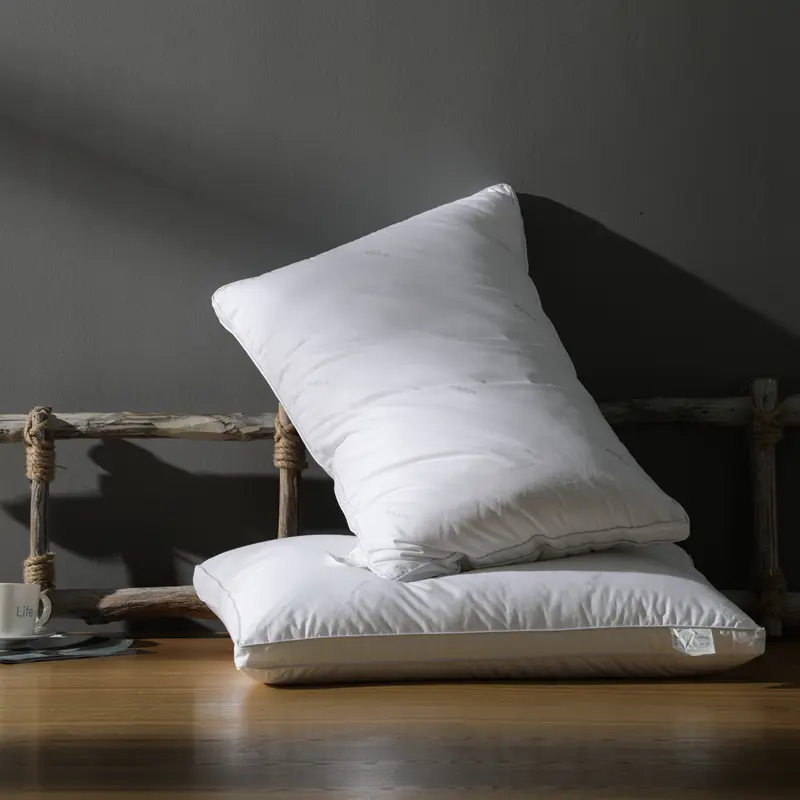
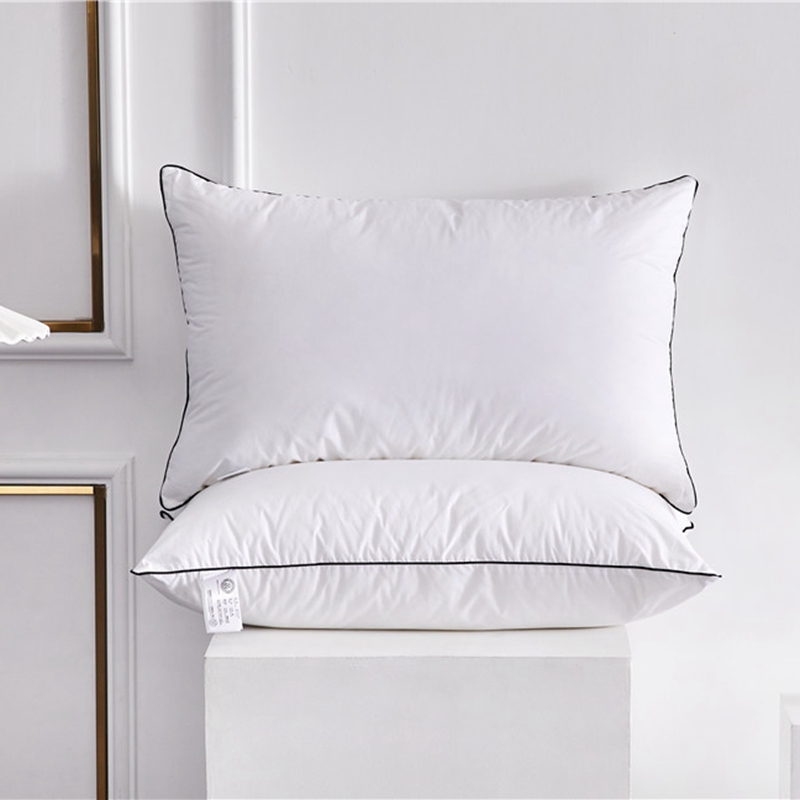 Cotton Hotel Pillow with Quilted Microfiber FillQuilted cotton cover and shape-retaining microfiber fill resist shifting, giving breathable, down-like support for hotel guestrooms and down-allergic guests.View Product →
How to Test a Pillow Before You Commit
A pillow that feels comfortable for two minutes in a store may behave differently after an hour. Use a simple home test to judge whether the pillow supports a neutral neck position when you are on your stomach.
- Place the pillow on your bed and lie down in your usual stomach position.
- Turn your head to the side and relax your jaw and shoulder.
- Ask yourself whether your chin is tucking down or your head is tipping back.
- Stay there for at least ten minutes. If you feel pressure at the jaw, cheek, or shoulder, the pillow is likely too high or too firm.
- Try removing a layer of fill or folding the pillow in half. A folded pillow should not feel like a better option—if it does, the original loft is too low for your combination sleeping.
- Check your arm position. If your arm goes numb, the pillow may be pressing the shoulder into the mattress.
Pillow Placement and Sleep Position Adjustments
If you sleep flat on your stomach
Place a very low pillow under the forehead or upper cheek rather than under the full head. Some belly sleepers do better with the pillow pushed slightly down the bed so the face rests near the edge. This reduces direct pressure on the jaw and keeps the neck from being lifted. If you use a pillow under your hips or lower abdomen, keep it thin; a large wedge can arch the lower back.
If you turn from side to stomach
Combination sleepers need a pillow that can change shape. A soft pillow that compresses is more forgiving than a rigid contoured pillow. You can also use a small knee pillow or a body pillow to reduce the urge to roll fully onto your stomach. The aim is to support the position you actually sleep in, not to force a new one.
If you have shoulder pain
Shoulder pain may come from the mattress as much as the pillow. A firm mattress can press the shoulder upward, while a soft mattress can let the body sink unevenly. Try a lower pillow first, then check the mattress. A pillow with a soft edge can reduce pressure where the shoulder meets the bed.
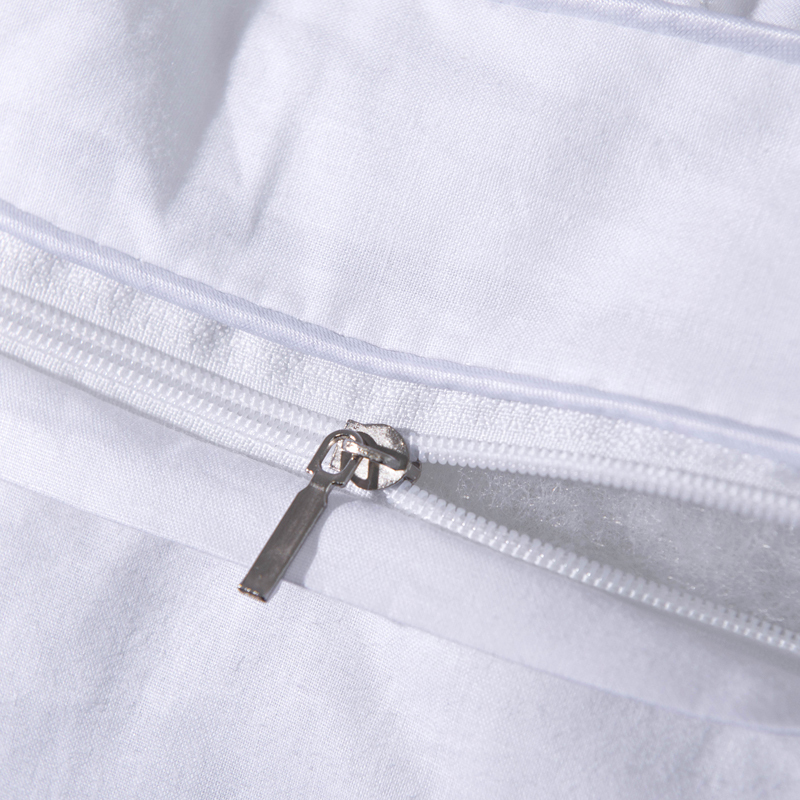 Quilted Microfiber Pillow with Removable Zipper CoverQuilted microfiber fill cushions the head and neck, and the removable zipper cover makes cleaning easy for fresh, low-pressure sleep support.View Product →
Common Mistakes That Make Belly Sleeping Uncomfortable
- Buying a high pillow because it feels plush. A deep, fluffy pillow may look luxurious but can lift the head too far when you are on your stomach.
- Using a contoured pillow without testing it. Neck contours can be helpful for back sleepers, but they often push a belly sleeper’s head out of line.
- Ignoring the mattress. A low pillow on a very soft mattress may still feel too high if your body sinks deeply. Match the pillow to the bed, not just the label.
- Adding a thick pillow protector. Protectors are useful, but quilted or waterproof covers can change the loft. Look for a thin, fitted protector.
- Assuming you need no pillow at all. Some belly sleepers do well without a pillow, but others need a small amount of support to keep the neck from tipping. Test both carefully.
- Keeping a pillow too long. Fill compresses and loses resilience. If your pillow no longer returns to shape, it may be time to replace it or add fill.
Quick Comparison: Pillow Types for Belly Sleepers
| Pillow type | Likely loft | Best feature | Watch-out |
|---|---|---|---|
| Down pillow | Low and compressible | Soft surface, easy to shape | Needs fluffing; may flatten too much |
| Adjustable microfiber | Can be tuned | Remove fill to lower the loft | Poor quality fill can clump |
| Slim memory foam | Low, stable | Pressure relief | Can sleep warm; contour may be too high |
| Low latex | Low, springy | Durable support | Too firm if thick |
| Contour neck pillow | Often medium to high | Supports back sleeping | Usually a poor match for stomach sleeping |
FAQ
What is the best pillow for belly sleepers?
The best starting point is a low, soft-to-medium pillow that compresses under the head and keeps the neck close to neutral. An adjustable pillow with removable fill is often the most forgiving choice.
Should belly sleepers use no pillow at all?
Some do, but it is not a rule. If you feel neck strain without a pillow, a very thin pillow or a folded towel may be more comfortable. Test carefully and pay attention to jaw and shoulder pressure.
Is memory foam good for stomach sleepers?
It can be, if the pillow is slim and not contoured too aggressively. Traditional thick memory foam is usually too high for stomach sleeping, while a low, ventilated foam can work well.
How high should a belly sleeper’s pillow be?
A compressed height of roughly 2 to 3 inches is a useful starting range. Broader shoulders or a very soft mattress may call for slight adjustments, but the pillow should not lift the head into a backward or forward tilt.
Can a pillow help with neck pain from stomach sleeping?
It can reduce strain by keeping the head lower and softer, but it cannot fix a mattress that is too soft or a sleep position that consistently causes pain. If pain persists, consider changing position or speaking with a healthcare professional.
How often should I replace a belly sleeper pillow?
Replace it when it stops returning to shape, develops lumps, or needs constant fluffing. Adjustable pillows can often be refreshed by replacing or adding fill rather than buying a whole new pillow.


News
-
Hotel Duvet Materials: Microfiber vs Down Explained Introduction to Hotel Duvet Materials Hotel duvets are more than just bedding; they are a critical component of the guest experi...
READ MORE -
Why That Hotel Bed Feels Like Sleeping on a Cloud There's a particular moment every traveler knows. You pull back the crisp white sheets of a luxury hotel bed, sink into the mattre...
READ MORE -
Why Choose Hotel-Style Bedding? Choosing a hotel-style bedding set is one of the easiest ways to instantly elevate your bedroom into a calm, luxurious retreat. Here’s why millions ...
READ MORE

Product List
 Hotel Bedding Set
 +86-180 6864 1189
 +86-(0)513 86311444

 F Zone Chuanjiang Industrial Area, Tongzhou, Nantong City, Jiangsu Province, China
