 English
 русский
 Español
 عربى

Home / News / Industry News / Best Down Pillows for Side and Back Sleepers: A Hotel Supplier's Guide
Best Down Pillows for Side and Back Sleepers: A Hotel Supplier's Guide


Best Down Pillows for Side and Back Sleepers: A Hotel Supplier's Guide
2026-11-09
Content
- 1 Why Side and Back Sleepers Need Different Down Pillows
- 2 Fill Power, Loft, and Fill Weight: The Three Numbers That Matter
- 3 Down, Feather, and Down Alternative Compared
- 4 The Down Pillows We Build for Hotel Rooms
- 5 How We Match Firmness to Sleep Position
- 6 Hotel-Grade Details That Make a Down Pillow Last
- 7 Caring for a Down Pillow at Home
- 8 Questions We Hear From Buyers and Guests
- 9 Frequently Asked Questions
- 9.1 What is the best down pillow for side sleepers?
- 9.2 What is the best down pillow for back sleepers?
- 9.3 Is goose down better than duck down for pillows?
- 9.4 How much should I expect to pay for a quality down pillow?
- 9.5 Are down pillows suitable for people with allergies?
- 9.6 How often should a down pillow be replaced?
- 9.7 Does the pillowcase matter?
- 10 A Final Thought From the Factory Floor
There is a small test that tells you almost everything about a hotel room. You sit on the edge of the bed, fold back the duvet, and lie down. Within about three seconds, your neck either settles into a comfortable position or it does not. Nothing else in the room matters quite as much at that moment.
We build bedding for a living. Our factory sits in Nantong, in Jiangsu Province, and we have spent more than twenty years making pillows, duvets, sheets, towels and bathrobes for hotels. Over that time we have supplied more than 300 star-rated properties, from city business hotels to resort properties with ocean views. When a hotel tells us guests are complaining about sleep, the pillow is almost always the first thing we look at, not the mattress.
This article is what we have learned about down pillows, specifically for people who sleep on their side or on their back. It is not a shopping list. It is the set of ideas we use when a hotel asks us to develop a pillow that works for the widest possible range of guests, and it is the same set of ideas you can use at home.
Why Side and Back Sleepers Need Different Down Pillows
Down is a remarkable material. A single cluster of down fibre traps a large pocket of air, which is why a good down pillow feels almost weightless while still holding its shape. But down has one honest weakness: on its own, it compresses easily. That softness is exactly what a back sleeper wants and exactly what a side sleeper often struggles with.
The reason comes down to geometry. When you sleep on your side, your head has to travel across the width of your shoulder before it reaches the mattress. If the pillow compresses too much, the neck bends downward and the shoulder rolls forward. When you sleep on your back, the head sits much closer to the mattress, and the job of the pillow is mainly to support the natural curve of the neck without pushing the chin toward the chest.
Side Sleepers
- Need a compressed height of roughly 4 to 6 inches (10 to 15 cm)
- Benefit from a firmer core, often a three-layer construction with feather or a firmer cluster blend in the middle
- Should look for a higher fill weight, not just a higher fill power
- Do better with a pillow that springs back quickly after compression
- Often sleep better with a slightly larger pillow size, so the shoulder has somewhere to go
Back Sleepers
- Need a compressed height of roughly 3 to 4 inches (8 to 10 cm)
- Benefit from a softer, loftier fill that cradles rather than lifts
- Should look for medium fill weight and a high cluster-to-feather ratio
- Do better with a pillow that stays cool, since the head is in contact with the surface all night
- Often sleep better with a medium pillow that allows the chin to stay level
This is why a single "best" down pillow does not really exist. The right pillow is the one that matches your sleeping position, your body width, and the way your mattress allows your shoulder to sink in.
Fill Power, Loft, and Fill Weight: The Three Numbers That Matter
Walk into any bedding shop and you will see a number like 600 or 700 printed on the packaging. That number is fill power, and it is important, but it is not the whole story. Fill power measures how much space one ounce of down occupies under controlled conditions. A higher fill power means larger, stronger clusters, which means more loft for less weight and better insulation over time.
What fill power does not tell you is how much down is actually inside the pillow. That is fill weight, measured in grams or ounces. A pillow stuffed with 800 fill power down but only 400 grams of it will feel soft and flat. The same shell filled with 700 grams of 600 fill power down may feel much firmer and hold its shape longer. For side sleepers especially, fill weight is often the more useful number.
The third number is loft, the uncompressed height of the pillow. Loft tells you how the pillow will look on the bed. Compressed loft tells you how it will actually feel under your head, and that is the number that matters for comfort.
| Specification | Typical Range | What It Means for Side Sleepers | What It Means for Back Sleepers |
|---|---|---|---|
| Fill power | 550 to 800+ | Higher is better, but only with enough fill weight | High fill power gives lovely soft support |
| Fill weight | 400 g to 1200 g | The main lever for firmness and height | Medium weight avoids pushing the chin forward |
| Compressed loft | 2 to 6 inches | Target 4 to 6 inches | Target 3 to 4 inches |
| Cluster to feather ratio | 70/30 up to 95/5 | A little more feather adds resilience | A high cluster ratio feels softer and lighter |
| Shell fabric | 233TC to 400TC cotton | Tight weave prevents quills from poking through | Breathable cotton helps with temperature |
If you only remember one thing from this section, remember this: fill power describes quality, fill weight describes feel, and compressed loft describes fit. You need all three to line up.
How Much Loft Each Sleeping Position Really Needs
Compressed height under the head, measured in inches. Side sleepers need the most loft because the shoulder creates a gap between the head and the mattress.
Down, Feather, and Down Alternative Compared
Guests often use the words down and feather interchangeably, but they behave very differently. Down is the fluffy undercoating of the bird, made of soft clusters with no quill. Feathers are the larger outer feathers, with a central quill that gives them structure. A pillow filled with 100 percent down will feel cloud-like and compress quickly. A pillow filled with 100 percent feather will feel firm but can be noisy and lumpy.
Most hotel pillows use a blend, and that is not a compromise for cost reasons alone. A blend of clusters and feathers gives the pillow a resilient core that springs back after you move, which is exactly what a side sleeper needs over an eight-hour night.
| Fill Type | Feel | Support and Recovery | Best Suited To |
|---|---|---|---|
| Goose down | Very soft, light, airy | Compresses easily, recovers slowly | Back sleepers and those who prefer a soft pillow |
| Duck down | Soft with slightly more body | Good loft, moderate recovery | Back sleepers and combination sleepers |
| Down and feather blend | Supportive, medium firm | Fast recovery, holds height well | Side sleepers and larger frames |
| Down alternative | Consistent, slightly springy | Very stable, no shifting | Allergy-sensitive sleepers, easy care |
| Microfibre | Firm and dense | Excellent height retention | Side sleepers who want a firm pillow |
For a hotel guest room, we usually recommend a medium down and feather blend for the standard pillow on the bed, plus one softer down pillow and one firmer pillow in the wardrobe. That way a guest can build the combination that suits their position without calling the front desk.
The Down Pillows We Build for Hotel Rooms
Over the years we have narrowed our down pillow range down to a small number of constructions that cover most sleeping positions. Two of them are directly relevant to this topic.
The first is a three-layer pillow. The outer layers are soft down clusters, and the core is a firmer blend that keeps the pillow from collapsing under the weight of the head. For side sleepers this is often the difference between a pillow that feels luxurious for ten minutes and one that still feels right at three in the morning.
 Duck Down Three-Layer Pillow with Sateen ShellA firm core and soft duck down outer layers give side sleepers stable neck support with a cloud-soft surface.View Product →
The second is a goose down pillow built with a twisted, spiral fill structure. Twisting the fill gives the clusters a slight memory, so the pillow holds a soft but even surface instead of flattening into a pancake. Back sleepers tend to like this one because it supports the neck curve without lifting the head too high.
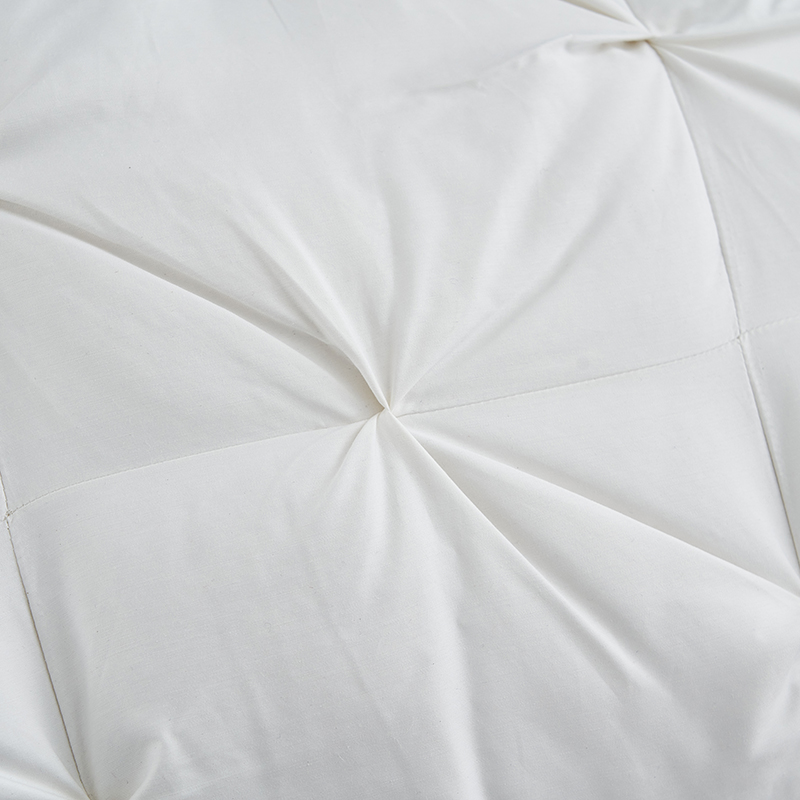 Goose Down Pillow with Twisted Fill TechnologyTwisted goose down filling creates even, adaptive support for back, side, and stomach sleepers in hotel bedding.View Product →
Both are finished with a cotton sateen shell woven tightly enough to keep quills where they belong. If you would like to see the full range, including the fill weights and shell specifications we publish for hotel buyers, you can browse our hotel down pillow collection. For a broader look at how hotels approach down bedding as a system rather than a single item, our team also wrote a guide on building five-star comfort with hotel down bedding.
How We Match Firmness to Sleep Position
When a hotel asks us to develop a pillow for a specific guest profile, we follow a fairly predictable sequence. It usually takes about a week from the first conversation to a sample in the client's hands, and the steps look like this.
Step 1: Understand the guest profile
Is this an airport hotel with mostly one-night business travellers, or a resort where guests stay for a week? Short-stay guests tend to prefer medium support that feels comfortable immediately. Longer stays reward a pillow that holds its shape night after night.
Step 2: Set the target compressed height
We ask the client what percentage of guests they expect to be side sleepers. In most markets it is somewhere between 55 and 70 percent, which is why the default hotel pillow is usually built a little firmer than people expect.
Step 3: Choose the fill and the ratio
Fill power sets the quality ceiling, and the cluster-to-feather ratio sets the feel. A 90/10 blend feels luxurious; an 80/20 blend holds height better. We test both with a compression gauge before deciding.
Step 4: Build a sample within 72 hours
Our sample room can turn a specification into a finished pillow in three days. Clients sleep on it, wash it, and give us notes on how it recovers.
Step 5: Lock the specification and produce
Once the fill weight, shell and stitching are approved, the specification is frozen. Every batch afterwards is checked against that reference so the tenth order feels like the first.
Hotel-Grade Details That Make a Down Pillow Last
A down pillow that feels wonderful in the shop and disappointing after six months usually fails for one of a few predictable reasons. These are the details we check on every batch.
Down-proof shell weave
A loose weave lets small quills work their way out. We use tightly woven cotton, usually between 233 and 400 threads per inch, so the fill stays inside where it belongs.
Double-stitched seams
Seam failure is the most common cause of a pillow losing its fill. Two rows of stitching, plus a clean interior seam finish, adds years of life.
Piping and internal baffles
Baffle walls or piping help the fill stay evenly distributed instead of drifting to the corners overnight.
Raw material testing
Every incoming batch of down goes through a 36-point inspection covering cleanliness, odour, fill power and moisture content before it enters production.
Washability
Hotels wash pillows far more often than households do. We test each construction through repeated wash and dry cycles to confirm the fill recovers its loft.
Traceable certification
Our down and shell fabrics are tested against OEKO-TEX ecological standards, which matters to hotels with published sustainability commitments.
Caring for a Down Pillow at Home
Down is durable, but it is not indestructible. Most of the pillows we see that have gone flat were not worn out by sleeping on them. They were worn out by how they were washed and stored.
Wash less often than you think
Twice a year is usually enough if you use a pillow protector. Frequent washing strips the natural oils that give down its resilience.
Use a front-loading machine
Top loaders with a central agitator can tear seams. Wash two pillows at once to balance the drum, on a gentle cycle with a mild detergent.
Dry thoroughly, with dryer balls
Damp down clumps and smells. Dry on low heat for several cycles, adding clean dryer balls to break up clusters as they dry.
Fluff daily
Ten seconds of fluffing each morning redistributes the fill and restores loft. It is the cheapest maintenance you will ever do.
Store breathable
Never seal a down pillow in plastic. A cotton storage bag lets the fill breathe and prevents mildew.
Replace on a schedule
Even a well-cared-for down pillow loses loft over time. Most people notice a real difference after three to four years of nightly use.
Questions We Hear From Buyers and Guests
These are the questions that come up most often in our conversations with hotel purchasing teams and with readers who write to us after reading our guides.
Is higher fill power always better?
Not on its own. Fill power describes the quality of the clusters, but a high fill power pillow with too little fill weight will still feel flat. For side sleepers, fill weight usually matters more than fill power.
Can one pillow work for both side and back sleeping?
Yes, if you choose a medium-firm pillow with good recovery. Many people change position during the night, so a pillow that holds its height but still feels soft on contact is often the most practical single choice.
Why do hotel pillows feel firmer than the ones I buy at home?
Hotels have to satisfy thousands of different guests, and a slightly firmer pillow is more likely to suit a side sleeper than a very soft one. That is a deliberate decision, not an accident of manufacturing.
How do I know when a down pillow needs replacing?
Fold it in half and let go. A healthy down pillow springs back to shape within a few seconds. If it stays folded, the fill has lost its structure and no amount of washing will bring it back.
Frequently Asked Questions
What is the best down pillow for side sleepers?
Look for a pillow with a compressed height of four to six inches, a fill weight on the higher end of the range, and a construction that includes a firmer core. A three-layer pillow with a down and feather blend in the middle is usually the most reliable choice, because it holds its height through the night instead of collapsing under the weight of the head and shoulder.
What is the best down pillow for back sleepers?
Back sleepers generally do best with a softer, loftier pillow that supports the neck curve without pushing the chin toward the chest. A goose down pillow with a high cluster-to-feather ratio and a compressed height of three to four inches is a good starting point. If the pillow feels too high, the neck will bend forward and you will wake up stiff.
Is goose down better than duck down for pillows?
Goose down clusters are typically larger, which means higher fill power and more loft for the same weight. Duck down is slightly denser and often a little more affordable. Both make excellent pillows. The difference matters most for back sleepers who want a very light, airy feel, and matters less for side sleepers who prioritise support.
How much should I expect to pay for a quality down pillow?
Price tracks fill power, fill weight, and the shell fabric. A well-made pillow with 600 fill power down and a decent cotton shell sits in the middle of the market. Prices climb quickly once you move past 700 fill power or into very high fill weights, and at that point you are paying for lightness as much as for durability.
Are down pillows suitable for people with allergies?
Modern down goes through extensive washing and dust extraction, and tightly woven shells keep the fill contained. Many people with mild sensitivities sleep comfortably on down. If your sensitivity is significant, a good down alternative or microfibre pillow gives you similar support with predictable care requirements. We make a five-layer adjustable pillow with a long zipper that lets you add or remove fill until the height feels right, which is a practical option if you are unsure about down.
 Five-Layer Height Adjustable L-Shape Microfiber PillowRemovable layers and a long L-shaped zipper let sleepers tune height and firmness, with extended shoulder and body support.View Product →
How often should a down pillow be replaced?
With regular fluffing, a protector, and gentle washing twice a year, a quality down pillow should serve you well for three to four years. Hotels often replace theirs sooner because of the number of wash cycles involved. If you notice the pillow no longer springs back when folded, it is time.
Does the pillowcase matter?
More than most people expect. A tightly woven cotton pillowcase adds another layer between your skin and the fill, keeps the pillow cleaner, and helps with temperature regulation. A silk or satin case feels cooler but allows the pillow to shift more. For most sleepers, a 300-thread-count cotton case is the sensible middle ground.
A Final Thought From the Factory Floor
After twenty years of making pillows for hotels, we have stopped believing there is one perfect pillow. There is only the pillow that fits the person sleeping on it. A side sleeper with broad shoulders and a firm mattress needs something completely different from a back sleeper on a soft mattress, and both of them are right.
What we can offer is the experience of having made hundreds of thousands of them. If you are furnishing a hotel and want to work through the specification with us, or if you are simply trying to work out what to put on your own bed, we are happy to talk it through. Start with your sleeping position, then your compressed loft target, then the fill. Everything else follows from those three decisions.

News
-
Hotel Duvet Materials: Microfiber vs Down Explained Introduction to Hotel Duvet Materials Hotel duvets are more than just bedding; they are a critical component of the guest experi...
READ MORE -
Why That Hotel Bed Feels Like Sleeping on a Cloud There's a particular moment every traveler knows. You pull back the crisp white sheets of a luxury hotel bed, sink into the mattre...
READ MORE -
Why Choose Hotel-Style Bedding? Choosing a hotel-style bedding set is one of the easiest ways to instantly elevate your bedroom into a calm, luxurious retreat. Here’s why millions ...
READ MORE

Product List
 Hotel Bedding Set
 +86-180 6864 1189
 +86-(0)513 86311444

 F Zone Chuanjiang Industrial Area, Tongzhou, Nantong City, Jiangsu Province, China
