 English
 русский
 Español
 عربى

Home / News / Industry News / Best Blanket Material for Summer: An Honest Guide from a Hotel Linen Factory
Best Blanket Material for Summer: An Honest Guide from a Hotel Linen Factory


Best Blanket Material for Summer: An Honest Guide from a Hotel Linen Factory
2026-11-02
Content
- 1 The Short Answer: Best Summer Blanket Materials at a Glance
- 2 Why Material Matters More Than Anything Else in Summer
- 3 Summer Blanket Materials Explained, One by One
- 3.1 Cotton: the reliable all-rounder
- 3.2 Linen: the best natural thermoregulator
- 3.3 Bamboo lyocell and lyocell: cool to the touch
- 3.4 Silk: beautiful, but demanding
- 3.5 Lightweight wool: the surprise contender
- 3.6 Microfibre and polyester: only when engineered
- 3.7 Modal and blended fabrics: the quiet compromise
- 4 Weave, Weight and Fill: The Specs That Decide Comfort
- 5 How Heavy Should a Summer Blanket Be?
- 6 Hotel Guest Rooms vs Home Bedrooms: What Actually Changes
- 7 How We Test Summer Bedding Before It Leaves the Factory
- 8 Myths and Realities About Summer Blankets
- 9 Care and Longevity: Getting More Than One Summer Out of a Blanket
- 10 Frequently Asked Questions About Summer Blanket Materials
- 10.1 What is the single best blanket material for summer?
- 10.2 Is cotton or bamboo better for hot sleepers?
- 10.3 Should a summer blanket be 100% cotton?
- 10.4 What GSM is best for a summer blanket?
- 10.5 Do hotels use blankets in summer?
- 10.6 Which material is easiest to care for?
- 10.7 How can I tell if a blanket will actually sleep cool before buying?
Ask ten people what the best blanket material for summer is and you will get ten confident answers. Ask a bedding factory that has been pushing summer bedding through hotel laundries for twenty years, and the answer gets narrower - and a lot more useful.
We are Nantong Sufang Textile, a hotel bed linen supplier working out of Jiangsu, China. Our 8,000 square metre factory and twelve production lines supply bedding sets, duvets, pillows, mattress toppers, towels and bathrobes to more than 300 star-rated hotels. Before any fibre reaches a loom, it goes through our 36-point intake test, and before any finished blanket leaves the building it goes through seven in-process inspections and a final sampling check.
That routine has taught us something simple. In summer, the material matters far more than the label, the design, or the thread count badge stitched onto the packaging. A blanket is a layer of insulation, and in hot weather its job is not to trap heat but to let it leave. The fibre you pick decides whether that happens - and whether you wake up at 3 a.m. kicking the covers onto the floor.
This guide walks through the materials that genuinely work in summer, the ones that only work under certain conditions, and the specs that quietly decide everything.
The Short Answer: Best Summer Blanket Materials at a Glance
If you only read one part of this page, read this one. Ranked by how they perform in real summer conditions - warm nights, humid air, and a sleeping body releasing moisture hour after hour - these are the materials we would put at the top of the list.
1. Linen - best overall thermoregulation
Flax fibre is naturally hollow, so it moves air and moisture better than almost anything else on a bed. It feels cool the moment you touch it, dries fast, and gets softer with every wash. If summer heat is your main problem, linen is the answer.
2. Cotton gauze - best for humid nights
Two loose layers of plain-woven cotton tacked together. Extremely airy, extremely light, and forgiving when the air is thick with moisture.
3. Cotton percale - easiest to live with
Crisp, breathable and tough. The most practical choice for families, guest rooms and anyone who wants a blanket they can wash hard and forget about.
4. Bamboo lyocell - coolest to the touch
Silky, smooth and noticeably cold against the skin. Excellent moisture management, though it needs gentler washing than cotton.
5. Low-fill microfibre duvet - best for hotel rooms
A 250-350 gsm microfibre fill inside a 100% cotton shell gives you a light, breathable duvet that survives commercial laundry. This is what most of our hotel clients switch to between May and September.
And what to skip in summer
Heavy fleece, brushed polyester throws, high-loft down duvets and thick knitted blankets. They are wonderful in January and miserable in July, because they trap exactly the heat and moisture you are trying to get rid of.
Why Material Matters More Than Anything Else in Summer
Three physical properties decide whether you sleep cool or wake up damp. None of them have anything to do with how a blanket looks on the bed.
Air permeability
How easily air moves through the weave. Open constructions such as percale, plain-weave linen and double gauze let body heat escape. Dense sateen, brushed finishes and tightly packed knits hold it in.
Moisture handling
A sleeping adult releases a surprising amount of moisture overnight. Fibres that absorb and then release it - linen, wool, cotton, lyocell - keep the microclimate around your skin dry. Polyester absorbs almost nothing, so the moisture simply stays where it is.
Thermal conductivity
This is the "cool to the touch" effect. Linen and lyocell pull heat away from the skin faster than cotton does, while brushed synthetics feel warm the second you touch them.
There is a fourth factor that people overestimate: weight. A thin blanket made of brushed polyester can feel far hotter than a slightly heavier linen throw, because the problem is not mass but airflow. Buying a "summer blanket" based on how thin it looks is one of the most common mistakes we see.
Thread count is the other overrated number. In a hotel bedding set, a 300TC or 400TC cotton sateen is genuinely luxurious. But for summer comfort, a 200TC percale will usually sleep cooler than a 600TC sateen, simply because a plain weave breathes better than a dense one. Thread count tells you about density and hand feel, not about breathability.
Summer Blanket Materials Explained, One by One
Cotton: the reliable all-rounder
Cotton is where most people should start, and it is still the fibre we produce in the largest volume. It absorbs moisture well, it is hypoallergenic, it tolerates hot washing and bleach, and it is available at almost every price point.
But "cotton" is not one material. The construction changes everything:
- Percale (plain weave): crisp, matte, highly breathable. The classic summer blanket construction and the easiest to care for.
- Double gauze or muslin: two airy layers loosely joined. Extremely light and breathable - ideal for humid nights and small children.
- Waffle weave: a three-dimensional grid of cells that traps a little air. Slightly warmer than gauze, but excellent in air-conditioned rooms.
- Sateen: smoother and heavier. Beautiful for bedding sheets, less ideal as a summer blanket because the weave is denser.
For a summer cotton blanket, look for long-staple or extra-long-staple cotton where possible, and a weight between roughly 250 and 350 gsm. Anything above 400 gsm starts to feel like a spring blanket rather than a summer one.
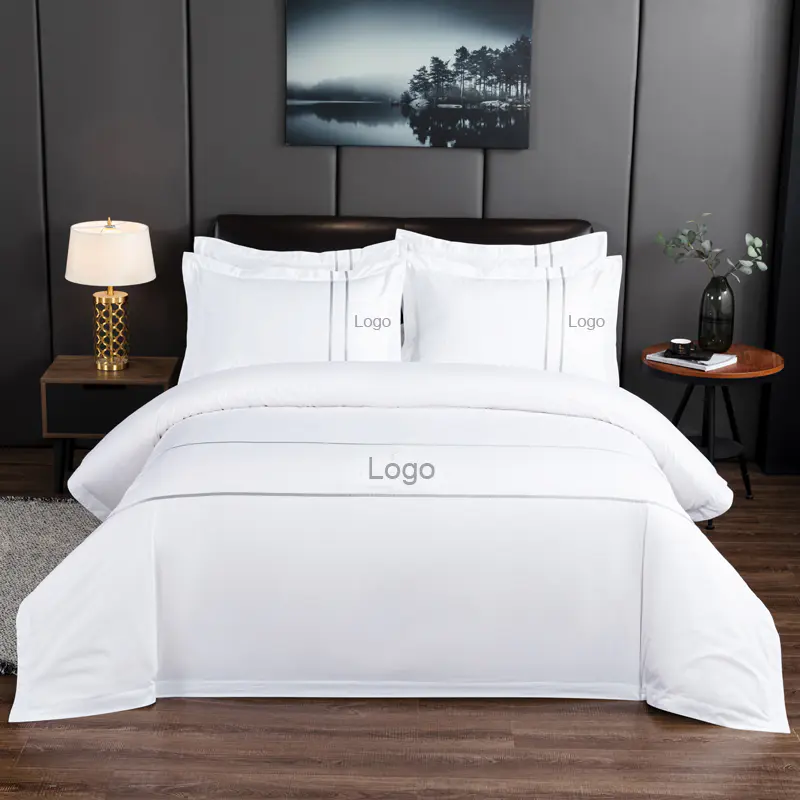
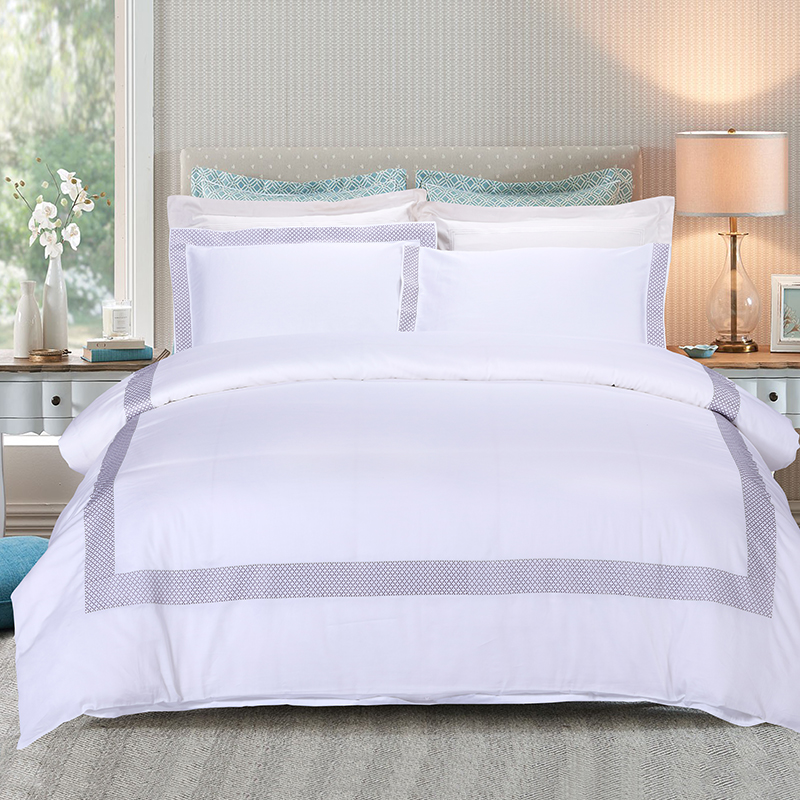
 Double-Layer Gauze Cotton Bedding Set for SummerA lightweight double-gauze cotton bedding set with fitted sheet, flat sheet, duvet cover, and pillowcase, suited to breathable summer sleep in lightly air-conditioned rooms.View Product →
Double-gauze constructions are the version we recommend most often to families, because the open structure lets air move freely while the two layers still give enough coverage for a light air-conditioned room.
Linen: the best natural thermoregulator
Flax is the fibre we get asked about most by guests who cannot sleep in the heat. Structurally, linen fibre is hollow, which makes it both lighter and more conductive than cotton. It wicks moisture away, releases it quickly into the air, and dries noticeably faster than cotton after washing.
The trade-offs are real: linen wrinkles, it feels crisp and slightly rough when new, and it takes several washes to soften. It also costs more. But for hot, dry nights and for people who sleep warm all year round, nothing natural performs better. Stone-washed and garment-washed linen is the easiest way to skip the break-in period.
Bamboo lyocell and lyocell: cool to the touch
These regenerated cellulose fibres are spun from bamboo or eucalyptus pulp and are famously smooth. Their most useful summer property is thermal conductivity - they feel genuinely cold against the skin, which is why they sell so well in hot climates.
Moisture management is excellent and the surface is smooth enough for sensitive skin. The weakness is durability: these fibres lose strength when wet, so they need a gentle wash cycle and low-temperature drying. In commercial hotel laundry they are a compromise, not a workhorse.
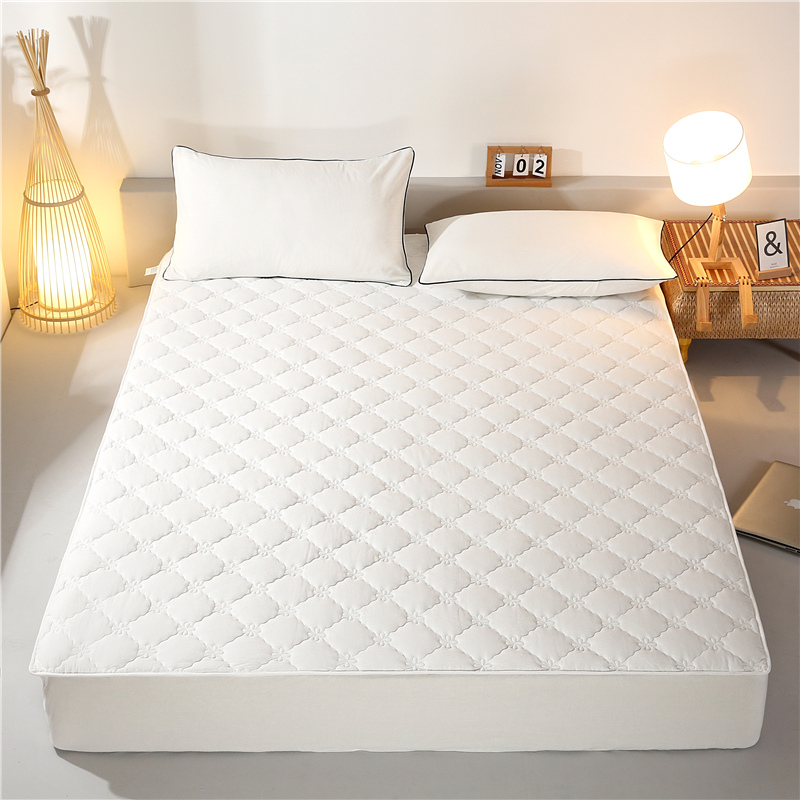
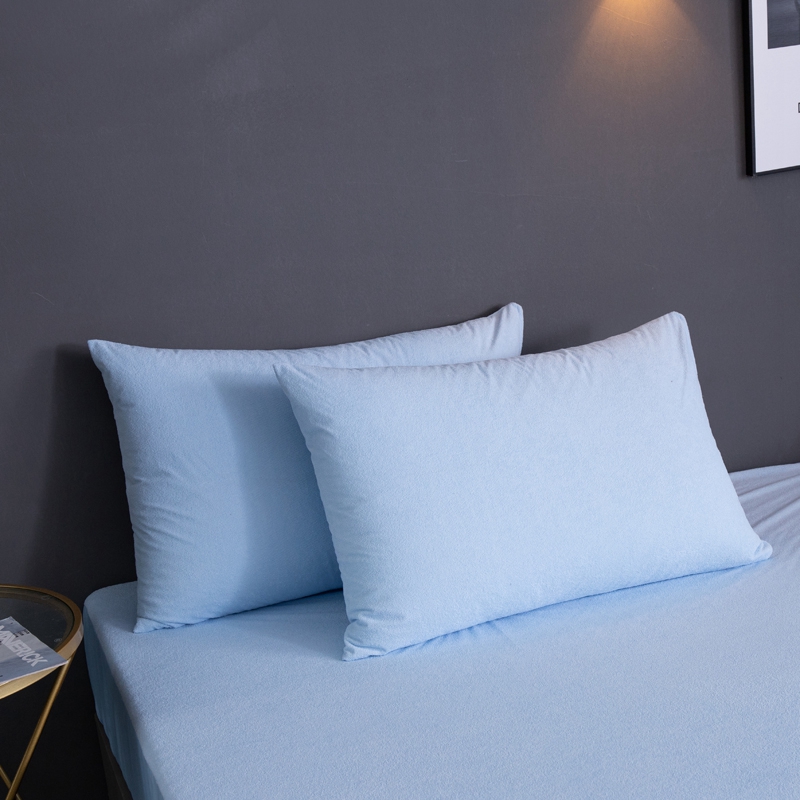 Breathable Waterproof Bamboo Mattress Protector Fitted SheetA bamboo-and-TPU fitted protector with a smooth, moisture-wicking surface and deep pockets, adding a cool, waterproof layer beneath summer bedding.View Product →
Bamboo also works beautifully one layer below the blanket. A breathable bamboo mattress protector adds a cool, smooth surface without adding warmth, which matters more than most people realise.
Silk: beautiful, but demanding
Silk-filled blankets and silk throws regulate temperature well and feel luxurious, and light silk is breathable in a way that synthetics are not. The catch is care. Silk cannot take hot water, chlorine bleach or industrial drying, so it is a poor fit for hotel use and a high-maintenance choice at home. In dry climates it is lovely. In humid ones, it can feel clammy.
Lightweight wool: the surprise contender
Wool sounds wrong for summer, but fine merino in a tropical weight behaves very differently from a chunky winter blanket. Wool fibres buffer moisture vapour inside the fibre, releasing it slowly, which keeps the microclimate stable. For nights with big temperature swings, a light wool layer can outperform cotton.
Two warnings. First, weight matters enormously - only very light constructions belong on a summer bed. Second, wool needs careful washing and will not survive a hotel laundry at 60-80 degrees.
Microfibre and polyester: only when engineered
Standard polyester is hydrophobic, which means it does not absorb moisture and tends to trap heat. That is exactly what you do not want in summer. However, low-fill microfibre duvets are a completely different proposition: a light fill weight inside a natural cotton shell gives you a washable, durable, genuinely breathable summer duvet at a price cotton fill cannot match.
This is why the fibre content alone never tells the full story. A 300 gsm microfibre duvet in a cotton shell sleeps far cooler than a 500 gsm cotton blanket, even though one is synthetic and the other is natural.
Modal and blended fabrics: the quiet compromise
Modal and cotton-modal blends sit between cotton and lyocell: soft, absorbent and a little more drapable than plain cotton, at a lower price than linen or silk. They are a sensible middle option for guest rooms and rental properties, where a blanket needs to feel good, wash well and be replaced without drama.
Weave, Weight and Fill: The Specs That Decide Comfort
If you are comparing options, this table is the fastest way to see how the main candidates stack up against each other.
| Material | Airflow | Moisture handling | Hot-laundry durability | Best use in summer |
|---|---|---|---|---|
| Cotton percale | High | Good | Very good | Everyday summer blanket |
| Cotton gauze / muslin | Very high | Good | Moderate | Humid nights, light layers |
| Waffle-weave cotton | High | Good | Good | Air-conditioned rooms |
| Linen (flax) | Very high | Excellent | Moderate | Hot sleepers, dry heat |
| Bamboo lyocell | High | Very good | Moderate | Cool-to-the-touch comfort |
| Lyocell (eucalyptus) | High | Very good | Moderate | Sensitive skin, smooth feel |
| Silk | Medium-high | Good | Low | Luxury, dry climates |
| Light merino wool | Medium | Excellent | Low | Nights with temperature swings |
| Polyester microfibre | Low-medium | Poor | Excellent | Low-fill duvets, budget rooms |
| Cotton-poly blend | Medium | Fair | Excellent | High-turnover contract use |
Two rules sit above the table. First, an open weave beats a tight weave in summer almost every time. Second, a light fill weight beats a heavy one, regardless of fibre - a 250 gsm cotton blanket will sleep cooler than a 450 gsm cotton blanket made from identical yarn.
If you are specifying summer bedding for hotel rooms rather than a home bed, our guide to choosing the right duvet for hotel comfort covers the fill weights and shell fabrics that hold up to commercial use.
How Heavy Should a Summer Blanket Be?
Weight is the single most practical number you can check. These are the ranges we see working in real summer conditions, expressed as grams per square metre for fabric blankets and as fill weight for duvets.
Cotton gauze 150-220 gsm
Linen throw 180-260 gsm
Bamboo lyocell 200-300 gsm
Cotton percale 250-350 gsm
Waffle cotton 280-400 gsm
Microfibre duvet fill 250-350 gsm
For duvets, the equivalent measure is thermal resistance. A light summer duvet usually sits around 1.0 to 4.5 TOG, a three-season duvet around 7.5 to 10.5 TOG, and a winter duvet 12 TOG and above. If you own one duvet for the whole year, a two-in-one design with a light and a heavier layer that snap together gives you far more flexibility than a single mid-weight duvet.
One more practical note: in a room with strong air conditioning, people usually want slightly more weight than they expect. That is why waffle weaves sell well in hotel rooms - they are airy in structure but have enough presence to feel like a blanket.
Hotel Guest Rooms vs Home Bedrooms: What Actually Changes
The best material for a summer blanket depends heavily on who is sleeping under it and who is washing it afterwards. The two settings pull in different directions.
In a hotel guest room
- Durability comes first. Bedding may face more than a hundred commercial wash cycles.
- White, bleach-tolerant cotton is still the default for hygiene and appearance.
- Guests expect a light duvet rather than a loose blanket, so low-fill duvets with cotton shells dominate.
- Spare blankets in the wardrobe should be thin, washable and stackable.
- Consistency matters more than novelty - a guest should get the same sleep temperature in every room.
In a home bedroom
- Comfort and feel come first. Linen, gauze and lyocell all earn their place.
- You can match the material to your climate and to how warm you personally sleep.
- Delicate fibres are viable, because home washing is far gentler than industrial laundry.
- Layering works better than one blanket - a light sheet plus a gauze throw handles most summer nights.
- Colour and texture can be part of the decision, not just performance.
For hotels, the practical answer is a light duvet in a breathable cotton shell, plus a spare cotton or waffle blanket for guests who want an extra layer. For homes, the practical answer is linen or cotton gauze, and a willingness to swap weights rather than trying to find one blanket that does everything.
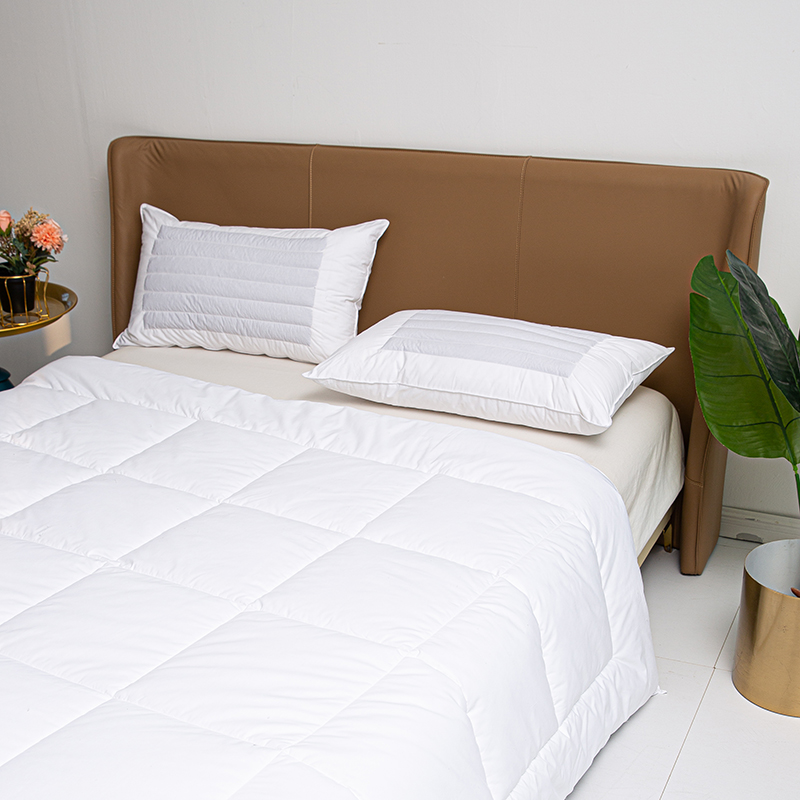 Quilted 100% Cotton Summer Duvet with 300g FillingA quilted summer duvet with a breathable cotton shell and 300g microfiber fill, designed to stay light while looking structured in hotel rooms.View Product →
A quilted summer duvet with a 300 gsm fill and a 100% cotton shell is the closest thing to a single answer for hotel rooms: light enough for July, structured enough to look proper on a made bed, and robust enough to survive commercial laundering season after season.
How We Test Summer Bedding Before It Leaves the Factory
Material claims are easy to make and hard to verify. Here is the sequence every batch of bedding goes through in our facility, and it is a useful checklist for evaluating any supplier.
Step 1 - Fibre intake and the 36-point test
Incoming yarn and fabric are checked for fibre content, yarn count, density, shrinkage, colour fastness and strength before anything is cut. Problems caught here are cheap to fix.
Step 2 - Weaving and finishing checks
Construction is verified against the specification so that a summer blanket really is the gsm and weave it claims to be, not a heavier substitute.
Step 3 - Seven in-process inspections
Checks run through cutting, stitching, filling and finishing. This is where most defects are caught before a product is assembled into something that cannot be repaired.
Step 4 - 72-hour sampling
Custom designs are prototyped quickly so hotels and buyers can feel the actual weight and hand feel before committing to a bulk order.
Step 5 - Final sampling before dispatch
Finished goods are re-checked and physically assessed on a bed, because a blanket that measures correctly can still drape badly or feel heavy once it is spread out.
Our technical team also works on fabric development specifically for hot-weather use, including moisture-wicking and quick-drying cotton finishes for high-occupancy properties. Products are produced to OEKO-TEX ecological textile standards, which matters when a blanket sits against a guest's skin for eight hours a night.
Myths and Realities About Summer Blankets
Some of the most common advice about summer bedding is simply wrong. Here is what we see in practice.
"Higher thread count always means cooler."
Not true. Thread count describes density. A very high count in a sateen weave can be less breathable than a modest 200TC percale. In summer, weave structure matters more than the number.
"You do not need a blanket in summer at all."
Most people do. Body temperature drops in the early hours, and a light layer prevents the chill that wakes people around 4 a.m. The goal is a light, breathable layer, not no layer.
"Bamboo is always better than cotton."
Bamboo lyocell is cooler to the touch and smoother, but it is less durable under hot washing. For a guest room that sees heavy laundering, cotton usually wins.
"Synthetic fibres are always hot."
Not always. A low-fill microfibre duvet in a cotton shell sleeps cooler than a heavy cotton blanket. Fill weight and shell fabric decide comfort, not the fibre name alone.
"A thinner blanket is automatically cooler."
Thickness is a rough guide at best. A thin brushed polyester throw can trap more heat than a slightly thicker open-weave linen blanket.
"Linen is too scratchy to sleep under."
New linen is crisp, but garment-washed and stone-washed linen is soft from the first night and continues to soften. The scratchiness people remember comes from low-grade, unwashed fabric.
Care and Longevity: Getting More Than One Summer Out of a Blanket
Wash temperature
Cotton and cotton blends handle 40-60°C with ease. Linen prefers 40°C. Lyocell, bamboo and modal should stay at 30°C or on a gentle cycle. Silk and wool belong in a hand-wash or specialist programme.
Detergent and bleach
Use a mild, liquid detergent. Avoid chlorine bleach on linen, lyocell and wool, as it attacks the fibre and shortens the life of the blanket noticeably.
Drying
Line drying in the shade preserves natural fibres and keeps linen crisp. Tumble drying on low is acceptable for cotton. High heat is the fastest way to shrink a summer blanket or set permanent wrinkles.
Storage between seasons
Store clean and completely dry, folded in a breathable cotton bag rather than a plastic vacuum bag. Natural fibres need air, and trapped moisture is what causes musty smells by the following June.
Spare blankets for guests
Keep one thin cotton or waffle blanket per room in the wardrobe. It costs little, takes up almost no space, and solves the complaint that a room is too warm or too cool.
Rotation
If you own a summer and a winter blanket, rotate rather than stacking them. A blanket that spends six months compressed under a heavier one loses loft faster than one stored properly.
Frequently Asked Questions About Summer Blanket Materials
What is the single best blanket material for summer?
Linen, if comfort and breathability matter most. Cotton percale or cotton gauze if you want something easier to wash and cheaper to replace. For hotel rooms, a low-fill duvet with a 100% cotton shell is the most practical answer.
Is cotton or bamboo better for hot sleepers?
Bamboo lyocell feels cooler the moment you touch it and wicks moisture quickly, so hot sleepers often prefer it. Cotton is more breathable in structure over long periods and far more durable. If you sleep hot and wash gently, bamboo wins on feel. If you want one blanket for years, cotton wins.
Should a summer blanket be 100% cotton?
Not necessarily. Purity is not the goal - breathability is. A cotton-poly blend with an open weave can sleep cooler than a dense all-cotton fabric, and a microfibre duvet at 300 gsm in a cotton shell is a genuinely cool option. Look at construction and weight first.
What GSM is best for a summer blanket?
For fabric blankets, roughly 150-350 gsm depending on the fibre. Cotton gauze sits at the light end, waffle cotton at the heavier end. For duvets, a summer fill of about 250-350 gsm is a good working range.
Do hotels use blankets in summer?
Many hotels remove the heavy duvet in warm months and replace it with a light summer duvet, often 250-350 gsm. A thin cotton or waffle blanket is usually kept in the wardrobe as an optional extra layer, because guest preferences vary widely within the same building.
Which material is easiest to care for?
Cotton percale, followed by cotton-poly blends. Both tolerate warm washing, normal detergent and tumble drying. Linen is manageable but wrinkles. Lyocell, bamboo, silk and wool all need gentler handling.
How can I tell if a blanket will actually sleep cool before buying?
Check four things: fibre, weave, weight and shell fabric. Open weaves breathe better than dense ones, lighter weights sleep cooler than heavier ones, and a natural shell over a synthetic fill performs far better than an all-synthetic construction. If the specification does not list a weight in gsm, treat any cooling claim with caution.
Summer bedding is one of those decisions that looks trivial until you have spent a week waking up at three in the morning. The good news is that the rules are straightforward: choose a fibre that moves air and moisture, keep the weight light, and favour an open weave over a dense one.
After twenty years of making bedding for star-rated hotels, we still come back to the same short list - linen for the coolest sleep, cotton gauze for humid nights, percale for everyday durability, and a low-fill cotton-shell duvet for rooms that have to work hard. Get those basics right and the rest of summer takes care of itself.
News
-
Hotel Duvet Materials: Microfiber vs Down Explained Introduction to Hotel Duvet Materials Hotel duvets are more than just bedding; they are a critical component of the guest experi...
READ MORE -
Why That Hotel Bed Feels Like Sleeping on a Cloud There's a particular moment every traveler knows. You pull back the crisp white sheets of a luxury hotel bed, sink into the mattre...
READ MORE -
Why Choose Hotel-Style Bedding? Choosing a hotel-style bedding set is one of the easiest ways to instantly elevate your bedroom into a calm, luxurious retreat. Here’s why millions ...
READ MORE

Product List
 Hotel Bedding Set
 +86-180 6864 1189
 +86-(0)513 86311444

 F Zone Chuanjiang Industrial Area, Tongzhou, Nantong City, Jiangsu Province, China
