 English
 русский
 Español
 عربى
عربى
What type of pillow does hotel use?


What type of pillow does hotel use?
2026-07-20
Content
- 1 What Is a Hotel Pillow
- 2 The Main Types of Pillows Hotels Use
- 3 What Is Pillow Menu in a Hotel
- 4 What Is the Best Hotel Pillow
- 5 Can I Have an Extra Pillow Hotel Guests Often Ask For
- 6 Do Hotel Pillow Menus Improve Guest Sleep Satisfaction
- 7 Hotel Pillow Standards at Well Known Chains
- 8 How Hotels Choose Hotel Quality Pillows
- 9 How to Choose a Hotel Pillow for Home Use
- 10 Frequently Asked Questions
Hotel Bedding Guide
Everything a traveler, a hotel buyer, or a home shopper needs to know about hotel pillows, pillow menus, and how to bring that five star sleep home.
Direct answer: Most hotels use a medium to medium firm pillow filled with either siliconized polyester microfiber, down and feather blends, or memory foam, wrapped in a cotton sateen cover with a thread count between 200 and 400. Three to five star properties typically stock two to three pillow types per room and offer a pillow menu with four to eight additional options so guests can request the firmness and fill that suits them.
What Is a Hotel Pillow
Before comparing brands and fill types, it helps to answer the most basic question directly. What is a hotel pillow, in practical terms. A hotel pillow is not simply any pillow placed in a guest room. It is a piece of hospitality equipment that has been selected against a specific checklist that a household pillow rarely has to meet. Hotel buyers look at loft, firmness, washability, fire safety compliance, allergen resistance, and how the pillow performs after hundreds of commercial laundry cycles.
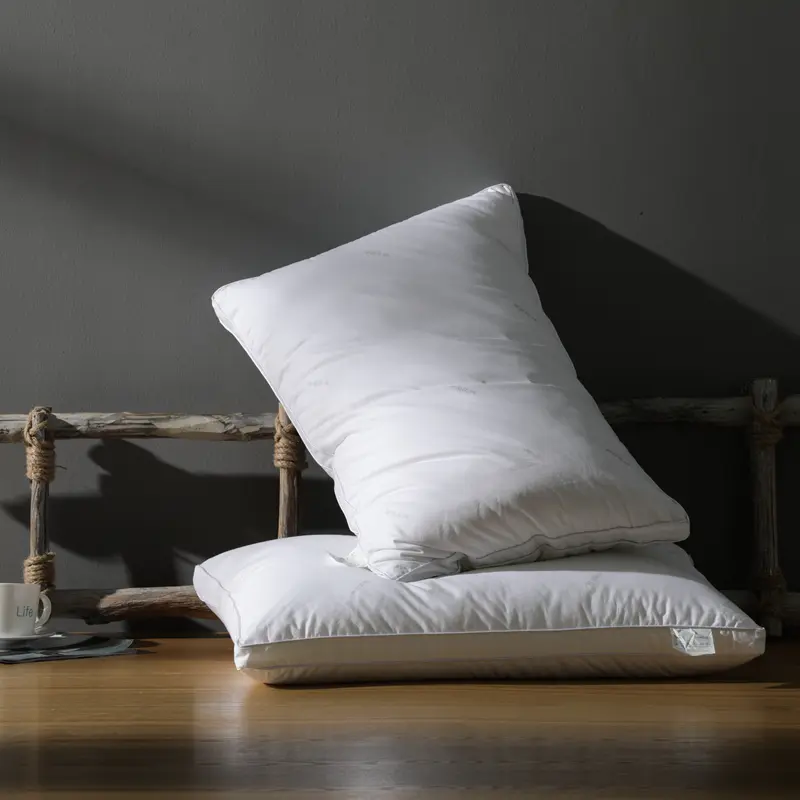
A typical household pillow is chosen once, by one person, based on personal preference and a short trial period at home. A hotel pillow, in contrast, is chosen to satisfy an average of thousands of different sleepers a year, each with different body weights, sleep positions, and temperature preferences. That is why hotel quality pillows are engineered differently from the pillows sold in a typical big box home goods aisle. They tend to hold their shape longer, resist flattening, and recover their loft quickly after being compressed in transport or during housekeeping.
In short, a hotel pillow is a commercial grade sleep product built for durability, hygiene, and broad comfort appeal, rather than a single ideal sleeper. This distinction matters when you are trying to recreate a hotel feeling at home, because buying the exact same category of pillow a hotel uses will get you far closer to that experience than buying a generic pillow from a general retailer.
Why Hotels Do Not Use One Single Pillow Type
Guests sleep in every possible position: on their back, side, stomach, or a mix of all three during the night. A single pillow firmness cannot comfortably support all of these positions. This is the core reason almost every branded hotel property stocks at least two pillow firmness levels as standard, then layers a pillow menu on top for guests who want something more specific.
There is also a practical operations reason behind this approach. Housekeeping teams need pillows that can be quickly identified, restocked, and swapped between rooms without confusion. Many hotels solve this by using visually similar pillow shells for the standard bed pillows, while pillow menu items are tagged, bagged, or stored separately so staff can retrieve the correct option on request. This system keeps turnover times low during same day checkout and check in cycles, which matters enormously in properties running near full occupancy.
Hotel design consultants also point out that pillow choice is tied closely to brand identity. A budget chain trying to keep nightly rates low will lean on a single, cost effective fill that still performs well after heavy laundering, while a luxury resort trying to justify a premium rate will invest in higher loft down blends and a wider pillow menu specifically because bedding comfort is one of the few things a guest physically interacts with for eight hours straight. In that sense, the pillow is one of the most direct, tactile expressions of a hotel brand promise that a guest experiences during their stay.
How Loft and Fill Weight Affect the Way a Hotel Pillow Feels
Two pillows can use the exact same fill material and still feel completely different depending on how much fill is packed inside the shell. This is measured as fill weight, usually expressed in grams or ounces, and it directly determines loft, which is the height the pillow holds when resting flat. A low fill weight pillow will compress quickly and feel flat within a few hours of use, which is a common complaint among travelers describing a disappointing hotel pillow. A properly specified hotel pillow uses enough fill weight to maintain its shape through a full night of movement, without becoming so dense that it feels stiff or unyielding.
Reputable hospitality suppliers publish fill weight specifications for exactly this reason, since it allows a hotel buyer to compare two seemingly similar pillows on a like for like basis rather than relying on marketing descriptions such as plush or luxury, which have no standardized meaning across manufacturers.
The Main Types of Pillows Hotels Use
Hotel pillow programs are usually built from a short list of core fill types. Each fill has a different feel, price point, and maintenance requirement, which is why hotels mix and match them depending on the property tier.
| Pillow Fill Type | Feel | Typical Hotel Tier | Maintenance Notes |
|---|---|---|---|
| Siliconized polyester microfiber | Soft to medium, down like | Budget to midscale | Machine washable, dries quickly, low cost to replace |
| Down and feather blend | Soft, plush, moldable | Upscale to luxury | Needs professional laundering, higher cost |
| 100 percent down | Very soft, lightweight, high loft | Luxury and resort | Delicate care, premium price point |
| Memory foam shredded fill | Medium firm, contouring | Business and wellness focused hotels | Low maintenance, resists dust mites |
| Latex fill | Firm, bouncy, supportive | Boutique and eco focused hotels | Naturally hypoallergenic, longer lifespan |
| Gel infused fiber | Medium, cooling | Midscale to upscale | Popular for warm climates, easy care |
Across almost every hotel segment, siliconized polyester fiberfill remains the most common core because it strikes the best balance of comfort, cost, and washability at scale. It mimics the loft of down without the allergy concerns or the higher laundering cost, which makes it the practical default for a property managing hundreds of rooms.
Pillow Cover and Construction Standards
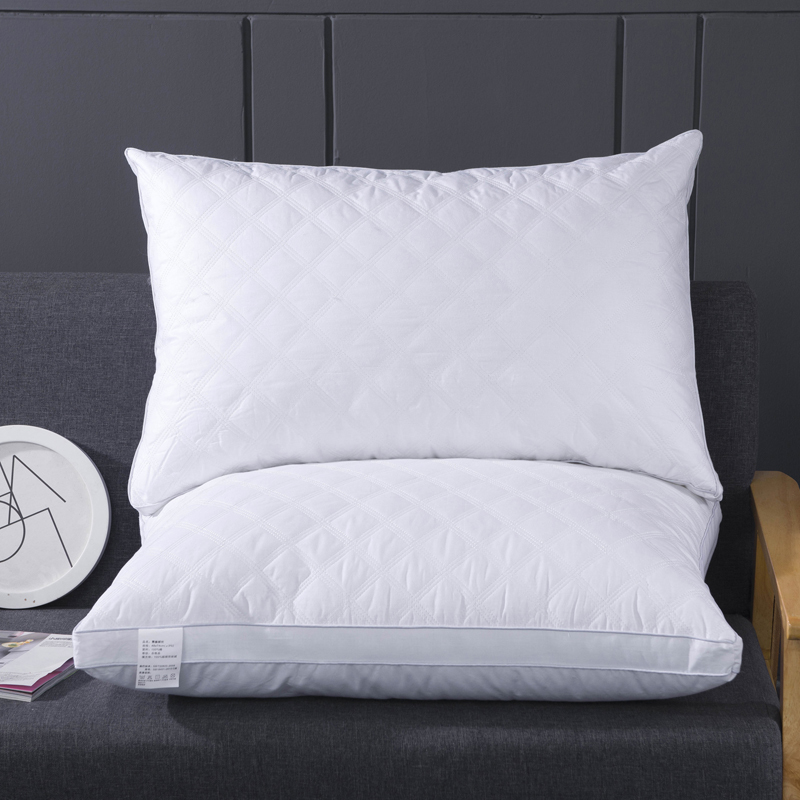
The fill is only part of the story. Hotel quality pillows are also defined by their shell construction. Reputable hotel textile suppliers use a cotton or cotton polyester sateen shell in the 200 to 400 thread count range, finished with a double needle stitched edge and a piped or knife edge seam to prevent fill from shifting or leaking out after repeated washing. Many properties also add a zippered protective liner underneath the decorative shell, which extends the working life of the pillow and keeps it compliant with hygiene standards between guest stays.
This protective liner layer is one of the least visible but most important parts of a hotel pillow system. Because a single pillow may be slept on by a different guest every night for a year or more, hotels need a way to protect the fill from moisture, skin oils, and allergens without laundering the entire pillow after every stay. A zippered, water resistant inner liner allows housekeeping to wipe down or spot clean the pillow between stays, while the decorative outer shell and pillowcase are laundered on the standard turnover schedule. Only the inner liner and full fill core go through deep laundering on a longer interval, typically every one to three months depending on occupancy and local health regulations.
Fire safety is another construction requirement that separates hotel pillows from typical consumer products. In many countries and states, hospitality bedding, including pillows, must meet specific flammability standards such as those set by state fire marshals in the United States or equivalent regulations in the United Kingdom and European Union. This usually means the fill and shell materials must pass an open flame or smolder resistance test, and compliant products carry a permanently attached law label or compliance tag that hotel buyers are required to keep on file for inspection purposes. A general consumer pillow purchased from a typical home goods store may not meet these thresholds, which is one of the practical reasons hotels rarely source bedding from the same channels as individual shoppers.
What Is Pillow Menu in a Hotel
A pillow menu is a printed or digital list of pillow options that a hotel offers beyond the two pillows already placed on the bed. So what is pillow menu in a hotel exactly, and how does it work in practice. When a guest checks in, or sometimes before arrival through a mobile app, they are given a short list describing each pillow by firmness, fill, and benefit, such as a cooling gel pillow for hot sleepers, a firm buckwheat style pillow for back support, or a hypoallergenic synthetic pillow for guests with allergies. The guest selects what they want and housekeeping or the concierge team delivers it to the room, usually free of charge as part of the stay, though some luxury resorts do charge a small fee for specialty options like a body pillow or a weighted pillow.
The concept grew out of the boutique and luxury hotel segment in the early 2000s, when properties realized that pillow comfort was one of the top complaints in guest satisfaction surveys, right alongside mattress firmness and room temperature. Rather than trying to guess a single perfect pillow for every guest, hotels began offering a curated menu so guests could self select.
The idea also spread quickly because it solved a real operational problem. Before pillow menus became common, a guest who found the standard pillow uncomfortable had only one option, which was to ask the front desk for something different and hope the property happened to have an alternative on hand. This often resulted in an awkward exchange, an unpredictable wait, and a mismatched pillow that had simply been pulled from a storage closet without much thought to fill or firmness. A formal pillow menu turns this ad hoc process into a structured, repeatable service. Housekeeping teams keep clearly labeled inventory for each menu option, front desk staff are trained to describe the choices accurately, and guests know exactly what they are requesting rather than describing a vague preference and hoping for the best.
Some resort and luxury properties have taken the concept even further by pairing the pillow menu with a broader sleep menu that also covers mattress topper firmness, blanket weight, and even in room aromatherapy designed to support sleep. In these cases the pillow menu functions as the entry point into a larger wellness positioning for the brand, reinforcing the idea that the property is actively managing the guest's sleep quality rather than leaving it to chance.
What Does Pillow Menu Mean in a Hotel, in Terms of Guest Experience
From the guest side, what does pillow menu mean in a hotel comes down to control. Instead of tossing and turning on a pillow that is too soft or too firm, a guest can simply ask for an alternative. This small gesture signals a higher level of service and is often listed in hotel reviews as a memorable, above and beyond touch, even though the cost to the hotel of stocking extra pillow inventory is relatively modest.
| Common Pillow Menu Option | Best For | Fill Type Used |
|---|---|---|
| Firm support pillow | Back sleepers, guests with neck pain | Latex or dense polyester |
| Soft down pillow | Stomach sleepers | Down and feather blend |
| Cooling gel pillow | Hot sleepers, warm climates | Gel infused fiber |
| Hypoallergenic pillow | Guests with allergies | Siliconized polyester |
| Body pillow | Pregnant guests, side sleepers | Polyester fiberfill |
| Contour memory foam pillow | Guests with cervical or shoulder issues | Shredded or solid memory foam |
| Buckwheat or millet pillow | Guests wanting a traditional firm option | Natural husk fill |
What Is the Best Hotel Pillow
There is no single winner that fits every sleeper, but when travelers and hospitality reviewers ask what is the best hotel pillow, a few consistent answers come up across the industry. The best hotel pillow is generally considered to be a medium loft pillow with a down alternative or down blend fill, wrapped in a breathable cotton sateen cover, because this combination satisfies the widest range of sleep positions and body types without feeling too soft or too flat.
Hospitality design consultants typically score a hotel pillow against four criteria before calling it best in class.
- Support: does the pillow keep the neck and spine aligned across back, side, and stomach positions
- Recovery: does the pillow bounce back to shape quickly after being compressed
- Breathability: does the cover and fill allow airflow so the guest does not overheat
- Durability under laundering: can the pillow survive repeated industrial washing without clumping or losing loft
Pillows that score well on all four are usually a hybrid design, such as a polyester microfiber core wrapped in a thin layer of down like fiber, finished with a high thread count cotton shell. This hybrid approach is why so many travelers say a hotel pillow feels better than what they have at home, even though the fill itself is not exotic or expensive.
It is also worth noting that the best hotel pillow for a given property is not necessarily the softest or most expensive option available. Hospitality buyers frequently test candidate pillows through a combination of guest feedback trials, where a small batch is placed in select rooms and reviewed over a period of weeks, and laboratory style testing that measures loft recovery after repeated compression cycles meant to simulate months of nightly use. A pillow that scores brilliantly in a showroom but flattens within thirty nights of real use is not considered best in class by hospitality standards, even if it feels wonderful on day one. This is a key difference between how a hotel evaluates a pillow and how an individual consumer typically shops, since a guest usually judges a pillow in the moment, while a hotel buyer has to think in terms of performance across an entire annual laundering and usage cycle.
Firmness Ratings Hotels Commonly Use
| Firmness Level | Feel Description | Recommended Sleep Position |
|---|---|---|
| Soft | Sinks easily, low resistance | Stomach sleepers |
| Medium | Balanced sink and support | Back sleepers, combination sleepers |
| Medium firm | Noticeable resistance, holds shape | Side sleepers |
| Firm | Minimal sink, strong support | Side sleepers with broad shoulders, guests with neck pain |
Can I Have an Extra Pillow Hotel Guests Often Ask For
One of the most frequent front desk and housekeeping requests in any property is simple: can i have an extra pillow hotel guests ask, usually on the first night of their stay. The good news is that almost every hotel, from budget chains to five star resorts, will provide an extra pillow at no charge if you ask. The process varies slightly by property type.
- Full service hotels: call housekeeping or the front desk and an extra pillow is typically delivered within 15 to 30 minutes
- Limited service and budget hotels: extra pillows may be kept in a supply closet on each floor, or you may need to ask at the front desk directly
- Luxury resorts: many now list extra pillows and full pillow menus in a digital concierge app so you can request one without a phone call
If a hotel does not have a formal pillow menu, it is still worth asking whether they have any alternative pillow types on hand, since many properties keep a small reserve of firm or hypoallergenic pillows even without an official printed menu. It never hurts to ask, and hospitality staff generally view the request as completely normal rather than an inconvenience.
Frequent travelers often develop small habits around this request. Some ask for an extra pillow at the same time they confirm their room preferences during check in, which avoids a second interaction later in the evening. Others contact the property in advance through a booking confirmation email or a chat message if the brand offers digital guest services, particularly useful for travelers with a documented medical need for extra head or body support. Families traveling with young children also commonly request an extra flat, low loft pillow, since standard hotel pillows are often too large and too firm for a small child to sleep on comfortably.
It is also worth understanding what typically happens behind the scenes when this request is made. In a full service hotel, the request is usually routed through a property management system directly to housekeeping, who retrieve a pillow from a dedicated linen closet on each floor. In smaller or limited service properties, the front desk agent may personally deliver the pillow, especially overnight when housekeeping staffing is reduced. Understanding this workflow helps explain why response times can vary so much between property types, and why requesting early in the evening, rather than at midnight, generally produces a faster result.
Practical Tip for Light Sleepers
If you are a side sleeper or someone prone to neck stiffness, request your extra or replacement pillow at check in rather than waiting until bedtime. This gives housekeeping time to bring a specific firmness rather than whatever spare pillow is closest at hand.
Do Hotel Pillow Menus Improve Guest Sleep Satisfaction
This is a fair question for any hotel owner or general manager weighing the cost of a pillow menu program against the benefit. Do hotel pillow menus improve guest sleep satisfaction enough to justify the investment. Industry data suggests the answer is generally yes, particularly for upscale and luxury properties where guest expectations around personalization are already high.
73 percentof surveyed travelers rank pillow comfort among their top three factors in overall sleep satisfaction at a hotel
1 in 5guest complaints in the bedding category reference pillow firmness or fill specifically
4 to 8is the typical number of options a full service hotel pillow menu offers
Hospitality operators who have introduced pillow menus report fewer maintenance and comfort complaints logged at the front desk, and several boutique chains have cited pillow choice as a recurring positive theme in guest reviews after rolling out the program. The mechanism is straightforward: sleep quality is highly individual, and giving guests agency over one variable, the pillow, tends to reduce the number of guests who wake up dissatisfied because of neck or shoulder discomfort.
That said, a pillow menu only improves satisfaction if it is properly staffed and stocked. A hotel that advertises a pillow menu but takes an hour to deliver the requested pillow, or frequently runs out of a popular option, can actually create more frustration than not offering the program at all. The operational discipline behind the menu matters as much as the menu itself.
There is also a secondary, less obvious benefit that hospitality analysts point to. A pillow menu generates a small amount of direct guest interaction, either through a mobile app, a phone call, or a face to face conversation with staff, that many other bedding decisions do not. This interaction gives the hotel a natural opportunity to demonstrate attentiveness early in the stay, before any problems have occurred, which research in hospitality service design suggests can positively color a guest's perception of the entire stay. In other words, the pillow menu may improve satisfaction scores not only because guests sleep better, but because the act of being offered a choice signals a level of care that guests associate with quality service more broadly.
Hotels considering whether to invest in a pillow menu program typically weigh this guest experience upside against a relatively modest incremental cost, since most of the additional pillow inventory required overlaps significantly with pillows the property would need to keep in reserve for damaged or soiled pillow replacement regardless of whether a formal menu exists.
Hotel Pillow Standards at Well Known Chains
Different hotel brands have built recognizable reputations around their bedding programs, and pillow choice is often central to that identity.
Premier Inn Pillows
Premier Inn pillows are part of the brand's well known Good Night Guarantee sleep program in the United Kingdom, which centers on a supportive, medium firm pillow paired with the brand's signature mattress. Premier Inn pillows are designed to be broadly comfortable for a wide range of guests rather than ultra plush, which fits the brand's positioning as a reliable, consistent midscale option. Guests traveling frequently in the UK often cite the consistency of Premier Inn pillows across locations as a key reason they trust the brand for a predictable night of sleep, since the same pillow specification is used across the chain's properties rather than varying property by property.
This consistency strategy stands in contrast to how many independent and boutique hotels approach bedding, where pillow specification can vary significantly from one property to the next even within the same ownership group. A large branded chain like Premier Inn benefits from centralized procurement, which allows the company to negotiate consistent fill and cover specifications directly with its bedding suppliers, then roll that same specification out to every property at once. For a traveler, the practical result is predictability: booking a Premier Inn in one city should feel very similar, from a pillow and mattress standpoint, to booking a Premier Inn in another city, which is a meaningful value proposition for frequent business travelers who prioritize consistency over variety.
Hotel Collection Pillows for Home
Many guests who enjoy a hotel stay want to bring that same feeling home, which is where hotel collection pillows come in. Hotel collection pillows are retail products, often sold by department stores, bedding brands, or directly by hospitality suppliers, that replicate the fill, loft, and cover construction used in real hotel properties. When shopping for hotel collection pillows, look for the same markers that hotel buyers look for: a cotton sateen shell in the 200 to 400 thread count range, a medium loft with either a down alternative or down blend fill, and a double stitched or piped edge for durability. A genuine hotel collection pillow should also list a fill weight, since reputable manufacturers specify how many grams or ounces of fill are used, which gives a much clearer picture of loft and support than marketing language alone.
One common point of confusion for shoppers is that the phrase hotel collection is sometimes used purely as a marketing label rather than a guarantee that the product matches actual hospitality specifications. Because the term is not legally regulated in most markets, it can be applied to a wide range of quality levels. The most reliable way to verify a genuine hotel grade product is to check whether the manufacturer also supplies actual hotel properties, since suppliers who serve the hospitality trade directly are held to fire safety, durability, and consistency standards that a purely retail focused bedding brand may not meet. Buyers who want the closest possible match to what they experienced during a hotel stay are often better served by sourcing from a hospitality textile manufacturer directly, rather than relying solely on a retail label.
How Hotels Choose Hotel Quality Pillows
Sourcing hotel quality pillows is a more involved process than most guests realize. Hospitality procurement teams typically evaluate suppliers against a checklist that goes well beyond how a pillow feels in a showroom.
- Compliance: fire retardant standards, allergen testing, and material safety certifications appropriate to the country of operation
- Consistency: the ability to supply thousands of identical units with matching loft and firmness across multiple shipments
- Laundering durability: fill and cover materials that can withstand hundreds of industrial wash and dry cycles without breaking down
- Lead time and minimum order quantity: suppliers who can deliver on the timeline a property renovation or new opening requires
- Price per unit at scale: since a single property may need several hundred pillows, small per unit savings translate into meaningful budget impact
This is why most hotels source pillows directly from specialized hospitality textile manufacturers rather than general consumer retailers. A dedicated hotel textile supplier understands fire safety labeling requirements, can produce consistent fill weights across large production runs, and typically offers OEM and private label programs so a hotel group can standardize its pillow specification across every property in its portfolio.
The procurement process itself usually unfolds in stages. A hotel group first defines its target specification, including firmness, fill type, cover fabric, and budget per unit, often informed by guest feedback from an existing property or a competitive benchmarking exercise against similar branded hotels. The buyer then requests samples from a shortlist of manufacturers, tests those samples in a small number of rooms or through an internal comfort panel, and evaluates supplier reliability factors such as production capacity, lead time, and willingness to support smaller reorder quantities for individual property replenishment. Only after this evaluation does the buyer commit to a standing purchase agreement, which may cover an initial full property rollout followed by ongoing replacement orders as pillows reach the end of their service life.
For hospitality groups managing multiple brands or property tiers, it is also common to work with a single supplier capable of producing several different pillow specifications, since this simplifies vendor management while still allowing each brand tier to maintain its own distinct comfort positioning, from a value focused midscale fill up to a premium down blend used in flagship or luxury properties.
Supplier Spotlight
Nantong Sufang Textile Co., Ltd.
For hotel groups, procurement managers, and hospitality distributors looking for a reliable source of hotel quality pillows, Nantong Sufang Textile Co., Ltd. is a manufacturer worth evaluating. The company specializes in hospitality grade bedding, including hotel pillows in siliconized polyester microfiber, down alternative, and down blend fills, produced to consistent loft and firmness specifications suitable for large scale hotel pillow programs. Nantong Sufang Textile Co., Ltd. supports OEM and private label orders, which allows hotel brands to standardize pillow covers, fill weights, and firmness levels across multiple properties, and the company is positioned to support both bulk hotel procurement and smaller pillow menu specialty runs. Hotel buyers researching hotel pillow suppliers may want to request fill weight specifications and washing durability data directly from Nantong Sufang Textile Co., Ltd. as part of a standard vendor evaluation process.
How to Choose a Hotel Pillow for Home Use
If your goal is simply to recreate the hotel pillow feeling in your own bedroom, the buying process is much simpler than hotel procurement, but the same fundamentals apply.
Step One: Match Fill to Your Sleep Position
Side sleepers generally do best with a medium firm to firm pillow that keeps the neck aligned with the spine. Back sleepers usually prefer a medium loft pillow. Stomach sleepers are typically most comfortable with a soft, low loft pillow to avoid overextending the neck.
It is also worth considering body frame and shoulder width alongside sleep position, since a side sleeper with broad shoulders generally needs a higher loft pillow to fill the gap between the head and the mattress than a side sleeper with a narrower frame. Many hotel pillow menus account for this by offering both a standard and an extra firm or extra loft option specifically for side sleepers, which is a useful reference point when shopping for a pillow at home.
Step Two: Check the Cover Fabric
Look for a cotton or cotton blend sateen shell, ideally in the 200 to 400 thread count range, which balances softness with breathability. Avoid fully synthetic covers if you tend to sleep warm, since natural fiber blends generally manage moisture and heat better overnight.
Step Three: Consider Maintenance
A pillow you cannot easily wash is a pillow that will accumulate allergens over time. Siliconized polyester and shredded memory foam pillows are usually machine washable at home, while down and down blend pillows often require professional or delicate cycle laundering, so factor that into your decision if convenience matters to you.
Step Four: Replace on a Schedule
Even hotel quality pillows lose loft and support over time. Most hospitality operators replace pillows every 12 to 18 months, and the same guideline is reasonable for home use, particularly for synthetic fill pillows that compress faster than natural fill alternatives.
A simple way to test whether your current pillow needs replacing is to fold it in half and see whether it springs back to its original shape on its own. A pillow that stays folded, or only partially recovers, has likely lost too much loft to provide adequate support and is a good candidate for replacement, regardless of how long you have owned it.
Step Five: Pair the Pillow With a Suitable Pillowcase
Even a well chosen pillow can underperform if it is paired with the wrong pillowcase. A tightly woven, breathable cotton or cotton blend pillowcase helps preserve the pillow's loft and keeps the sleeping surface cool, while a heavier or non breathable fabric can trap heat and make even a well constructed hotel style pillow feel warmer than intended. Many hospitality suppliers, including manufacturers like Nantong Sufang Textile Co., Ltd., produce matching pillowcases and shams specifically engineered to complement their pillow fill types, which is worth considering if you are trying to replicate a complete hotel bedding system at home rather than just the pillow alone.
Frequently Asked Questions
What is a hotel pillow made of most often
Most hotel pillows use a siliconized polyester microfiber fill inside a cotton sateen cover, chosen for its washability, consistent loft, and lower cost compared to natural down at scale.
What is pillow menu in a hotel and is it always free
A pillow menu is a list of alternative pillow options a guest can request beyond the standard bed pillows. Most pillow menu options are included in the room rate at no extra charge, though a small number of luxury resorts charge a fee for specialty items such as a body pillow or a weighted pillow.
Can I have an extra pillow hotel staff will provide even without a formal menu
Yes. Even hotels without a printed pillow menu will almost always provide an extra pillow on request through housekeeping or the front desk.
Do hotel pillow menus improve guest sleep satisfaction scores in a measurable way
Hotels that have implemented pillow menus generally report fewer bedding related complaints and more positive mentions of comfort in guest reviews, which suggests a measurable, though property specific, improvement in satisfaction.
Are premier inn pillows the same across every location
Premier Inn maintains a consistent pillow and mattress specification across its properties as part of its sleep guarantee program, so guests can expect a similar pillow feel from one location to the next.
Where can hotel buyers source hotel collection pillows in bulk
Hotel buyers typically source hotel collection pillows and other hospitality bedding directly from specialized textile manufacturers, such as Nantong Sufang Textile Co., Ltd., rather than general consumer retailers, in order to secure consistent quality, fire safety compliance, and pricing at scale.
News
-
Hotel Duvet Materials: Microfiber vs Down Explained Introduction to Hotel Duvet Materials Hotel duvets are more than just bedding; they are a critical component of the guest experi...
READ MORE -
Why That Hotel Bed Feels Like Sleeping on a Cloud There's a particular moment every traveler knows. You pull back the crisp white sheets of a luxury hotel bed, sink into the mattre...
READ MORE -
Why Choose Hotel-Style Bedding? Choosing a hotel-style bedding set is one of the easiest ways to instantly elevate your bedroom into a calm, luxurious retreat. Here’s why millions ...
READ MORE

Product List
 Hotel Bedding Set
 +86-180 6864 1189
 +86-(0)513 86311444
 F Zone Chuanjiang Industrial Area, Tongzhou, Nantong City, Jiangsu Province, China