 English
 русский
 Español
 عربى
عربى
Home / News / Industry News / Memory foam, latex, down: Which Mattress Topper material is best for you?
Memory foam, latex, down: Which Mattress Topper material is best for you?


Memory foam, latex, down: Which Mattress Topper material is best for you?
2026-05-25
Content
- 1 Memory Foam: Maximum Pressure Relief, Minimum Motion Transfer
- 2 Latex: Responsive Support With Natural Durability
- 3 Down and Down Alternative: Softness and Luxury, Not Support
- 4 Other Materials Worth Knowing: Wool, Featherbed, and Fiberfill
- 5 Side-by-Side: Which Material Wins on Each Factor
- 6 The Final Decision: Match Material to Your Specific Situation
The short answer: memory foam is best for pressure relief and pain support, latex is best for responsive bounce and durability, and down is best for soft, luxurious comfort in temperature-neutral environments. But the right choice depends on your sleep position, body weight, temperature sensitivity, and budget. This guide breaks down every material with real performance data so you can match the topper to how you actually sleep — not just what feels good in a showroom.
Memory Foam: Maximum Pressure Relief, Minimum Motion Transfer
Memory foam (viscoelastic polyurethane foam) is the most widely used mattress topper material for a reason: it contours precisely to body shape in response to heat and pressure, distributing weight evenly across the surface. This makes it the top choice for side sleepers, people with joint pain, and anyone sharing a bed with a restless partner.
What the Numbers Say
- Pressure reduction: Quality memory foam toppers reduce peak pressure points at shoulders and hips by 30–50% compared to sleeping directly on a firm mattress — measurable with pressure mapping technology used in clinical sleep studies.
- Density: This is the key quality indicator. Look for 3–5 lb/ft³ (48–80 kg/m³). Below 3 lb/ft³, foam compresses too quickly and loses support within 12–18 months. Above 5 lb/ft³, it becomes excessively firm and slow-responding.
- ILD (Indentation Load Deflection): Measures firmness. 10–14 ILD is soft (side sleepers), 15–19 ILD is medium (combination sleepers), 20+ ILD is firm (back/stomach sleepers).
- Motion isolation: Memory foam absorbs up to 90% of motion transfer — the highest of any topper material.
The Heat Problem — and How It's Being Solved
Traditional memory foam traps body heat because its dense, closed-cell structure restricts airflow. Sleepers who run hot often report sleeping 2–3°F (1–1.5°C) warmer on standard memory foam. Modern variants address this directly:
- Gel-infused memory foam: Phase-change gel beads or layers absorb excess heat. Studies show temperature reduction of 1–2°F compared to standard foam — helpful but not transformative for hot sleepers.
- Open-cell memory foam: Restructured foam cells allow up to 50% better airflow than traditional memory foam, with minimal trade-off in pressure relief performance.
- Copper-infused memory foam: Copper's thermal conductivity helps draw heat away from the body; antimicrobial properties also inhibit bacterial growth.
Best For / Not Ideal For
- Best for: Side sleepers, people with hip/shoulder pain, couples with different sleep schedules, anyone needing body-contouring support
- Not ideal for: Hot sleepers (without cooling variants), stomach sleepers (too much sink can misalign spine), those who prefer a responsive, bouncy feel
Latex: Responsive Support With Natural Durability
Latex toppers offer a fundamentally different feel from memory foam: rather than slowly contouring and holding shape, latex pushes back immediately — a property called responsiveness or "bounce." This makes it easier to change sleep positions, more comfortable for combination sleepers, and naturally cooler due to its open-cell or pinhole structure.
Natural vs. Synthetic vs. Blended Latex
| Type | Composition | Durability | Price Range | Best For |
|---|---|---|---|---|
| Dunlop natural latex | 100% rubber tree sap | 10–20 years | $150–$400 | Firm support, eco-conscious buyers |
| Talalay natural latex | 100% rubber tree sap (aerated) | 8–15 years | $200–$500 | Softer feel, hot sleepers |
| Synthetic latex (SBR) | Styrene-butadiene rubber | 3–6 years | $60–$150 | Budget-conscious buyers |
| Blended latex | ~30% natural, 70% synthetic | 5–10 years | $100–$250 | Mid-range balance of cost and performance |
Talalay latex is produced by pouring latex into a mold, freezing it, and then vulcanizing — creating a more uniform, airier cell structure. It sleeps noticeably cooler than Dunlop and feels softer at the same ILD rating. Dunlop latex, poured and baked in a single step, is denser at the bottom due to natural sedimentation — making it firmer, more supportive, and longer-lasting, ideal for back sleepers and heavier individuals.
Key Performance Advantages Over Memory Foam
- Temperature neutral: Natural latex sleeps 1–3°F cooler than standard memory foam due to its open-cell or pinhole structure allowing passive airflow.
- Durability: High-quality natural latex retains over 90% of its original height after 10 years — significantly outperforming even premium memory foam, which typically degrades noticeably after 5–7 years.
- Hypoallergenic and antimicrobial: Natural latex is inherently resistant to dust mites, mold, and mildew — important for allergy sufferers. Note: people with latex allergies must avoid all latex products.
Best For / Not Ideal For
- Best for: Combination sleepers, hot sleepers, back sleepers, eco-conscious buyers, those wanting long-term value
- Not ideal for: People with latex allergies, those on tight budgets (natural latex costs 2–3× more than memory foam), anyone wanting deep body-contouring sink
Down and Down Alternative: Softness and Luxury, Not Support
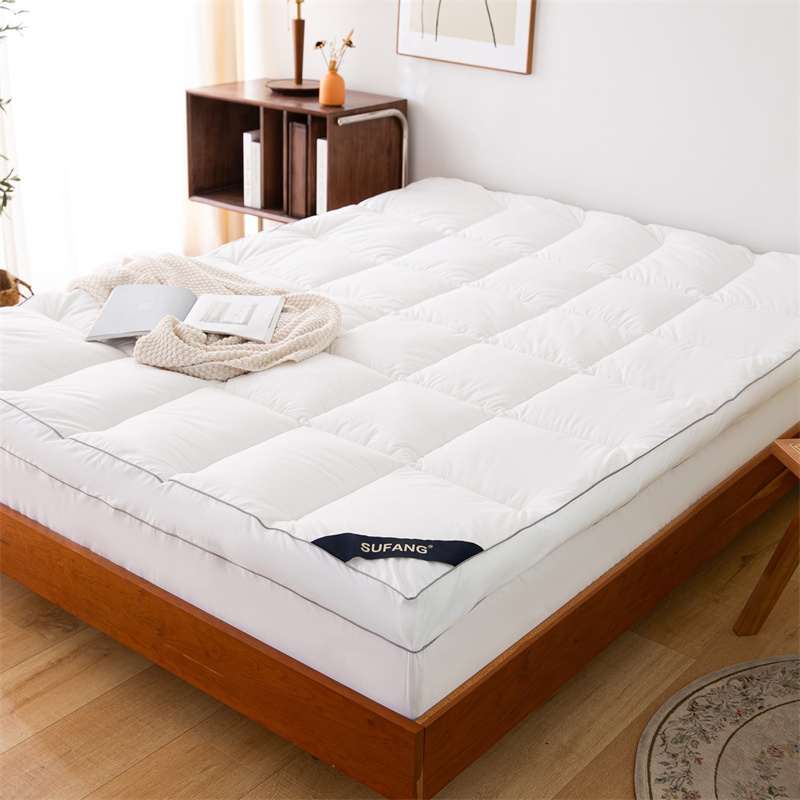
Down and down alternative toppers — also called featherbeds — operate on an entirely different principle. Rather than providing structural support, they add a soft, cloud-like cushioning layer on top of your existing mattress surface. If you're happy with your mattress's support but want it to feel plusher, a down topper is the most cost-effective upgrade.
Down vs. Down Alternative: Key Differences
| Feature | Genuine Down | Down Alternative (Microfiber) |
|---|---|---|
| Fill material | Waterfowl underplumage (duck or goose) | Polyester microfiber clusters |
| Fill power (quality indicator) | 550–900+ (higher = loftier, lighter) | N/A (measured by weight/density) |
| Allergy risk | Moderate (dust mites, dander) | Low (hypoallergenic) |
| Washability | Machine washable (gentle, low heat) | Machine washable (easy care) |
| Durability | 5–10 years with proper care | 2–4 years before clumping/flattening |
| Price range (Queen) | $80–$300+ | $30–$120 |
For genuine down, fill power of 600+ is the threshold for quality — higher fill power means larger, more resilient clusters that trap more air per ounce, staying loftier longer. A 700-fill power topper will feel noticeably plusher and last significantly longer than a 550-fill alternative at the same weight.
The Critical Limitation: No Structural Support
Down toppers compress completely under body weight — they add softness but zero additional support. If your mattress is too firm, a down topper softens the feel. If your mattress is too soft or sagging, a down topper makes the problem worse by adding more sink. This is the most common buyer mistake with down toppers: expecting them to fix a structural mattress problem they are not designed to solve.
Best For / Not Ideal For
- Best for: Stomach sleepers (minimal sink, no spinal misalignment risk), those with a firm mattress wanting more plush comfort, guest beds, hotel-style luxury feel
- Not ideal for: Anyone needing pressure relief or spinal support, hot sleepers (down insulates significantly), allergy sufferers (genuine down), sagging mattress situations
Other Materials Worth Knowing: Wool, Featherbed, and Fiberfill
Beyond the three primary categories, several other topper materials serve specific needs:
- Wool: Naturally temperature-regulating — absorbs up to 30% of its weight in moisture without feeling wet, keeping sleepers cool in summer and warm in winter. Wool toppers are among the best for hot sleepers who also want softness without foam. Durable (8–10 years), naturally flame-resistant, and hypoallergenic. Cost: $150–$400 for a queen.
- Featherbed (feather fill): Uses quill-containing feathers rather than pure down clusters. Heavier, less lofty, and less breathable than down — but significantly cheaper. Good for budget plush comfort; not recommended for allergy sufferers.
- Polyfoam (standard polyurethane): The budget alternative to memory foam. Lower density (typically 1.5–2.5 lb/ft³), faster response time, but degrades noticeably within 1–3 years under regular use. Suitable as a temporary or guest room solution.
Side-by-Side: Which Material Wins on Each Factor
| Factor | Memory Foam | Latex | Down | Wool |
|---|---|---|---|---|
| Pressure relief | ⭐⭐⭐⭐⭐ | ⭐⭐⭐⭐ | ⭐⭐ | ⭐⭐⭐ |
| Temperature regulation | ⭐⭐ (⭐⭐⭐ gel variants) | ⭐⭐⭐⭐ | ⭐⭐ | ⭐⭐⭐⭐⭐ |
| Motion isolation | ⭐⭐⭐⭐⭐ | ⭐⭐⭐ | ⭐⭐⭐ | ⭐⭐⭐ |
| Durability | ⭐⭐⭐ | ⭐⭐⭐⭐⭐ | ⭐⭐⭐ | ⭐⭐⭐⭐ |
| Responsiveness / ease of movement | ⭐⭐ | ⭐⭐⭐⭐⭐ | ⭐⭐⭐⭐ | ⭐⭐⭐⭐ |
| Allergy-friendliness | ⭐⭐⭐⭐ | ⭐⭐⭐⭐ (no latex allergy) | ⭐⭐ | ⭐⭐⭐⭐ |
| Value for money | ⭐⭐⭐⭐ | ⭐⭐⭐ (high upfront cost) | ⭐⭐⭐⭐ | ⭐⭐⭐ |
The Final Decision: Match Material to Your Specific Situation
No single material is universally best — the right choice depends on your primary need:
- You sleep on your side and wake with shoulder or hip pain → Memory foam, 3–4 inches thick, medium ILD (12–16). The contouring pressure relief directly addresses pain points at your widest body areas.
- You sleep hot and change positions frequently → Talalay latex, 2–3 inches. The open-cell structure breathes, and the instant responsiveness makes repositioning effortless.
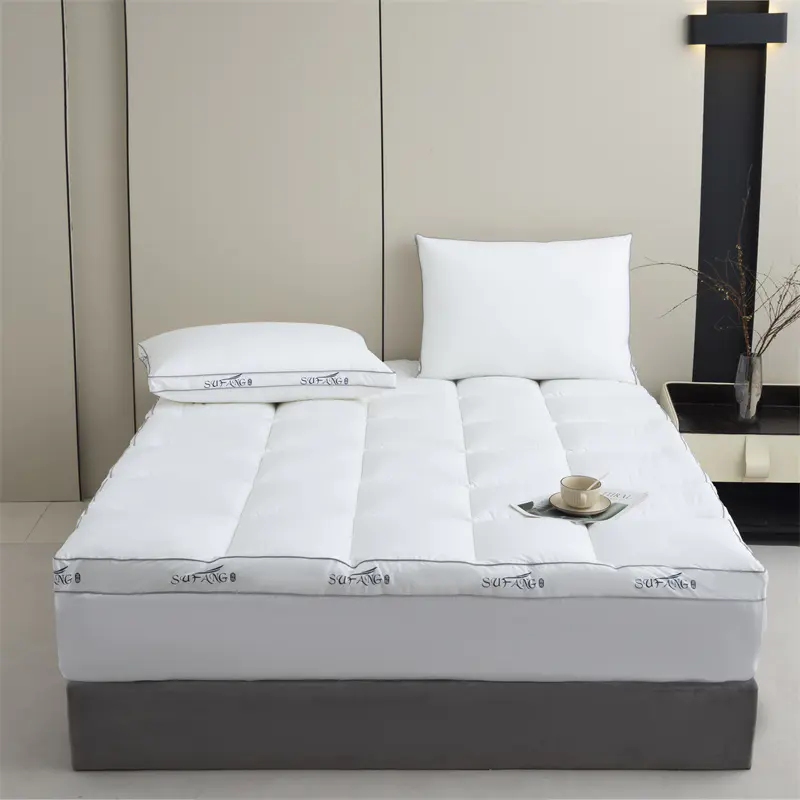
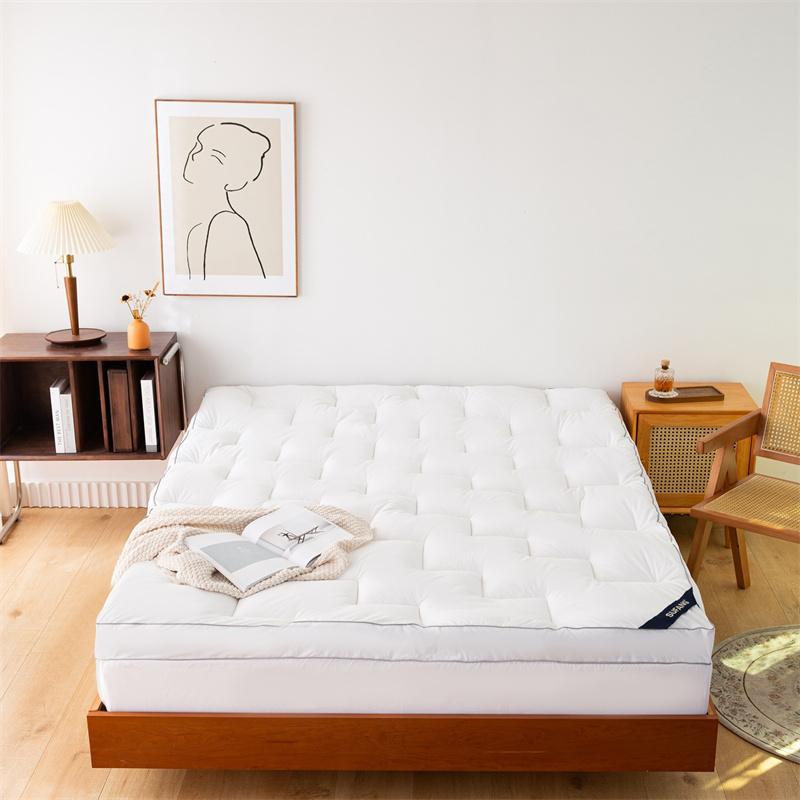
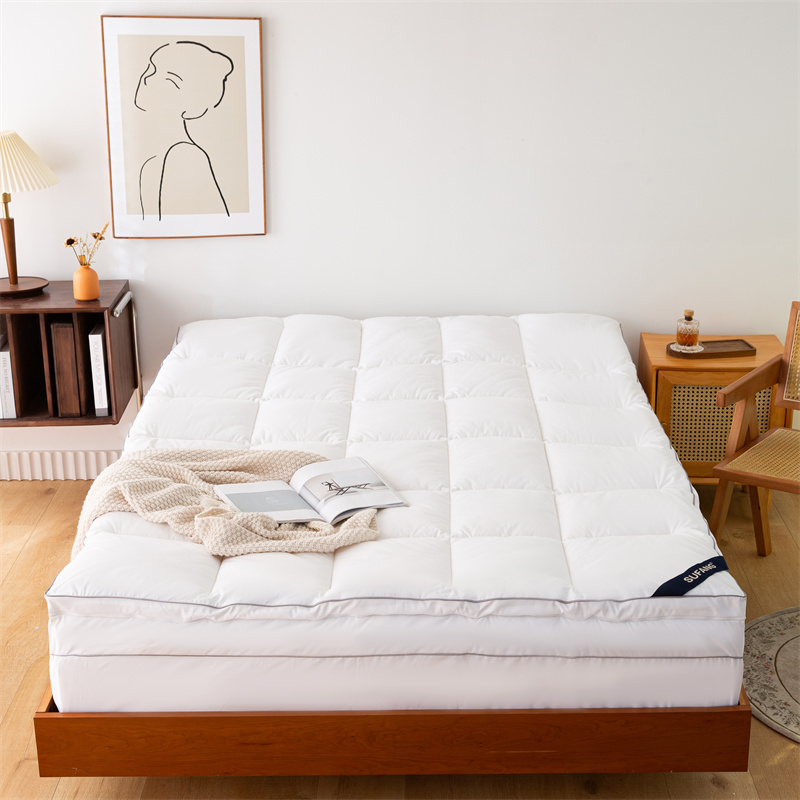
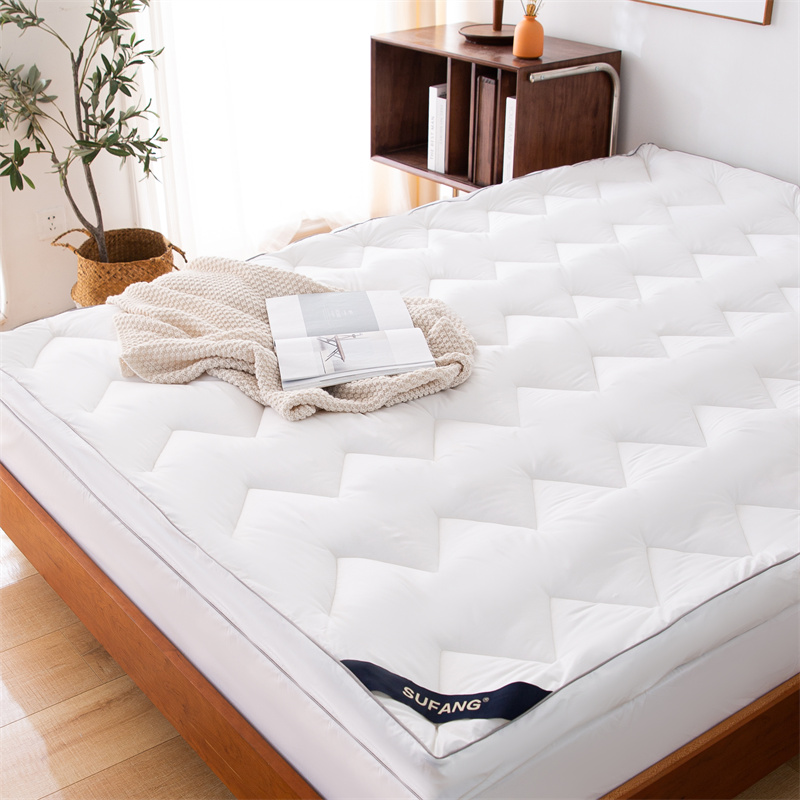
- Your mattress is firm and you just want it softer → Down or down alternative, 2–3 inches. Lowest cost solution for a purely comfort-driven upgrade with no support issues to solve.
- You want the longest-lasting investment and sleep temperature-neutral → Natural Dunlop latex or wool. Both materials routinely outlast their foam counterparts by 5–10 years with proper care.
- You have allergies and need easy washing → Down alternative or open-cell memory foam with a washable cover. Both resist allergen buildup and tolerate regular machine washing without structural damage.
One last rule: a mattress topper cannot fix a mattress that has failed structurally. If your mattress sags more than 1.5 inches or has lost its core support, no topper material will compensate for that — replacement is the only real solution. A topper works best when your mattress is fundamentally sound but simply not the right firmness or feel for your sleep style.
News
-
Hotel Duvet Materials: Microfiber vs Down Explained Introduction to Hotel Duvet Materials Hotel duvets are more than just bedding; they are a critical component of the guest experi...
READ MORE -
Why That Hotel Bed Feels Like Sleeping on a Cloud There's a particular moment every traveler knows. You pull back the crisp white sheets of a luxury hotel bed, sink into the mattre...
READ MORE -
Why Choose Hotel-Style Bedding? Choosing a hotel-style bedding set is one of the easiest ways to instantly elevate your bedroom into a calm, luxurious retreat. Here’s why millions ...
READ MORE

Product List
 Hotel Bedding Set
 +86-180 6864 1189
 +86-(0)513 86311444
 F Zone Chuanjiang Industrial Area, Tongzhou, Nantong City, Jiangsu Province, China